

Chinese Herbs for Constipation: TCM Patterns, Best Formulas, and Safe Relief
Key Takeaways
- Chinese herbs for constipation work best when matched to the TCM pattern behind the symptom.
- Huo Ma Ren, Yu Li Ren, and Hei Zhi Ma are commonly used for dry, hard stools.
- Ma Zi Ren Wan is one of the best-known Chinese herbal formulas for dry constipation with mild Heat and stagnation.
- Strong herbs such as Da Huang, Fan Xie Ye, and Mang Xiao should not be used casually or long term without professional guidance.
- Constipation with severe pain, vomiting, fever, blood in the stool, unexplained weight loss, or inability to pass gas needs medical evaluation.
What Constipation Means in Traditional Chinese Medicine

In Traditional Chinese Medicine, constipation means the Large Intestine is not moving waste smoothly because Qi, fluids, Blood, Yin, Yang, Heat, Cold, or organ function is out of balance. The treatment principle depends on the pattern. Dry constipation needs moisture. Stress constipation needs Qi movement. Cold constipation needs warmth. Deficiency constipation needs nourishment and support.
TCM looks at constipation through both stool quality and whole-body signs. The same symptom can have different root causes.
A hard, dry stool may suggest intestinal dryness, Yin deficiency, Blood deficiency, or Heat consuming fluids. A bowel movement that feels stuck with bloating may suggest Qi stagnation. A weak urge with fatigue may suggest Qi deficiency. Constipation with cold limbs and abdominal chill may suggest Cold or Yang deficiency.
The Large Intestine is central, but it does not work alone. In TCM, bowel movement depends on several connected systems:
- Large Intestine: forms and eliminates stool
- Spleen: supports transformation, transportation, and Qi production
- Stomach: helps descend food and waste
- Liver: keeps Qi moving smoothly, especially during stress
- Lung: supports descending Qi and fluid regulation
- Kidney: provides Yin fluids, Yang warmth, and deeper constitutional support
- Blood and Yin: moisten the intestines
- Yang and Qi: provide movement, warmth, and propulsion
This is why Chinese herbs are usually prescribed in formulas rather than as single herbs. A formula can moisten the intestines, move Qi, support deficiency, and reduce harsh effects at the same time.
TCM Constipation Patterns and What They Mean
TCM constipation patterns help explain why one remedy works for one person but not another. The pattern is identified by stool texture, bowel frequency, abdominal symptoms, thirst, temperature signs, stress response, energy level, tongue appearance, and overall constitution.
| TCM Pattern | Stool Type | Common Signs | Treatment Principle |
| Heat constipation | Hard, dry, difficult stool | Thirst, dark urine, bad breath, irritability, feeling hot | Clear Heat, moisten dryness, move stool |
| Qi stagnation constipation | Irregular, difficult, incomplete stool | Bloating, abdominal distension, stress sensitivity, sighing | Move Qi, relax constraint, support bowel movement |
| Cold constipation | Slow, difficult stool | Cold abdomen, cold limbs, preference for warmth, low energy | Warm Cold, support Yang, move the bowel |
| Qi deficiency constipation | Weak urge, difficult passage, may not be very dry | Fatigue, shortness of breath, sweating, low appetite | Tonify Qi, support propulsion |
| Yin deficiency constipation | Dry, hard stool | Dry mouth, night sweats, heat sensations, red tongue signs | Nourish Yin, generate fluids, moisten intestines |
| Blood deficiency constipation | Dry stool, chronic difficulty | Pale complexion, dizziness, brittle nails, weakness | Nourish Blood, moisten intestines |
| Kidney deficiency constipation | Chronic dryness or sluggishness | Aging-related weakness, low back weakness, cold or dryness signs | Tonify Kidney, warm or nourish, moisten stool |
Heat Constipation
Heat constipation happens when internal Heat dries the fluids in the intestines. The stool becomes hard, dry, and difficult to pass.
Common signs may include thirst, dark urine, bad breath, abdominal fullness, irritability, dry mouth, and a red tongue with yellow coating. Some people feel hot or prefer cold drinks.
The TCM treatment principle is to clear Heat, protect fluids, moisten the intestines, and help stool descend. Herbs and formulas in this category can be effective, but some are strong. Heat-clearing purgatives are not the same as gentle daily digestive support.
Qi Stagnation Constipation
Qi stagnation constipation often appears when stress, emotional tension, irregular meals, or prolonged sitting disrupt smooth digestive movement.
The stool may be difficult to pass even if it is not extremely dry. A person may feel bloated, distended, irritable, or unable to fully empty. Symptoms may worsen during stressful periods.
The treatment principle is to move Qi, relax abdominal constraint, reduce bloating, and support the normal downward movement of the bowels.
Cold Constipation
Cold constipation occurs when Cold slows intestinal movement. This pattern may include slow bowel movements, abdominal discomfort that feels better with warmth, cold hands and feet, clear urine, fatigue, and a pale tongue with a white coating.
The treatment principle is to warm the digestive system, dispel Cold, support Yang, and encourage movement. Cold-type constipation is different from Heat constipation, so cooling laxatives or cold raw foods may not be the best fit.
Qi Deficiency Constipation
Qi deficiency constipation is caused by weak propulsion. The intestines may not have enough energetic force to move stool effectively.
This pattern can involve fatigue, weak urge to defecate, shortness of breath, spontaneous sweating, low appetite, and difficulty passing stool even when it is not very hard. Some people feel tired after bowel movements.
The treatment principle is to strengthen Qi while supporting bowel movement. Strong purgatives may create temporary relief but may not address the underlying weakness.
Yin Deficiency Constipation
Yin deficiency constipation occurs when the body lacks the cooling, moistening fluids needed to lubricate the intestines.
The stool is usually dry, hard, or pellet-like. Other signs may include dry mouth, dry throat, night sweats, heat sensations in the palms or soles, and a red tongue with little coating.
The treatment principle is to nourish Yin, generate fluids, and moisten the intestines. This pattern often develops gradually and may require consistent support rather than harsh stimulation.
Blood Deficiency Constipation
Blood deficiency constipation happens when the intestines are not adequately nourished and moistened. It may appear after illness, heavy menstruation, childbirth, chronic fatigue, or long-term depletion.
Common signs may include dry stool, pale complexion, dizziness, brittle nails, dry skin, and weakness.
The treatment principle is to nourish Blood and moisten the intestines. This is usually a gentle, restorative approach rather than a forceful laxative strategy.
Kidney Deficiency and Age-Related Constipation
Kidney deficiency constipation is often seen in chronic, recurring, or age-related constipation. It may involve dryness, weakness, low back discomfort, cold signs, or reduced vitality.
In some cases, Kidney Yin deficiency contributes to dryness. In others, Kidney Yang deficiency contributes to coldness and sluggish bowel movement.
The treatment principle depends on whether the pattern is dry, cold, weak, or mixed. Formulas such as Ji Chuan Jian are traditionally used in deficiency-related constipation patterns under professional guidance.
Best Chinese Herbs for Constipation by Function
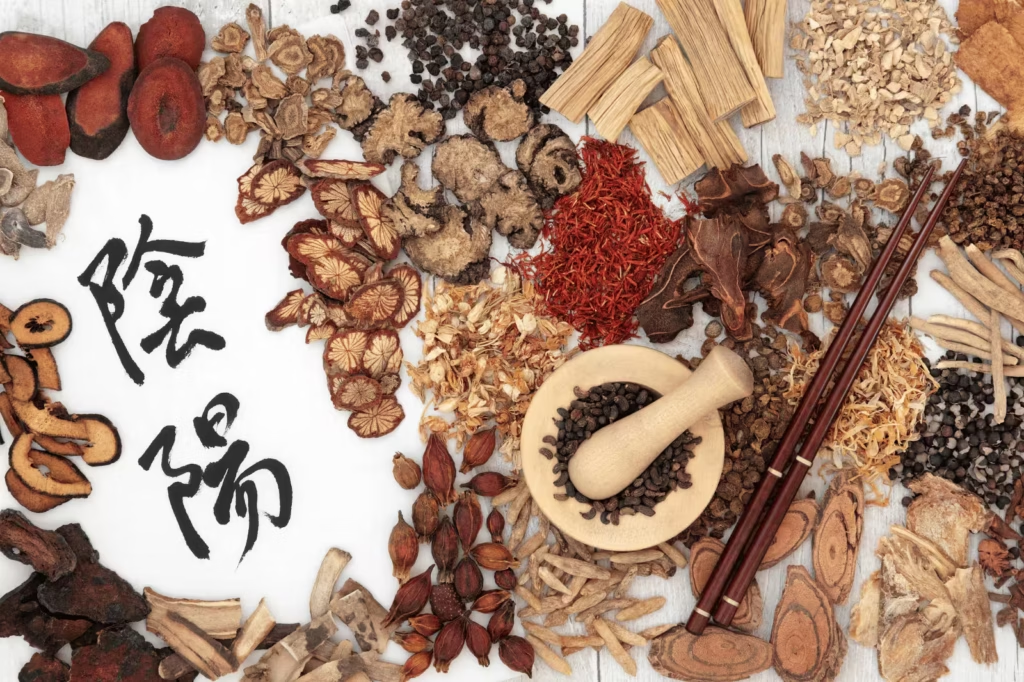
The best Chinese herb for constipation depends on the cause. Huo Ma Ren is commonly used for dry stool. Yu Li Ren helps moisten and move the bowels. Da Huang and Fan Xie Ye are stronger laxative herbs for short-term use. Rou Cong Rong and Dang Gui are often used when constipation is linked with deficiency, dryness, or aging.
Chinese herbs are not chosen only by asking, “What makes me go?” They are chosen by function.
Some herbs moisten. Some move Qi. Some clear Heat. Some warm Cold. Some tonify deficiency. Some strongly purge the bowels and must be used carefully.
Moistening Herbs for Dry Stool
Huo Ma Ren
Huo Ma Ren, or hemp seed, is one of the most important Chinese herbs for dry constipation. It moistens the intestines and helps unblock stool without relying only on harsh stimulation.
It is commonly used when stools are dry, hard, or difficult to pass due to intestinal dryness, Yin deficiency, Blood deficiency, or mild Heat.
Huo Ma Ren is a key herb in Ma Zi Ren Wan.
Yu Li Ren
Yu Li Ren is used to moisten the intestines and promote bowel movement. It is often considered when constipation involves dryness with difficulty passing stool.
It may be used in formulas for dry constipation, fluid depletion, or sluggish bowel movement when a moistening and moving effect is needed.
Hei Zhi Ma
Hei Zhi Ma, or black sesame seed, is a nourishing herb and food-like remedy used for dryness patterns. It supports Blood and Yin while helping lubricate the intestines.
It is often more appropriate for chronic dry stools than for sudden severe constipation.
Qi-Moving Herbs for Bloating and Stress Constipation
Zhi Ke and Zhi Shi
Zhi Ke and Zhi Shi are used to regulate Qi and reduce fullness or distension. They may be included when constipation involves bloating, abdominal pressure, and a stuck sensation.
Hou Po
Hou Po helps move Qi, reduce fullness, and address abdominal distension. It is often paired with other herbs in formulas for constipation with stagnation or Heat accumulation.
Mu Xiang and Xiang Fu
Mu Xiang and Xiang Fu are Qi-regulating herbs that may be considered when digestive symptoms are linked with stress, tension, or irregular movement.
These herbs are not simple laxatives. Their purpose is to restore smoother movement.
Heat-Clearing and Purgative Herbs for Heat Constipation
Da Huang
Da Huang, or rhubarb root and rhizome, is a strong downward-draining herb used in Heat accumulation constipation. It is not a casual daily remedy.
It may be used when there is hard stool, abdominal fullness, Heat signs, and significant stagnation. Professional guidance is important because it can be too harsh for weak, dehydrated, pregnant, elderly, or deficient individuals.
Mang Xiao
Mang Xiao is traditionally used to soften hardness, drain Heat, and help move stool. It is a strong purgative substance and should be used only with appropriate supervision.
Fan Xie Ye
Fan Xie Ye, or senna leaf, is a stimulant laxative herb. It may produce relatively fast bowel movement by increasing intestinal contractions.
It should not be relied on as a long-term daily solution unless specifically directed by a qualified clinician. Overuse may cause cramping, diarrhea, dehydration, electrolyte imbalance, or bowel dependence.
Warming and Tonifying Herbs for Cold or Deficiency Constipation
Rou Cong Rong
Rou Cong Rong is often used in deficiency-related constipation, especially when there are Kidney deficiency, dryness, weakness, or age-related symptoms. It can moisten the intestines while supporting deficiency patterns.
Dang Gui
Dang Gui nourishes Blood and moistens the intestines. It is commonly used when constipation is linked with Blood deficiency, dryness, weakness, or postpartum depletion.
Huang Qi and Dang Shen
Huang Qi and Dang Shen support Qi deficiency. They may help when constipation comes from weak propulsion rather than simple dryness.
These herbs do not function like stimulant laxatives. They support the body’s ability to move stool more effectively when deficiency is part of the pattern.
Sheng Jiang
Sheng Jiang, or fresh ginger, warms the middle and supports digestion. It may be helpful as a supportive herb or food therapy for cold-type sluggish digestion, but it is not usually the main constipation herb.
Lung-Intestine Moistening Herbs
Xing Ren
Xing Ren, or apricot kernel, is often associated with the Lung, but in TCM the Lung and Large Intestine are paired. Xing Ren can help moisten the intestines and support downward movement.
It should be used carefully and professionally because proper preparation and dosing matter.
Classic Chinese Herbal Formulas for Constipation
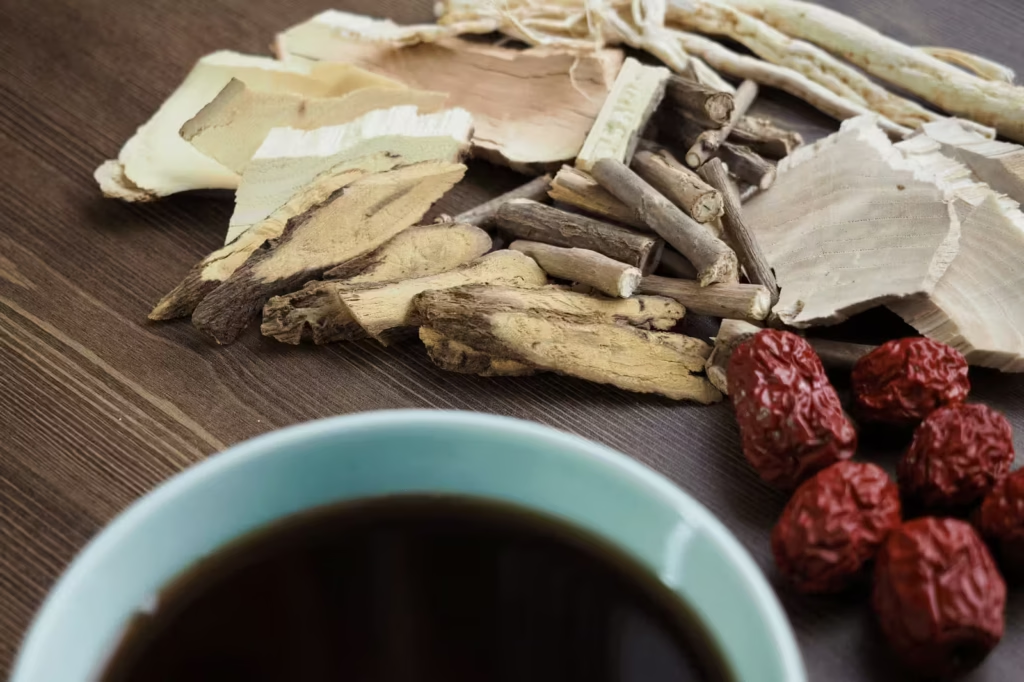
Chinese herbal formulas for constipation combine herbs to match a full pattern. Ma Zi Ren Wan is commonly used for dry constipation with mild Heat. Run Chang Wan supports Blood deficiency dryness. Ji Chuan Jian is used for deficiency-related constipation, especially in older adults. Zeng Ye Tang focuses on fluid depletion and severe dryness. Cheng Qi Tang formulas are stronger Heat-purging formulas that require supervision.
|
Formula |
Best Fit |
Pattern Focus |
Important Note |
|
Ma Zi Ren Wan |
Dry, hard stool with mild Heat or stagnation |
Intestinal dryness, mild Heat, Qi constraint |
Well-known formula, often studied for functional constipation |
|
Run Chang Wan |
Chronic dry stool with weakness |
Blood deficiency, intestinal dryness |
Nourishing and moistening |
|
Ji Chuan Jian |
Elderly or deficiency constipation |
Kidney deficiency, dryness, weak movement |
Often used for chronic deficiency patterns |
|
Zeng Ye Tang |
Severe dryness |
Yin fluid depletion |
Nourishes fluids rather than strongly purging |
|
Tiao Wei Cheng Qi Tang |
Heat constipation |
Heat accumulation |
Stronger, practitioner-guided |
|
Xiao Cheng Qi Tang |
Heat with abdominal fullness |
Qi obstruction and Heat |
Stronger, not for casual use |
|
Da Cheng Qi Tang |
Severe excess pattern |
Heat accumulation, obstruction signs |
Strong purgative, professional use only |
Ma Zi Ren Wan
Ma Zi Ren Wan, also known as Hemp Seed Pill, is one of the best-known Chinese herbal formulas for constipation. It is traditionally used for dry constipation with mild Heat, intestinal dryness, and impaired movement.
The formula commonly includes Huo Ma Ren, Xing Ren, Bai Shao, Zhi Shi, Hou Po, and Da Huang. Together, these herbs moisten the intestines, move Qi, soften stool, and help bowel movement descend.
Ma Zi Ren Wan is not appropriate for every constipation pattern. It may not be the best choice for cold-type constipation, severe deficiency, diarrhea tendency, pregnancy, or constipation with medical red flags unless evaluated by a qualified practitioner.
Run Chang Wan
Run Chang Wan is traditionally used for constipation from Blood deficiency and intestinal dryness. It is more nourishing and moistening than strongly purging.
This type of formula may be considered when dry stool appears with pale complexion, dizziness, dry skin, fatigue, or signs of depletion.
Ji Chuan Jian
Ji Chuan Jian is traditionally used for constipation associated with Kidney deficiency, especially in older adults or people with chronic weakness.
It supports deficiency while helping moisten and move stool. It is often more appropriate for chronic deficiency patterns than for sudden Heat constipation.
Zeng Ye Tang
Zeng Ye Tang focuses on generating fluids and moistening dryness. It is used when constipation is linked with depleted Yin fluids.
This formula approach is especially relevant when dry stool appears with dry mouth, dry throat, heat sensations, or a red tongue with little coating.
Cheng Qi Tang Formulas
Tiao Wei Cheng Qi Tang, Xiao Cheng Qi Tang, and Da Cheng Qi Tang are Heat-clearing, downward-draining formulas. They are stronger formulas for excess-type constipation.
These formulas are not general wellness remedies. They are traditionally used when there are clear signs of Heat accumulation, abdominal fullness, dry stool, and obstruction-type presentation.
Because these formulas can be strong, they should be used only under qualified supervision.
Formulas for Qi Stagnation Constipation
When constipation is driven by stress, bloating, abdominal distension, or irregular bowel habits, a practitioner may use Qi-moving formulas or modify a formula to regulate Liver Qi and Large Intestine movement.
The goal is not only to force a bowel movement. The goal is to restore smoother movement so stool can pass with less tension and discomfort.
Gentle Herbs vs Strong Herbal Laxatives: What Is the Difference?
Gentle Chinese herbs for constipation usually moisten, nourish, or support movement. Strong herbal laxatives stimulate or purge the bowels. Gentle herbs may be better for chronic dryness or deficiency, while strong laxative herbs may be used short term for specific excess patterns. Natural does not always mean gentle.
This distinction matters.
Huo Ma Ren, Yu Li Ren, Hei Zhi Ma, Dang Gui, and Rou Cong Rong are generally used in moistening or nourishing approaches. They are often chosen when dryness or deficiency is part of the problem.
Da Huang, Fan Xie Ye, and Mang Xiao are stronger. They may be useful in the correct pattern, but they are more likely to cause cramping, diarrhea, or excessive downward movement if misused.
The most common mistake is treating every constipation case as if it needs a strong laxative. In TCM, that can weaken the body, worsen deficiency, or fail to address the root pattern.
How Long Do Chinese Herbs Take to Work for Constipation?
Chinese herbs may work at different speeds depending on the pattern, formula, dose, and severity of constipation.
Strong purgative herbs may act faster, but they are not always the safest or most appropriate option. Moistening herbs may take longer because they support lubrication and bowel regularity rather than forcing a bowel movement.
Deficiency-related constipation usually requires more time because the treatment focuses on rebuilding Qi, Blood, Yin, Yang, or Kidney support. Chronic constipation often improves best when herbs are combined with diet, hydration, movement, stress regulation, and consistent bowel habits.
TCM Diet and Lifestyle Tips for Constipation
TCM lifestyle care for constipation supports the same treatment principle as herbs. Dry constipation needs moisture. Cold constipation needs warmth. Qi stagnation needs movement. Deficiency constipation needs nourishment and routine.
Foods for Heat and Dry Constipation
For dry or Heat-type constipation, the goal is to moisten the intestines and protect fluids.
Helpful options may include cooked greens, pears, sesame seeds, soups, stewed fruit, oats, and adequate fluids. Lightly cooked vegetables are often easier to digest than large amounts of raw food.
Very spicy foods, heavy fried foods, excess alcohol, and very drying foods may worsen Heat or dryness in some people.
Foods for Cold Constipation
For cold-type constipation, warm cooked foods are usually preferred. Soups, stews, ginger in appropriate amounts, warm water, and regular meals may be more supportive than iced drinks, cold smoothies, or excessive raw foods.
The goal is to warm the digestive system without overstimulating it.
Foods for Qi Deficiency Constipation
For Qi deficiency constipation, the body needs easy-to-digest nourishment. Warm cooked grains, soups, root vegetables, and regular meal timing may be helpful.
Large amounts of raw fiber can sometimes create more bloating if digestion is weak. Fiber still matters, but it should be increased gradually and paired with fluids.
Habits That Support Bowel Movement
Daily habits can make herbal treatment more effective.
Helpful practices include:
- Drinking warm water in the morning
- Eating meals at regular times
- Taking a short walk after meals
- Practicing clockwise abdominal massage
- Using a footstool to improve toilet posture
- Responding to bowel urges instead of suppressing them
- Reducing prolonged sitting
- Supporting sleep and stress regulation
Safety: Who Should Avoid Self-Treating with Chinese Herbs?

People who are pregnant, breastfeeding, elderly, medically fragile, taking medications, or experiencing severe constipation should not self-treat with strong Chinese laxative herbs. Constipation with bleeding, vomiting, fever, severe pain, unexplained weight loss, or inability to pass gas needs medical evaluation.
Chinese herbs can be powerful. Safety depends on the person, the formula, the dose, the duration, the quality of the product, and the medical context.
Use extra caution if you:
- Are pregnant or breastfeeding
- Are giving herbs to a child
- Are an older adult with chronic constipation
- Take blood thinners, diuretics, heart medications, psychiatric medications, pain medications, or diabetes medications
- Have kidney disease, liver disease, inflammatory bowel disease, bowel obstruction history, or unexplained abdominal pain
- Have chronic diarrhea alternating with constipation
- Have constipation from opioids, antipsychotics, iron, calcium, or other medications
- Have rectal bleeding, black stool, fever, vomiting, or severe pain
Strong laxative herbs should not be used as a daily long-term habit without guidance. Overuse may create dependency, worsen dehydration, or disturb electrolytes.
When Constipation Needs Medical Evaluation
Constipation is common, but some symptoms require medical attention.
Seek medical evaluation if constipation is sudden, severe, persistent, or associated with:
- Blood in the stool
- Bleeding from the rectum
- Black or tarry stool
- Constant or severe abdominal pain
- Vomiting
- Fever
- Inability to pass gas
- Unexplained weight loss
- New constipation after age 50
- A family history of colon or rectal cancer
- Persistent change in bowel habits
- Constipation that does not improve with self-care
Chinese herbs may support digestive health, but they are not a replacement for urgent evaluation when warning signs are present.
A Safer, More Personalized Way to Support Constipation Relief
Chinese herbs can be worth considering for constipation when the treatment is matched to the correct TCM pattern and used safely.
Moistening herbs may help dry stools. Qi-moving herbs may help bloating and stress-related constipation. Warming and tonifying herbs may support cold or deficiency patterns. Strong purgative herbs may help specific excess patterns, but they require caution and professional guidance.
The best approach is not simply finding the strongest laxative. It is identifying why the bowel is not moving well and choosing herbs, formulas, foods, and lifestyle habits that support the underlying pattern.
If constipation keeps coming back, feels difficult to manage, or seems connected to stress, dryness, cold digestion, fatigue, or medication use, personalized care can make a meaningful difference. At ACA Acupuncture & Wellness, our licensed practitioners use TCM pattern assessment, acupuncture, Chinese herbal medicine, and practical lifestyle guidance to help support safer, more targeted digestive relief.
Request an appointment with ACA Acupuncture & Wellness today to explore a constipation support plan tailored to your body, symptoms, and long-term digestive health.
Sources:
Cheng, C.-W., Bian, Z.-X., & Wu, T.-X. (2009). Systematic review of Chinese herbal medicine for functional constipation. World Journal of Gastroenterology, 15(39), 4886–4895.
Huang, T., Ning, Z., Hu, D., Zhang, M., Zhao, L., Lin, C. Y., Leung, E. L.-H., Bian, Z., & Lu, A. (2020). Chinese herbal medicine MaZiRenWan improves bowel movement in functional constipation through down-regulating oleamide. Frontiers in Pharmacology, 10, Article 1570.
Lyu, Z., Xu, X., Zhao, M., & Tang, S. (2022). Outcome of the efficacy of Chinese herbal medicine for functional constipation: A systematic review and meta-analysis. World Journal of Gastrointestinal Pharmacology and Therapeutics, 13(4), 79–94.
GLP-1 constipation is usually treated with more fluids, gradual fiber intake, regular walking, smaller balanced meals, and medical guidance if symptoms persist. From a TCM perspective, it may involve dryness, Qi stagnation, or weak bowel movement, so Chinese herbs should be matched to the person’s pattern and used carefully with GLP-1 medications.
Traditional Chinese approaches to constipation often include warm water, regular meals, abdominal massage, movement, food therapy, acupuncture, and herbal formulas chosen by pattern. Dry stools may call for moistening support, while bloating, cold digestion, fatigue, or stress-related constipation may need different TCM strategies.
Huo Ma Ren, or hemp seed, is one of the best-known Chinese herbs for dry constipation because it helps moisten the intestines and support easier stool passage. However, there is no single best herb for every case because constipation may come from dryness, Heat, Cold, Qi stagnation, Blood deficiency, Yin deficiency, or weak bowel movement.
Ma Zi Ren Wan is a classic Chinese herbal formula often used for dry constipation with mild Heat, intestinal dryness, and difficult stool passage. It may help support smoother bowel movements, but it is not the right formula for every constipation pattern and should be used with professional guidance when symptoms are chronic or complex.
Senna tea may help short-term constipation, but it is a stronger stimulant laxative and should not be used as a daily long-term remedy. Gentler options depend on the pattern, such as ginger tea for cold-type sluggish digestion, peppermint tea for bloating, or warm water in the morning for simple bowel support.
Constipation should be checked by a doctor if it is sudden, severe, persistent, or occurs with rectal bleeding, blood in the stool, black stool, vomiting, fever, severe abdominal pain, unexplained weight loss, or inability to pass gas. These symptoms may signal a more serious condition and should not be treated with herbs alone.
Testimonials

Cart (0)
Your cart is currently empty.



Cart (0)
Your cart is currently empty.