

Understanding Acupuncture Meridian Pathways: How Energy Flows Through the Body

Key Takeaways
-
Acupuncture meridian pathways serve as energy highways that guide Qi to organs, tissues, and cells, supporting overall physical and emotional health.
-
When meridian pathways are blocked or imbalanced, symptoms such as pain, fatigue, digestive issues, or emotional distress may occur.
-
Each acupuncture meridian is linked to a specific organ, and stimulating the right point can improve function and restore energetic balance.
-
Extraordinary meridians act as reservoirs for Qi, helping regulate energy during stress, illness, or hormonal shifts.
-
Acupuncture restores Qi flow through these meridians, encouraging the body’s natural healing response while improving circulation, mood, and vitality.
What Are Meridians in Acupuncture?
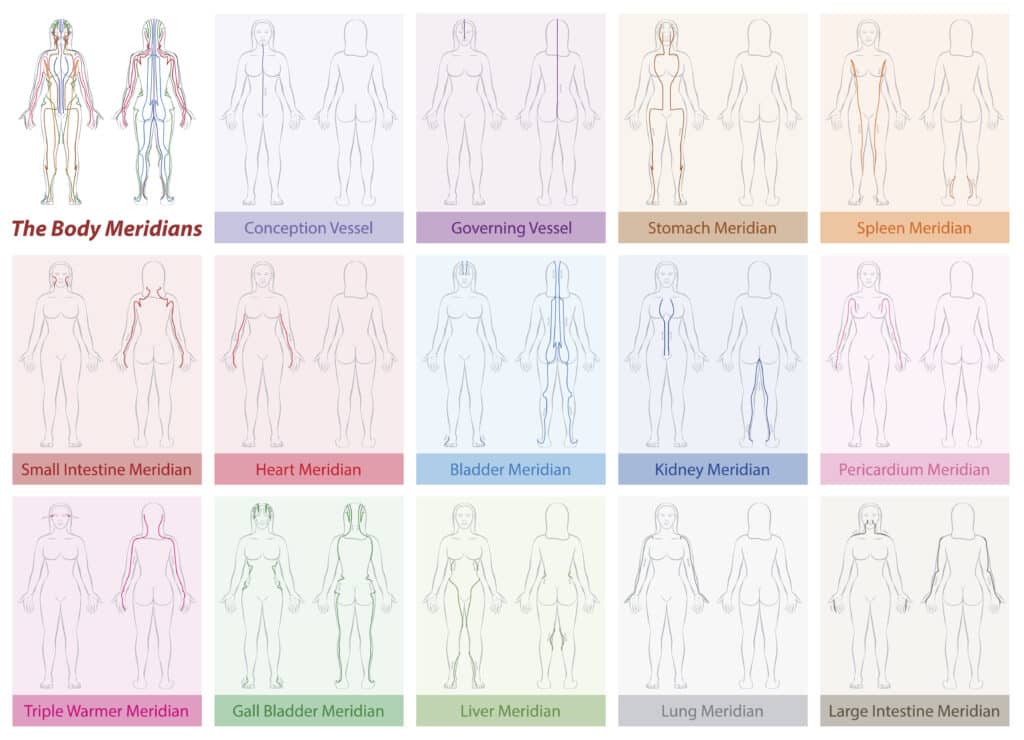
Meridians in acupuncture are functional energy pathways that connect internal organs with specific areas of the skin, muscles, and senses. They form a network that allows Qi and Blood to circulate, and acupuncturists use this network to understand symptoms and choose treatment points.
Meridian Basics
In Traditional Chinese Medicine, we describe the body through a channel system called the jing luo. These channels are not tubes you can see on a scan. They are functional pathways that describe how sensation, circulation, and symptoms travel through the body over time.
Each meridian links an internal organ system with regions on the surface of the body. The Lung meridian connects the chest with the arm and thumb. The Gallbladder meridian traces a path from the head, through the side of the body, down to the fourth toe. When a patient describes pain, tingling, or tension following one of these paths, our acupuncturists immediately think in terms of meridian patterns, not only local tissue problems.
Types of Meridians
Within the jing luo network, we recognize several levels of channels:
- Primary meridians: twelve major pathways that each connect to a zang fu organ, such as Lung, Liver, Heart, Kidney, and Spleen.
- Extraordinary meridians: eight deeper channels that store and redistribute Qi and Blood, and help integrate the whole system.
- Collateral meridians (Luo vessels): branching connections that link primary channels with each other and with nearby tissues.
- Sinew and divergent channels: pathways that explain how pain, stiffness, and chronic conditions can spread beyond the primary route.
How Meridians Relate to Qi, Blood, and Organs
Meridians are the routes. Qi and Blood are the traffic. The organs are the central stations that generate, transform, and store these resources.
- Qi moves through meridians to activate muscles, power digestion, support immunity, and stabilize mood.
- Blood circulates along similar routes, nourishing tissues, moistening joints, and supporting mental clarity.
- Each meridian belongs to a particular organ system, so a Lung channel pattern points to Lung function, while a Spleen channel pattern points to digestion, metabolism, and fluid handling.
When we say a meridian is blocked, we mean that Qi and Blood are not circulating smoothly along that route. The result might be sharp pain, numbness, swelling, or a sense of fullness or tightness that follows the channel. When a meridian is deficient, you might feel weakness, dull ache, coldness, or lack of sensation along that same pathway.
What Is Qi and How Does It Flow Through Meridians?
Qi is the vital life force in Traditional Chinese Medicine that powers every function of the body and mind. Qi flows through the meridian network, and acupuncture regulates this flow to restore balance, reduce symptoms, and support long term health.
Prenatal and Postnatal Qi
In TCM, Qi has both inherited and acquired aspects.
- Prenatal Qi is the constitutional energy you receive from your parents. It shapes your baseline resilience, tendency toward certain conditions, and how you age.
- Postnatal Qi is produced every day from the air you breathe and the food you digest. The Lung and Spleen systems are central to this process.
When prenatal Qi is strong and postnatal Qi is well supported, meridians carry steady, clear energy. Injuries heal, sleep is restorative, digestion feels stable, and mood can adapt to stress. When these forms of Qi are weakened or consumed faster than they are replenished, meridians start to reflect strain: tight bands, chronic knots, wandering pain, and inconsistent energy from day to day.
Common Signs Your Qi May Be Out of Balance
Patients often recognize Qi imbalance once we translate the language. Common signs include:
- Energy that crashes at the same time every day.
- Pain or tension that follows a clear line along an arm, leg, or the back.
- Feeling wired and restless but also exhausted, especially at night.
- Swings between loose stools and constipation, or between strong appetite and lack of hunger.
- Emotional patterns that repeat under stress, such as irritability, worry, or sudden sadness.
- Cold hands and feet, night sweats, or a sense of heat rising to the head.
When these patterns are mapped onto meridians, your symptoms stop being random and start looking like a story we can treat.
The 12 Primary Meridians and Their Functions
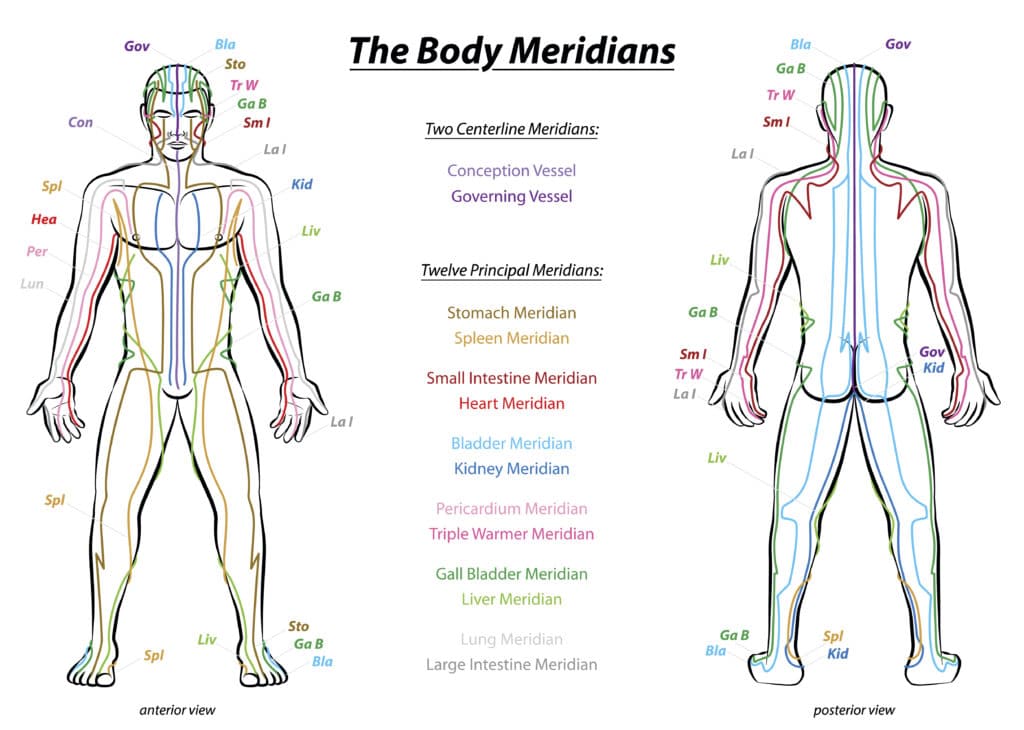
In Traditional Chinese Medicine, the twelve primary meridians are the main channels that carry Qi and Blood through the body. Each one is Yin or Yang, belongs to a Five Element, pairs with a partner meridian, and governs a specific organ system.
Lung Meridian (Hand Taiyin)
The Lung meridian runs from the chest down the arm to the thumb. It governs breath, the opening and closing of the pores, and the body’s first line of defense against the external world.
- Nature: Yin, Metal, paired with Large Intestine
- Key roles: Breathing, immune defense, skin regulation, fluid distribution in the upper body
- Common imbalance signs: Cough, shortness of breath, frequent colds, dry skin, low voice, lingering grief or sadness
When Lung Qi is weak or constrained, patients may feel easily winded, emotionally heavy, and more vulnerable to respiratory issues. Acupuncture along this channel helps restore fuller breath and strengthen the body’s protective Qi.
Large Intestine Meridian (Hand Yangming)
The Large Intestine meridian starts at the index finger and travels up the arm, across the shoulder, and to the side of the nose. It assists the Lung in managing fluids and waste.
- Nature: Yang, Metal, paired with Lung
- Key roles: Waste elimination, fluid balance, influence on nose and sinuses
- Common imbalance signs: Constipation, bloating, abdominal discomfort, dry stools, sinus congestion, certain types of headaches
When this channel is out of balance, patients often describe feeling “backed up” both physically and energetically. Supporting this meridian with acupuncture can regulate the bowels, clear certain headaches, and help the Metal element function with more ease.
Stomach Meridian (Foot Yangming)
The Stomach meridian begins just below the eye, travels down the front of the body, and ends at the second toe. It is central to appetite and the initial stages of digestion.
- Nature: Yang, Earth, paired with Spleen
- Key roles: Receiving food, initial breakdown of nutrients, support for facial region and muscles along its path
- Common imbalance signs: Reflux, nausea, bad breath, mouth ulcers, heavy limbs, strong or erratic appetite
When Stomach Qi is disturbed, patients may report discomfort after meals, burning in the chest, or a constant need to snack to keep energy up. Acupuncture can settle the Stomach channel, ease digestive distress, and stabilize appetite.
Spleen Meridian (Foot Taiyin)
The Spleen meridian runs from the big toe up the inner leg and into the abdomen and chest. In TCM, Spleen refers to the broader function of transforming food into usable Qi and Blood.
- Nature: Yin, Earth, paired with Stomach
- Key roles: Transformation and transportation of nutrients, production of Blood, fluid regulation, support for muscles and limbs
- Common imbalance signs: Bloating, loose stools, easy bruising, fatigue, heavy limbs, excessive worry or rumination
When Spleen Qi is weak, patients can feel foggy, heavy, and drained, especially after eating. By strengthening this channel with acupuncture and lifestyle guidance, we help stabilize energy, digestion, and mental focus.
Heart Meridian (Hand Shaoyin)
The Heart meridian connects the chest to the inner arm and the little finger. It governs circulation and the “Shen,” the spirit that includes consciousness, mood, and sleep.
- Nature: Yin, Fire, paired with Small Intestine
- Key roles: Circulation of Blood, clarity of mind, quality of sleep, emotional stability
- Common imbalance signs: Palpitations, anxiety, insomnia, restless dreams, feeling mentally scattered
Heart channel patterns often show up in patients who feel physically safe but internally restless or over stimulated. Acupuncture along the Heart network helps settle the mind, ease palpitations, and improve sleep quality.
Small Intestine Meridian (Hand Taiyang)
The Small Intestine meridian starts at the little finger, travels along the arm, crosses the shoulder, and ends near the ear. It separates what is useful from what is not, both physically and symbolically.
- Nature: Yang, Fire, paired with Heart
- Key roles: Separation of clear from turbid in digestion, assimilation of nutrients, influence on neck and shoulders
- Common imbalance signs: Abdominal pain, poor digestion, alternating bowel patterns, neck and shoulder tension, mental fog
When this channel is not functioning well, patients may have difficulty digesting both food and experiences. Treatment along the Small Intestine meridian can ease upper back and neck tightness while supporting clearer thinking and smoother digestion.
Bladder Meridian (Foot Taiyang)
The Bladder meridian begins at the inner corner of the eye, runs over the head, and flows down along both sides of the spine and back of the leg to the little toe. It is the longest meridian and strongly linked to the nervous system.
- Nature: Yang, Water, paired with Kidney
- Key roles: Fluid storage and excretion, support for the spine, regulation of the back and posterior body
- Common imbalance signs: Low back pain, tightness along the spine or hamstrings, urinary frequency or urgency, stress related tension
We often see Bladder channel patterns in people who sit for long hours or carry tension through their back. Acupuncture along this pathway can ease pain, relax the nervous system, and support more balanced fluid metabolism.
Kidney Meridian (Foot Shaoyin)
The Kidney meridian starts on the sole of the foot, travels up the inner leg, and reaches the chest. In TCM, Kidney stores Essence, the deep reserve that underlies growth, reproduction, and aging.
- Nature: Yin, Water, paired with Bladder
- Key roles: Essence storage, growth and development, bone and teeth health, fertility, hearing, and fear response
- Common imbalance signs: Low back and knee pain, chronic fatigue, low libido, fertility challenges, hormonal shifts, feelings of deep insecurity or fear
When Kidney Qi or Essence is depleted, patients may feel as if their “battery” never fully charges. By tonifying this channel, we support fertility, hormonal balance, bone strength, and long term resilience.
Pericardium Meridian (Hand Jueyin)
The Pericardium meridian runs from the chest along the inner arm to the middle finger. It is often described as the Heart’s protective shield, buffering emotional and circulatory stress.
- Nature: Yin, Fire, paired with Triple Burner
- Key roles: Protection of the Heart, regulation of circulation in the chest, emotional buffering and relationship to intimacy
- Common imbalance signs: Chest tightness, palpitations with anxiety, mood swings, feeling emotionally overwhelmed or shut down
In practice, we frequently use Pericardium points to calm anxiety, open the chest, and restore a sense of emotional safety. It is a key channel for stress-related symptoms that sit in the chest and upper abdomen.
Triple Burner (San Jiao) Meridian (Hand Shaoyang)
The Triple Burner meridian starts at the ring finger, travels up the arm, around the ear, and into the side of the head. It does not represent a single organ, but three body regions: upper, middle, and lower burners.
- Nature: Yang, Fire, paired with Pericardium
- Key roles: Distribution of fluids, coordination of metabolism, regulation of temperature and Qi movement across the three burners
- Common imbalance signs: Bloating, a sense of internal dampness or edema, sluggish metabolism, irregular temperature sensations
When this channel is out of balance, patients can feel “puffy,” heavy, and energetically stuck. Working with Triple Burner points helps harmonize fluid movement and systemic metabolism.
Gallbladder Meridian (Foot Shaoyang)
The Gallbladder meridian begins at the outer corner of the eye, travels along the side of the head and body, and ends at the fourth toe. It is closely tied to decisions, planning, and lateral body structures.
- Nature: Yang, Wood, paired with Liver
- Key roles: Bile secretion, tendon health, lateral body support, decision making and courage
- Common imbalance signs: Migraines or side head pain, jaw tension, hip and lateral leg tightness, indecision, frustration
We see Gallbladder channel issues in patients who feel stuck between choices, hold tension in the jaw or sides of the neck, or experience recurrent migraines. Channel-based acupuncture along this route often brings relief and clearer direction.
Liver Meridian (Foot Jueyin)
The Liver meridian runs from the big toe up the inner leg into the lower abdomen and chest. It is responsible for keeping Qi flowing smoothly throughout the body.
- Nature: Yin, Wood, paired with Gallbladder
- Key roles: Regulation of Qi flow, detoxification, tendon and ligament health, menstrual harmony, eye health, emotional regulation
- Common imbalance signs: PMS, irritability, mood swings, eye strain, tight muscles, rib side discomfort, alternating digestive patterns
When Liver Qi stagnates, patients often feel irritable, tense, and congested, both physically and emotionally. By soothing and spreading Liver Qi through the meridian, acupuncture can ease muscular tightness, support menstrual health, and soften emotional reactivity.
| Meridian | Function | Common Imbalances |
| Stomach | Metabolism, energy supply | Indigestion, bloating, gastric pain |
| Spleen | Blood circulation, immune support | Fatigue, weak immunity, bruising |
| Small Intestine | Nutrient absorption | Poor digestion, abdominal discomfort, brain fog |
| Heart | Emotional balance, cardiovascular health | Anxiety, insomnia, palpitations |
| Bladder | Fluid regulation, nervous system support | Urinary issues, back pain, stress |
| Kidney | Energy storage, reproductive health | Fatigue, lower back pain, hormonal issues |
| Pericardium | Heart protection, emotional regulation | Chest tightness, mood swings, anxiety |
| Triple Burner | Temperature control, fluid balance | Bloating, sluggish metabolism, fluid retention |
| Gallbladder | Decision-making, stress management, digestion | Headaches, migraines, indecisiveness |
| Liver | Detoxification, hormone regulation | Irritability, menstrual issues, vision problems |
| Lung | Breathing, immune defense | Cough, asthma, fatigue |
| Large Intestine | Digestion, waste elimination | Constipation, bloating, abdominal pain |
The Eight Extraordinary Meridians
The eight extraordinary meridians are deeper acupuncture channels that store and distribute Qi and Blood, integrate the primary meridians, and regulate growth, development, hormones, and long term adaptation.
Du Mai (Governing Vessel)
The Du Mai runs along the spine and continues over the top of the head. It is closely associated with Yang energy, the nervous system, and the stability of the body’s central axis. Balancing this vessel is often helpful for back pain, spinal tension, low mood, and brain fog.
Ren Mai (Conception Vessel)
The Ren Mai travels along the front midline of the body from the pelvis up to the chest. It nourishes Yin, body fluids, and is deeply connected with reproductive and hormonal function. This vessel is commonly addressed in fertility work, menstrual concerns, and many digestive patterns.
Chong Mai (Penetrating Vessel)
The Chong Mai is often called the sea of Blood because of its strong influence on Blood and circulation. It links the trunk and lower abdomen with multiple meridians, acting like a central hub for Qi and Blood movement. Irregular menstruation, digestive disturbance, and deep or longstanding anxiety patterns frequently involve this vessel.
Dai Mai (Belt Vessel)
The Dai Mai encircles the waist like a belt and is unique because it runs horizontally instead of vertically. It helps coordinate the flow of Qi between the upper and lower body. When this vessel is too tight or too slack, people may notice low back heaviness, pelvic congestion, or symptoms that feel as if they cannot move upward or downward.
Yin Qiao and Yang Qiao (Heel Vessels)
The Yin Qiao and Yang Qiao vessels influence how energy moves through the legs and how the body organizes standing and walking. They are linked to the opening and closing of the eyes and play a role in sleep regulation. Imbalances in these vessels can show up as insomnia, leg tightness, or asymmetrical posture and gait patterns.
Yin Wei and Yang Wei (Linking Vessels)
The Yin Wei and Yang Wei vessels help coordinate and integrate the Yin and Yang meridians over time. They are strongly associated with how a person processes emotions and integrates life experiences. Lingering sadness, persistent anxiety, or feeling unable to recover after stress often suggests involvement of these linking vessels.
Understanding How Meridian System Imbalances Affect Symptoms
In Traditional Chinese Medicine (TCM), the meridian system is more than a network of energy pathways—it’s a diagnostic map that reveals the root causes of physical and emotional symptoms. Each meridian corresponds to specific organs and bodily functions, and disruptions in these pathways often manifest as distinct symptoms. By understanding these patterns, acupuncturists can identify imbalances and restore harmony within the body.
Common Meridian Imbalances and Their Symptoms
| Meridian | Common Symptoms |
| Liver | Migraines, irritability, menstrual irregularities |
| Lung | Shortness of breath, fatigue, skin issues |
| Heart | Anxiety, insomnia, heart palpitations |
| Kidney | Low energy, fear, hormonal imbalances |
| Stomach | Digestive discomfort, bloating, fatigue |
| Large Intestine | Headaches, immune function issues |
How Symptoms Present in Daily Life
- Physical Health: Blockages can lead to pain, fatigue, and digestive issues.
- Emotional Health: Disruptions may cause anxiety, mood swings, and emotional instability.
- Cognitive Health: Brain fog, poor concentration, and mental fatigue are often linked to stagnant Qi.
The Importance of Timing
Each primary meridian is most active during a specific two-hour window each day. Symptoms experienced during these periods can indicate imbalances:
- 1 a.m. – 3 a.m. (Liver): Waking up during this time may suggest Liver Meridian issues.
- 3 a.m. – 5 a.m. (Lung): Difficulty breathing or restlessness could indicate Lung Meridian imbalances.
- 9 a.m. – 11 a.m. (Stomach): Digestive discomfort is common during this window.
- 3 p.m. – 5 p.m. (Bladder): Afternoon fatigue and back pain may point to Bladder Meridian issues.
Key Acupuncture Points for Symptom Relief
- ST36 (Stomach Meridian): Supports digestion and boosts energy.
- LI4 (Large Intestine Meridian): Relieves headaches and enhances immune function.
- PC6 (Pericardium Meridian): Calms anxiety and regulates the heart.
- KI1 (Kidney Meridian): Grounds energy and promotes restful sleep.
By recognizing these patterns and targeting specific acupuncture points, practitioners can address both the symptoms and their underlying causes. This holistic approach not only alleviates discomfort but also restores the body’s natural energy flow, promoting long-lasting health and well-being.
What Are Acupuncture Points and How Do They Work?
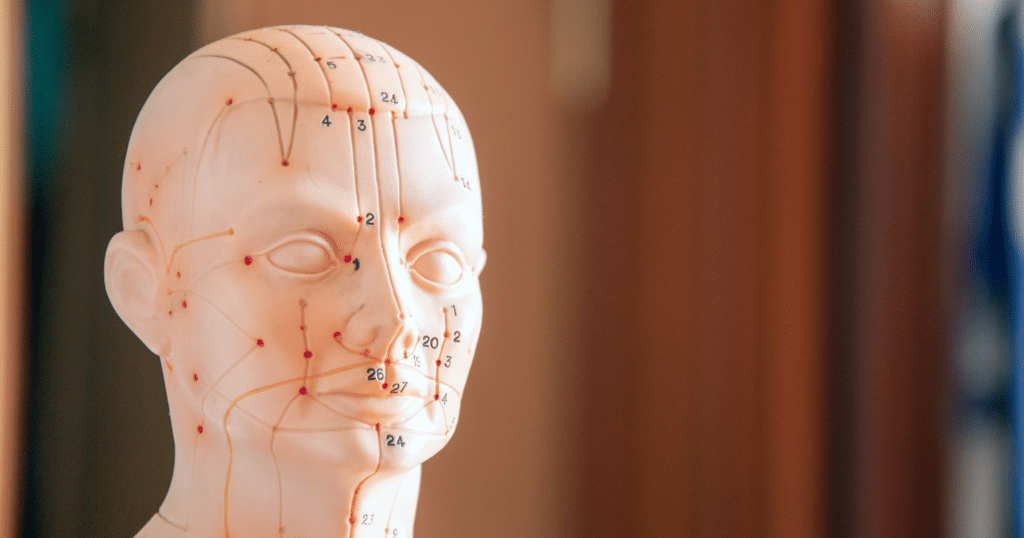
Acupuncture points are specific locations along meridians where Qi is most accessible for regulation. Stimulating these points with needles, heat, or pressure allows acupuncturists to move, tonify, or disperse Qi and Blood to change symptoms and rebalance the system.
Point Categories Patients Hear About
There are hundreds of acupuncture points. They are grouped into functional categories that guide our choices:
- Local points near the area of pain or dysfunction.
- Distal points on hands, feet, or ears that influence distant regions through the channel network.
- Source points that access the root Qi of a meridian.
- Luo connecting points that link paired channels.
- Back shu and front mu points that directly reflect organ function on the back and abdomen.
- Command points that strongly affect broad regions like the face, abdomen, or back.
During treatment, we rarely use points randomly. Each one is chosen for its relationship to your meridian pattern.
Deqi Sensation Explained
When we insert a needle, we are not aiming to cause pain. We are inviting Qi to respond. The moment when Qi engages is called Deqi.
Patients describe Deqi in many ways: a spreading warmth, a heavy feeling, a dull ache, a pleasant current that moves along a line, or a sense of release. This sensation tells us that the channel is responding and that the point is influencing the meridian as intended. It is a sign of communication between the needle and the Qi network, not a sign of harm.
Foundational Points We Use Frequently
Some points are so versatile that we use them across many conditions, always in the context of a full pattern diagnosis:
- ST36 (Zusanli): strengthens digestion, boosts Qi and Blood, and supports immune function.
- LI4 (Hegu): moves Qi in the face and head, eases pain, and helps regulate the exterior of the body.
- PC6 (Neiguan): calms the Heart and mind, eases nausea, and supports the chest.
- KI1 (Yongquan): grounds excess energy that is stuck in the head, calms the spirit, and helps with sleep.
Each of these points sits on a meridian, and their effects are best understood through that channel context.
How Acupuncture Balances Meridian Pathways

Acupuncture serves as a powerful tool for restoring Qi flow along these meridian pathways. By inserting fine needles at specific points along these channels, practitioners can remove blockages, alleviate pain, and promote healing throughout the body.
Scientific research increasingly supports acupuncture’s efficacy in treating various ailments by modulating pain perception through neural pathways and triggering biochemical responses that promote healing. Conditions such as chronic pain, anxiety, digestive issues, and even skin disorders have shown improvement with acupuncture treatments.
It’s essential to recognize that acupuncture does not merely treat symptoms; it addresses root causes by restoring balance within these intricate networks of energy flow. The holistic approach of TCM emphasizes treating both physical ailments and emotional well-being simultaneously.
Benefits of Meridian-Based Acupuncture for Modern Health Concerns

Meridian based acupuncture helps modern health concerns by addressing pain, stress, sleep problems, digestive issues, hormonal imbalances, and long term resilience through a unified energy map. By regulating Qi and Blood in specific channels, our acupuncturists support both symptom relief and deeper rebalancing.
Pain and Musculoskeletal Conditions
Pain often follows meridian lines rather than neat anatomical borders. Channel-based acupuncture is particularly effective for:
- Neck and shoulder pain that tracks along the Gallbladder and Bladder pathways.
- Low back pain with radiating symptoms along the Bladder or Gallbladder meridians.
- Repetitive strain injuries where forearm and hand channels are overloaded.
By balancing the channels that pass through painful regions, we reduce tension, improve circulation, and reset neuromuscular patterns.
Stress, Anxiety, and Sleep
Chronic stress often compresses Liver, Heart, and Pericardium meridians. Patients feel wired, anxious, and unable to rest. When we calm these channels, sleep becomes deeper, mood more stable, and emotional reactions less extreme. We also work with the organ clock to support sleep at specific times of night.
Digestive and Metabolic Health
Spleen and Stomach meridians are central to modern digestive complaints. By strengthening these channels and regulating paired meridians such as Liver and Large Intestine, we help:
- Reduce bloating, reflux, and irregular bowel movements.
- Stabilize appetite and reduce cravings driven by fatigue and stress.
- Improve the sense of grounded energy throughout the day.
Fertility, Hormones, and Women’s Health
Meridian pathways give us a powerful framework for working with cycles and hormones. We regularly support:
- Menstrual irregularities tied to Liver, Spleen, and Chong Mai patterns.
- Fertility journeys, where Kidney, Ren Mai, and Chong Mai are central.
- Perimenopausal transitions with heat, night sweats, and mood changes.
By treating these as channel based patterns, not only hormone numbers, we can support the whole system during sensitive phases.
Prevention and Long-Term Resilience
Many patients continue acupuncture after their acute issue improves. Meridian based care then shifts to prevention:
- Keeping Qi and Blood moving smoothly to prevent flares.
- Supporting organ systems that are constitutionally weaker.
- Helping the nervous system reset regularly in a high stress environment like NYC.
Over time, patients often notice faster recovery from stress, fewer extreme swings in symptoms, and a clearer sense of connection to their bodies.
Everyday Practices to Support Healthy Meridians Between Sessions

Simple daily habits such as gentle movement, conscious breathing, balanced eating, and emotional hygiene help keep meridians open between acupuncture sessions. These practices support Spleen, Liver, Lung, Heart, and Kidney channels and make treatment results more stable.
Movement and Breath
Qi likes rhythm. It stagnates when we sit in one position for hours. To support meridians:
- Take short walking breaks to pump Qi through the legs and Bladder channel.
- Use simple Qi Gong or Tai Chi style movements to connect breath and motion.
- Practice slow, abdominal breathing to nourish Lung and Kidney Qi.
You do not need complex routines. Consistency matters more than perfection.
Food Habits That Support Spleen and Stomach
Spleen and Stomach meridians are sensitive to what and how you eat:
- Favor warm, cooked meals over constant cold, raw foods.
- Eat at regular times to match the organ clock, especially in the morning.
- Reduce heavy, greasy, and overly sweet foods that create Dampness and stagnation.
These changes help the Earth element carry the rest of the system more effectively.
Emotional Hygiene for Liver and Heart
Meridians respond strongly to emotions. To care for Liver and Heart channels:
- Allow some time daily to process feelings rather than pushing them down.
- Use simple journaling, stretching, or mindful breathing when irritability or sadness rises.
- Seek support when emotions feel too heavy to hold alone.
These small practices reduce sudden surges or collapses of Qi that can trigger meridian imbalances.
Empowering Your Health with Acupuncture
Your health journey is unique, and meridian therapy provides a tailored approach to healing. Whether addressing chronic conditions or seeking preventative care, acupuncture offers a bridge between traditional wisdom and modern well-being.
At ACA Acupuncture and Wellness, we integrate time-honored techniques with contemporary medical insights to provide compassionate, effective care. Our services include:
- Acupuncture
- Cupping
- Chinese Massage (TuiNa)
- Chinese Herbs
- Physical Therapy
- Moxibustion
- Reflexology
- Ear Seeding
- Thermal Therapy Room
To explore how acupuncture can support your health, visit ACA Acupuncture. Let’s embark on a path to wellness together.
Sources:
Langevin, H. M., & Yandow, J. A. (2002). Relationship of acupuncture points and meridians to connective tissue. The Anatomical Record, 269(6), 257–265.
Li, J., Wang, Q., Liang, H., Dong, H., Li, Y., Ng, E. H., & Wu, X. (2012). Biophysical characteristics of meridians and acupoints: A systematic review. Evidence-Based Complementary and Alternative Medicine, 2012, 1-6.
In acupuncture, a bodily pathway of energy is referred to as a meridian. These meridians are invisible channels that run throughout the body, carrying vital energy, or Qi, to different organs and tissues. Traditional Chinese Medicine (TCM) believes that maintaining a smooth and balanced flow of Qi through these pathways is essential for physical, emotional, and mental well-being.
Restoring Qi flow requires a combination of techniques, including acupuncture, acupressure, Qigong, and breathwork. Acupuncture involves inserting thin needles into specific points along the meridians to stimulate energy flow. Lifestyle changes such as stress management, hydration, and movement exercises like Tai Chi and yoga can also aid in opening blocked meridians, promoting overall health and vitality.
One of the most powerful acupuncture points is Zu San Li (ST36), located on the lower leg. Known as the “point of longevity,” it is renowned for boosting energy levels, supporting digestive health, and strengthening the immune system. Stimulating this point can help alleviate fatigue, promote overall well-being, and restore balance within the body.
Yes, acupuncture helps release trapped energy by stimulating specific points along the meridians. When Qi becomes stagnant, it can cause physical discomfort and emotional distress. By inserting needles into targeted areas, acupuncture restores the natural flow of energy, relieving tension, reducing pain, and supporting emotional balance.
A blocked bladder meridian can manifest as physical, emotional, and mental symptoms. Physically, individuals may experience lower back pain, urinary issues, headaches, and muscle stiffness. Emotionally, blockage in this meridian is often linked to feelings of fear, anxiety, and overwhelm, as the bladder meridian is associated with the body’s stress response. Mentally, it can lead to difficulty concentrating, restlessness, and disrupted sleep patterns.
In acupuncture, the energy that flows through the body is called Qi (pronounced “chee”). Qi is considered the life force that sustains all bodily functions, from circulation and digestion to emotional balance and immune defense. When Qi flows smoothly through the meridians, the body maintains health and vitality, while blockages or imbalances can lead to illness and discomfort.
Testimonials

Cart (0)
Your cart is currently empty.



Cart (0)
Your cart is currently empty.