

TCM Water Element Guide: Personality Traits, Best Foods, and Signs of Imbalance
The Water element in Traditional Chinese Medicine represents your deepest reserves of energy, wisdom, and adaptability. It governs the Kidney and Urinary Bladder systems, the tissues that anchor your body, and the emotional capacity that helps you face uncertainty with clarity instead of fear.
When balanced, the Water element expresses courage, insight, and long-term resilience. When depleted or stagnant, it often appears as fearfulness, fatigue, indecision, and discomfort in the lower back, knees, or urinary system.
In the Five Elements framework, each element reflects both a natural force and a human pattern. Water is the most internal, reflective, and resource conserving of the five. It corresponds with winter, a season associated with rest, storage, and protecting what matters most. Just as nature pauses to rebuild its strength, the Water element signals the human need for deep restoration and emotional steadiness.
Understanding your Water constitution is especially relevant in today’s environment, where stress, sleep disruption, constant notifications, and fear based decision cycles push people away from their natural rhythms. The Water element offers a lens for understanding why some phases feel draining, why fear rises unexpectedly, or why motivation disappears even when you want to continue. It also reveals how to rebuild inner reserves through food, movement, sleep, and emotional awareness.
Key Takeaways
- The Water element governs willpower, wisdom, adaptability, and the Kidney–Bladder systems.
- Balanced Water energy shows up as calm, insight, patience, and emotional depth.
- Imbalance may appear as fear, fatigue, brain fog, urinary issues, sensitivity to cold, or weak lower back and knees.
- Seaweeds, beans, small oily fish, bone broth, and warm cooked foods help nourish Water energy.
- Slow movement, proper rest, warmth, and grounding practices help restore depleted reserves.
Water Element: Core TCM Associations
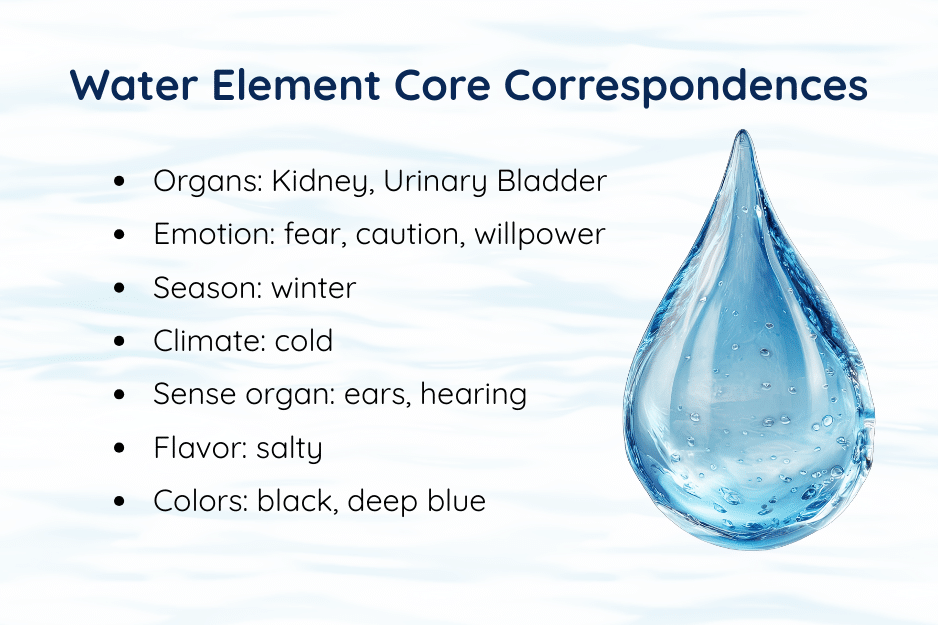
The Water element is linked with depth, wisdom, storage, and adaptation. It governs the Kidney and Bladder systems and expresses the emotion of fear in both healthy and excessive forms. Physically, it anchors the bones, lower back, hearing, and hair.
Core Correspondences
- Organs: Kidney, Urinary Bladder
- Emotion: fear, caution, willpower
- Season: winter
- Climate: cold
- Tissues: bones, marrow, brain, teeth, lower back, knees
- Sense organ: ears, hearing
- Fluids: urine, reproductive fluids, cerebrospinal fluid
- Flavor: salty
- Colors: black, deep blue
- Archetypes: sage, hermit, deep diver
In the Five Element Cycle
Water nourishes Wood, providing the foundation for growth and creativity. Earth moderates Water, preventing flooding or stagnation. Emotional imbalances show up in this cycle: chronic fear stalls Wood’s momentum, while excessive rumination (Earth) drains Water’s reserves.
Water Element Personality: Strengths, Challenges, and Relationship Patterns
Balanced Water personalities are deep thinkers with strong willpower and emotional steadiness. Imbalanced Water shows up as fearfulness, withdrawal, indecision, or rigidity.
Balanced Water Personality Traits
- Deeply introspective and observant
- Calm under pressure
- Patient and long-term oriented
- Comfortable with silence and solitude
- Emotionally steady, grounded, loyal
Signs of Water Deficiency
- Timidity or persistent fear
- Catastrophizing and worst-case thinking
- Overwhelm or inability to start tasks
- Exhaustion, low drive, desire to hide
- Craving salty foods, preferring to stay in bed
Signs of Water Excess or Stagnation
- Emotional coldness or detachment
- Withdrawal or secrecy
- Control-oriented behavior
- Resistance to change
- Hoarding energy, resources, information
Water Types in Relationships and Teams
Water types bring loyalty, patience, and deep listening. They excel at long-term planning and emotional insight. However, they may appear distant, struggle to articulate needs, or withdraw when stressed.
Other elements often perceive them differently: Wood may find them slow, Fire sees them quiet, Earth finds them stabilizing, Metal appreciates their thoughtfulness.
Constitution vs Temporary Imbalance
Some Water traits are lifelong patterns, while others arise from cold weather, exhaustion, trauma, or prolonged stress. Distinguishing between the two helps determine which lifestyle and emotional habits need adjusting.
Emotional and Mental Signs of Water Element Imbalance
The Water element governs fear, courage, and the capacity to respond to change. When imbalanced, fear becomes excessive and drains decision-making, confidence, and emotional stability.
Fear and the Willpower (Zhi)
Healthy fear guides wise decisions. Excessive fear freezes action and weakens Kidney Qi. Sudden shock, chronic anxiety, or prolonged overwhelm may deplete the deeper Jing (Essence), leaving a person feeling fragile or easily startled.
Exhaustion, Burnout, and Running on Empty
Long work hours, low-quality sleep, overstimulation, and insufficient rest produce classic Water depletion signs:
- Emotional numbness
- Loss of motivation
- Cynicism or apathy
- Feeling “empty” despite trying to push forward
Cognitive and Emotional Changes
- Brain fog or difficulty concentrating
- Forgetfulness under stress
- Rumination and avoidance
- Fear of change or unpredictability
- Difficulty trusting self or others
Water Element, Trauma, and Stress
Long-term stress or acute trauma can imprint on the Water element, particularly the Kidney–Bladder systems. This may appear as hypervigilance, chronic fear, or difficulty relaxing. A trauma-informed approach helps rebuild safety without blame.
Physical Signs in Kidney and Bladder Systems
Water imbalances often appear in the lower back, knees, bones, urinary system, and fluid regulation. These systems reflect both excess and deficiency patterns.
Musculoskeletal Signs
- Lower back pain
- Weak knees and ankles
- Stiffness intensified by cold weather
- Bone or joint weakness
Urinary, Fluid, and Reproductive Signs
- Edema or fluid retention
- Dark, scanty, or frequent urination
- Nighttime urination
- Recurrent UTIs or burning/urgency
- Fertility challenges or libido changes
- Menstrual irregularities or prostate issues
Hair, Teeth, and Hearing
- Premature graying
- Hair thinning
- Brittle teeth or bone density changes
- Tinnitus or decreased hearing
- Sensitivity to loud noises
Systemic Signs of Water Depletion
- Kidney Yang deficiency: cold feet, cold lower back, sluggishness, low energy
- Kidney Yin deficiency: night sweats, irritability, heat in palms/soles, disrupted sleep
Red Flags (Seek Medical Care)
- Blood in urine
- Severe pelvic or lower back pain
- Fever with urinary symptoms
- Sudden inability to urinate
- Sudden hearing loss
- Rapid, unexplained weight loss
Best Foods for Nourishing Your Water Element
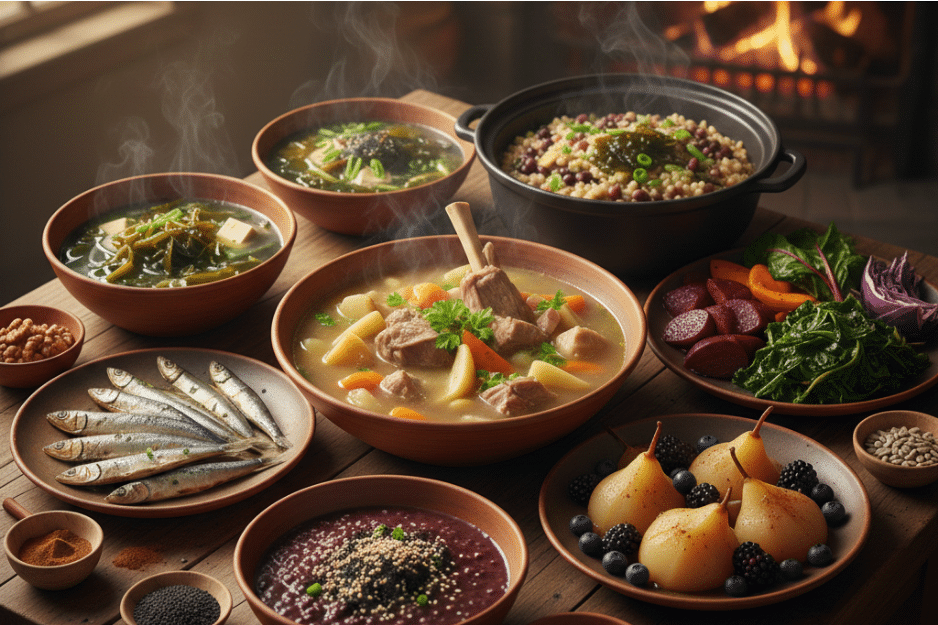
Warm, mineral-rich, gently salty foods strengthen Water energy. Seaweeds, dark beans, bone broth, and cooked winter vegetables build deep reserves.
Foundational Eating Principles
- Prefer warm, cooked meals
- Choose mineral-dense ingredients
- Include gentle salty flavors from whole foods
- Build consistent meal rhythms
- Eat with seasonal awareness, especially in winter
Salty and Mineral-Rich Foods
- Seaweeds: kelp, kombu, wakame, nori
- Small oily fish: sardines, anchovies
- Black beans, adzuki beans, barley, millet, black rice
- Walnuts, black sesame, pumpkin and sunflower seeds
Warming and Blood-Nourishing Foods
- Lamb, beef, bone broth
- Root vegetables, dark leafy greens
- Aromatics: ginger, garlic, leeks, onions, scallions
- Spices: cinnamon, cloves
Hydrating, Yin-Supportive Foods
- Soups and stews
- Congee and slow-cooked grains
- Stewed fruits, dark berries, pears
- Winter-friendly recipes like barley–bean stew or miso–seaweed soup
Foods and Habits That Drain Water
- Excess caffeine and stimulants
- Iced drinks
- Raw salads in cold seasons
- Ultra-processed salty snacks
- Late-night eating
- Overhydration without minerals
Sample 1-Day Winter Menu
Breakfast: ginger–black sesame congee
Lunch: barley, adzuki bean, and root vegetable stew
Dinner: miso broth with seaweed, bok choy, and small oily fish
Snacks: walnuts, roasted seeds, warm herbal tea
Hydration, Drinks, and Mineral Balance for Water Element Health
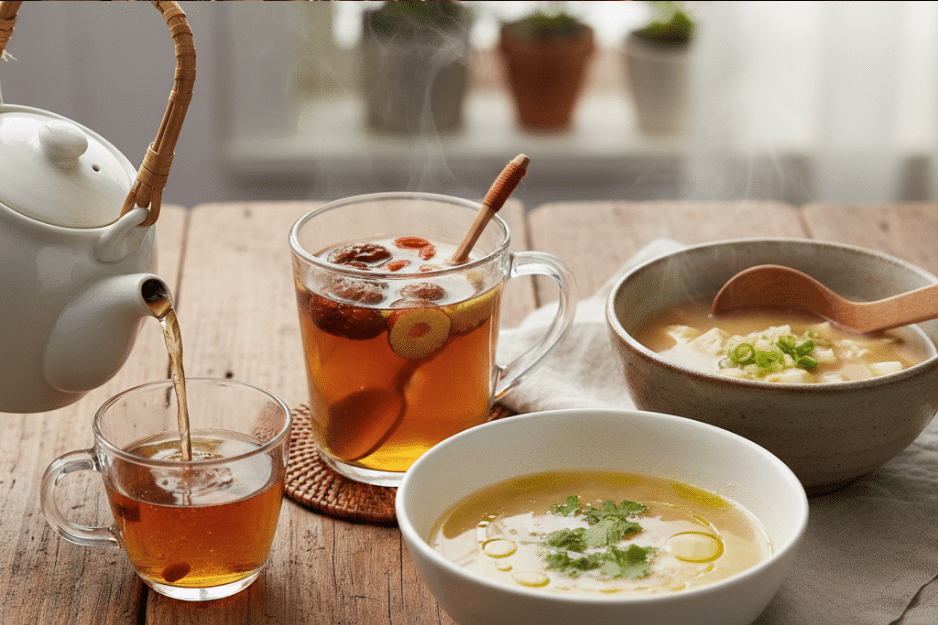
Warm hydration and mineral-rich drinks support Kidney function and fluid movement without overwhelming the system.
How to Drink for Water Health
- Sip warm or room-temperature water throughout the day
- Adjust intake to climate, fatigue level, and activity
- Avoid rapid, large gulps of cold water
Therapeutic Drinks
- Warm water with citrus
- Barley tea, roasted grain teas
- Goji–jujube infusions
- Light mineral broths
- Mild miso drinks
Minerals and Electrolytes
Mineral balance supports the TCM view of fluid transformation. Electrolytes can be helpful in heat, long workouts, or illness but are unnecessary for sedentary days.
Lifestyle Practices to Rebalance the Water Element

Gentle movement, proper rest, warmth, and grounding practices replenish the Water element and stabilize fear.
Rest, Sleep, and Pacing
- Earlier bedtimes, slower mornings
- Deeper rest in winter months
- Clear boundaries around downtime
- Days designed for recovery instead of constant output
Mindful, Fluid Movement
- Qigong
- Tai Chi
- Yin yoga
- Slow stretching
- Gentle walks
- Warm-water activities when appropriate
Nervous System Regulation
- Diaphragmatic breathing
- Humming or soft vocal toning
- Guided relaxation
- Journaling fears into actionable steps
- Simple mindfulness practices
Protecting Kidneys and Feet from Cold
- Warm socks
- Avoid standing barefoot on cold floors
- Lumbar wraps or warm packs
- Warm baths or Epsom salt soaks
Safe DIY Acupressure
- Kidney 1 (Yongquan): grounding
- Kidney 3 (Taixi): stabilizing
- Bladder 23 region: lower back nourishment
Use gentle pressure and avoid points during pregnancy or illness unless guided by a professional.
How TCM Practitioners Typically Support the Water Element
TCM practitioners combine observation, tongue and pulse assessment, and pattern diagnosis to choose treatments that rebuild Water’s depth and balance.
Assessment
Evaluation usually includes:
- Energy levels and sleep patterns
- Fear, stress, or trauma history
- Urinary patterns
- Bone and joint issues
- Pulse, tongue, and Five Element observations
Common Treatment Approaches
- For Yang deficiency: warming moxa, cooked foods, lifestyle pacing
- For Yin deficiency: nourishing herbs, hydration, early nights
- For Damp Heat: clearing and draining approaches
- For mixed patterns: sequential treatment to rebuild reserves
Modalities
- Acupuncture
- Moxibustion
- Cupping
- Gua sha
- Customized herbal formulas
- Dietary therapy plans
Integrating Western Medicine
Referrals for labs, imaging, or specialist care may be suggested for fatigue, urinary issues, hormonal changes, or bone concerns. Collaborative care ensures safety and helps track deeper changes.
Self-Reflection: Are You a Water Type or Just Temporarily Out of Balance?
A short self-check can help you understand whether your challenges reflect your natural constitution or a temporary imbalance.
Quick Self-Reflection Checklist
Ask yourself:
- Do I feel fear more often than I want to?
- Do I fatigue easily or need extra rest?
- Do I avoid change even when it’s needed?
- Do cold weather and winter drain me?
- Do I struggle with lower back or knee weakness?
- Do I crave salty foods?
- Do I withdraw when overwhelmed?
- Do I think in long-term patterns?
Interpreting Your Answers
- Consistent lifelong patterns may indicate a constitutional Water type.
- Recent changes tied to stress, aging, or winter suggest temporary Water depletion.
- Difficulty adapting or emotional coldness may suggest stagnation or excess.
What to Do Next
Begin with warm, mineral rich foods, proper hydration, warmth, pacing, and grounding movement. Regular meditation or mindful breathing can also stabilize fear, settle the nervous system, and help rebuild inner reserves. If signs continue, our trained TCM practitioner can assess your pattern more precisely and guide deeper treatment.
Frequently Asked Questions
What does the Water element represent?
The Water element represents wisdom, adaptability, and the body’s deepest energy reserves.
In TCM, Water governs the Kidney and Bladder systems, which store Jing (Essence), regulate growth, reproduction, and aging, and anchor the bones, lower back, knees, ears, and brain. Emotionally, Water expresses both healthy caution and excessive fear. When Water is balanced, a person shows calm insight and strong willpower. When disrupted, fear, fatigue, and instability tend to appear.
How do I know if my Water element is weak?
You can identify Water weakness if you have 3 or more of the following signs: fatigue, cold sensitivity, lower back or knee discomfort, fearfulness, urinary changes, or slow recovery after stress.
Water deficiency often appears as low energy that does not improve with rest, cold feet or a cold lower back, increased fear or anxiety, weak knees or lower back pain, frequent nighttime urination, or difficulty bouncing back after emotional or physical strain. If these signs persist for several weeks or worsen in winter, your Water element is likely depleted.
Can food alone fix a Water imbalance?
Food alone can correct mild Water imbalances, but moderate or severe patterns usually require additional support.
Warm, mineral rich foods strengthen Kidney and Bladder function, but deeper issues like chronic fatigue, long term stress, recurrent UTIs, or Yin and Yang deficiency often require a combination of rest, hydration, lifestyle pacing, herbal formulas, or acupuncture. Food is the foundation, but it usually works best when combined with other supportive therapies.
How long does rebalancing the Water element take?
Mild imbalance improves in 2 to 4 weeks, while deep depletion may require 2 to 6 months of consistent habits.
The Water element governs Jing, which replenishes slowly. If the imbalance is recent, focused lifestyle changes and warm foods bring noticeable improvements within a few weeks. If the imbalance developed over years, you may need ongoing rest, nourishment, and targeted treatments for several months. Progress tends to be gradual and steady rather than rapid.
Is the Water element the same as Western kidney disease?
No. The Water element does not diagnose kidney disease or replace medical testing.
In TCM, the Kidney system includes energetic, emotional, and developmental functions that do not appear in Western anatomy. A person can have a Water imbalance even if their lab tests are normal. Likewise, someone with kidney disease may not have a Water imbalance. If you have urinary pain, swelling, blood in urine, or abnormal lab values, a medical evaluation is required regardless of Water patterns.
Can someone have too much Water element?
Yes, excess Water can occur and usually shows up as emotional withdrawal, coldness, or rigidity in thinking or behavior.
Water excess may include feeling emotionally shut down, avoiding connection, resisting change, or becoming overly cautious. Physically, the body may feel cold, stiff, or heavy. The goal is not to reduce Water entirely but to restore movement and warmth through grounding exercise, warm foods, social connection, and gentle circulation-focused therapies.
Integrating Water Wisdom Into Everyday Life

Water wisdom invites you to honor rest, deepen your insight, and move through life with steadiness instead of urgency. It encourages you to understand your natural rhythms so you can protect your energy during demanding phases and rebuild your reserves before you start to feel depleted.
Living seasonally means leaning into rest during winter, pacing life transitions, and strengthening your foundation before periods of growth. During intense work seasons or emotional upheaval, Water practices help create stability at a time when everything else feels uncertain.
At ACA Acupuncture and Wellness, we support this process with therapies that nourish the Water element and help restore balance on a deeper level. Our thermal therapy rooms encourage warmth and circulation. Our acupuncture, cupping, moxibustion, and reflexology sessions help release tension, regulate energy, and strengthen the Kidney and Bladder systems. We also guide patients through gentle lifestyle and food recommendations that reinforce long-term resilience.
The Water element teaches that healing begins with stillness and awareness. Listening to the early whispers of imbalance, instead of waiting for stronger symptoms, allows you to support your energy before depletion sets in. By living in rhythm with the seasons and your unique constitution, and by receiving consistent care when needed, you build a steadier foundation for clarity, confidence, and emotional strength throughout the year.
If you would like personalized guidance or feel ready to start strengthening your Water element, contact us to book an appointment. We are here to support your healing at every step.
Sources:
Xie, L., & Zi, Y. (2024). Application of psychotherapy based on five-element theory in Traditional Chinese Medicine in improving the mental states of patients with post-stroke depression. Frontiers in Psychiatry, 15, Article 11319754.

Cart (0)
Your cart is currently empty.


Cart (0)
Your cart is currently empty.