

Acupuncture for Biceps Femoris Pain: Effective Treatment for Hamstring Strain and Posterior Thigh Pain
Key Takeaways:
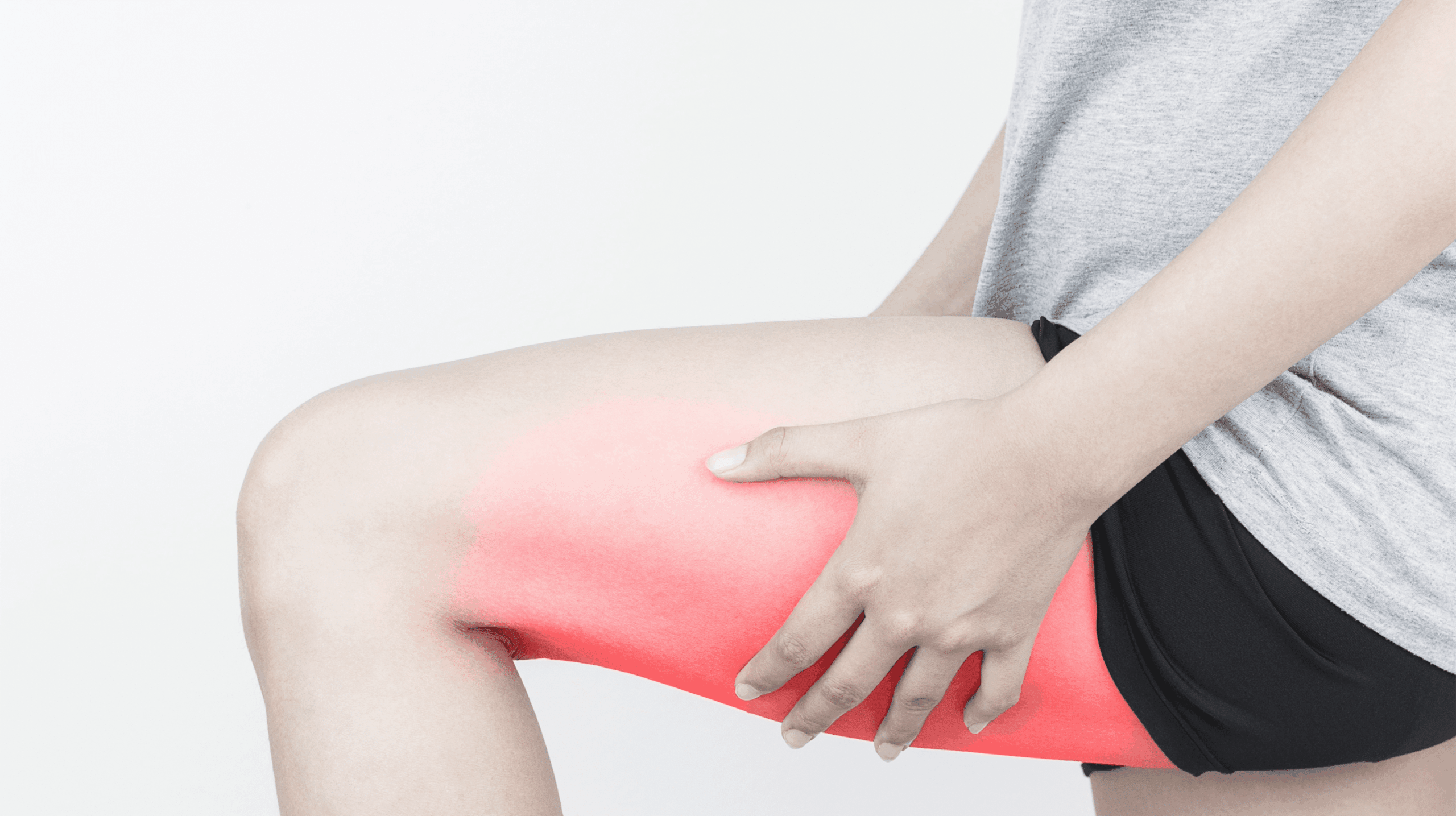
- Biceps femoris pain is highly specific and often feels sharp or localized, making it different from general hamstring tightness.
- Acupuncture treats both the painful muscle and the underlying pelvic or biomechanical imbalances that cause recurring strain.
- Targeted acupuncture points, trigger point release, and electroacupuncture accelerate healing and restore proper muscle function.
- Pairing acupuncture with glute activation, core stabilization, and controlled strengthening leads to faster and more complete recovery.
- Early treatment, proper load management, and improved movement mechanics significantly reduce the risk of future biceps femoris injury.
What Is Biceps Femoris Pain?
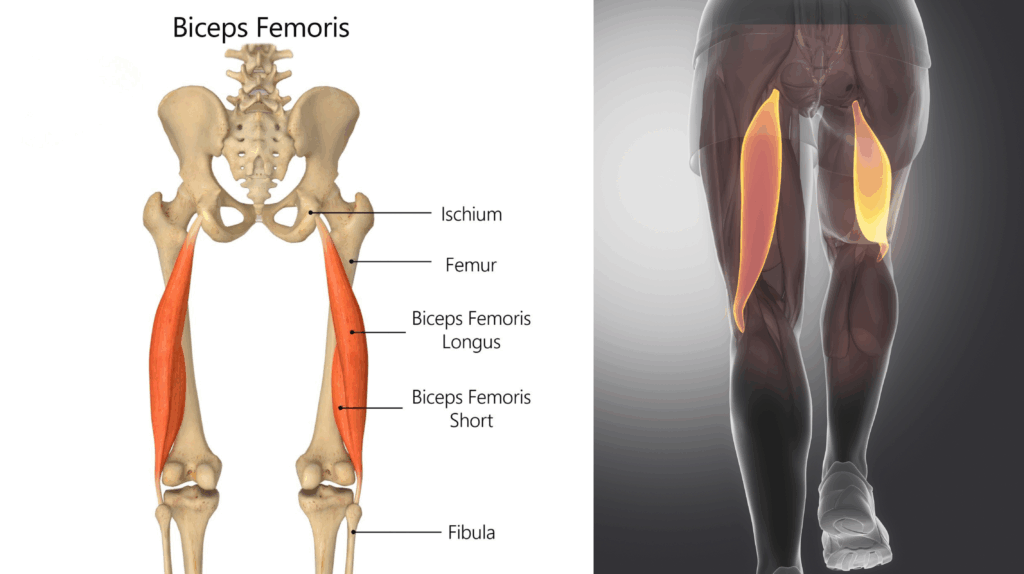
The two parts of the biceps femoris include:
- Long head which begins at the pelvis and helps extend the hip
- Short head which attaches to the femur and assists with knee flexion
Because each head performs a unique action, discomfort can show up in several locations rather than in one predictable spot.
Common pain locations include:
- High hamstring area near the sit bone
- Outer posterior thigh
- Behind the knee
- Lateral hamstring tightness during bending or squatting
Biceps Femoris Pain Compared With General Hamstring Tightness
General hamstring tightness usually feels like a uniform stiffness running along the entire back of the leg.
Biceps femoris pain, on the other hand, is more specific. It often feels sharp, localized, or pulling along the outer portion of the thigh, especially during running, bending, or quick directional movements.
Associated Issues
This muscle rarely becomes painful on its own. Its function is closely tied to the pelvis, hips, and lower back, which means imbalances in these areas can easily overload the outer hamstring.
Common contributing issues include:
- Pelvic rotation that alters hamstring tension
- Weakness in the gluteus medius leading to poor hip stability
- Sacroiliac joint irritation that changes movement patterns
- Sciatic nerve tension that increases sensitivity and tightness
- Faulty running mechanics or lifting technique
Because these interconnected structures directly influence the biceps femoris, treating the muscle alone is rarely enough. Long-term relief requires correcting the underlying biomechanical patterns that keep overloading it.
What Causes Biceps Femoris Pain?
Biceps femoris pain usually develops when the outer hamstring is overloaded, strained, or forced to compensate for nearby weaknesses or alignment issues. The causes can be mechanical, training-related, or posture-related, and most cases involve more than one factor.
Common causes include:
- Grade I to Grade III hamstring strains from sprinting, heavy lifting, or sports
- Overstriding while running
- Errors in sprinting or acceleration mechanics
- Deadlift or Romanian deadlift form issues
- Pelvic misalignment or SI joint dysfunction
- Weak glutes or weak core stability
- Sudden increases in training volume or intensity
- Long periods of sitting that shorten the hamstrings
- Myofascial trigger points in the posterior thigh
- Referred pain from the lumbar spine, piriformis, or gluteus minimus
A skilled clinician will evaluate all of these contributing factors, not just the spot where the pain is felt. This is essential for preventing reinjury and restoring normal movement.
Symptoms: How Do You Know It’s the Biceps Femoris?

Common symptoms include:
- Pain or tightness on the outer back of the thigh
- Pain behind the knee, especially during bending or pushing off
- Sudden sharp pain during a sprint, lunge, or quick acceleration
- A tight rope–like sensation that does not release with stretching
- Bruising or swelling in moderate or severe strains
- A feeling that the hamstring might give way under load
- Difficulty accelerating, climbing stairs, or performing explosive movements
If stretching makes the pain sharper or more irritated, the biceps femoris is often the primary muscle involved rather than the entire hamstring group.
How Acupuncture Treats Biceps Femoris Pain
1. Releases Tight Fibers and Trigger Points
Trigger points in the biceps femoris can cause stabbing pain, deep tension, or nerve-like discomfort. Acupuncture stimulates motor points to reset dysfunctional muscle fibers and release knots immediately.
2. Improves Local Circulation and Tissue Repair
Acupuncture increases blood flow to the injured area, delivering oxygen and nutrients while clearing inflammatory waste. This accelerates the muscle’s natural healing timeline.
3. Reduces Inflammation and Swelling
Research shows acupuncture regulates inflammatory chemicals (cytokines, prostaglandins), reducing swelling and pain without relying on medication.
4. Calms Nerve Irritation and Sciatic-Related Pain
A tight biceps femoris can irritate the sciatic nerve or mimic sciatic symptoms. Acupuncture improves nerve conduction and interrupts pain signaling patterns.
5. Corrects Muscle Imbalances That Led to the Injury
Acupuncture does more than reduce pain in the biceps femoris. It also targets the surrounding structures that contributed to the strain in the first place. By restoring balance throughout the posterior chain and pelvis, the muscle can heal properly and remain resilient during movement.
Areas commonly addressed include:
- Weak glute muscles that force the hamstring to overwork
- Tight hip flexors that pull the pelvis forward and shorten the hamstrings
- Pelvic rotation that increases tension on the outer hamstring
- Tight calf muscles that alter running mechanics and load distribution
By correcting these imbalances, acupuncture supports a more stable movement pattern and helps prevent the pain from returning.
6. Supports Long-Term Prevention
Acupuncture enhances neuromuscular coordination and retrains the hamstring to activate at the right time during movement. When the muscle fires efficiently and in sync with the glutes and core, the risk of future strain is significantly reduced. This makes acupuncture not only a treatment for current pain but also an important tool for long-term injury prevention.
Acupuncture Points for Biceps Femoris & Hamstring Pain
A targeted acupuncture approach combines local points, distal points, and precise trigger point needling to release tension, improve circulation, and correct the biomechanical patterns contributing to outer hamstring pain.
Local Points
These points sit directly along the hamstring pathway and help reduce pain, release knots, and improve muscle function:
- BL36 (Chengfu) located at the upper hamstring
- BL37 (Yinmen) located along the mid posterior thigh
- BL38 (Fuxi) located on the outer posterior thigh
- BL39 and BL40 supporting both the knee and the hamstring connection
- GB30 (Huantiao) addressing gluteal tension and high hamstring issues
- Ashi or trigger points placed directly over the biceps femoris
Distal Points
These points support healing by improving circulation, relaxing the posterior chain, and balancing the lower limb:
- GB34 supporting tendons and ligaments
- ST36 enhancing blood flow and recovery capacity
- BL58, KI3, and SI3 strengthening the posterior chain
Trigger Point Acupuncture Notes
Trigger point needling is often essential for true biceps femoris release. A quick twitch response indicates the needle has reached the irritated muscle band and released the knot. Mild soreness afterward is common and typically resolves within twenty-four hours. Deep needling of the hamstring should always be performed by an experienced practitioner who understands anatomy and safe needle depth.
Does Acupuncture Really Work for Hamstring Strain?
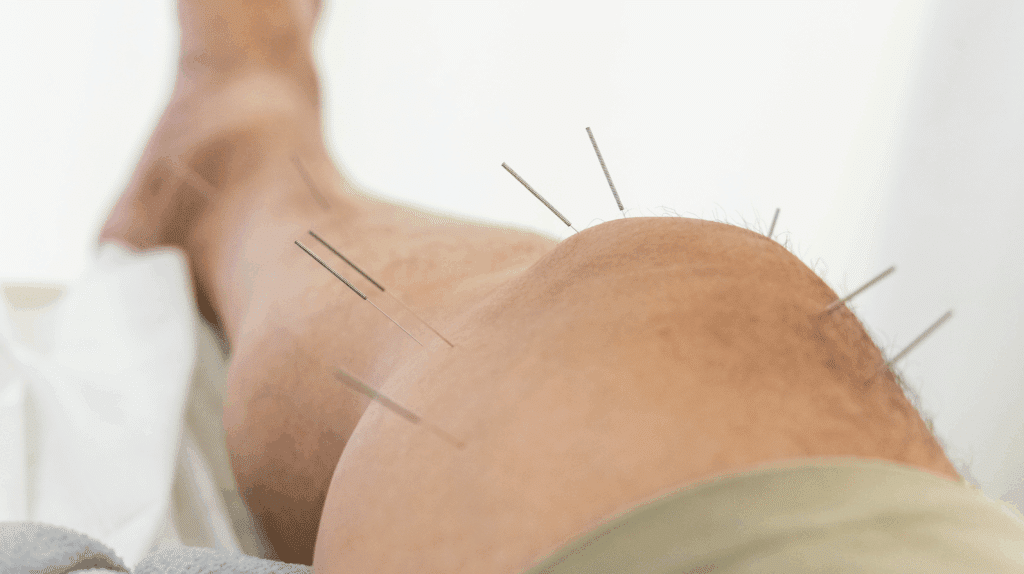
Current evidence from clinical trials and sports medicine research supports acupuncture as an effective therapy for hamstring strains and posterior thigh pain. Findings across multiple studies demonstrate measurable improvements in both short-term symptoms and long-term functional outcomes.
Research consistently shows that acupuncture:
- Reduces hamstring pain more quickly than standard care alone
- Improves range of motion and functional strength during rehabilitation
- Enhances muscle repair by increasing local microcirculation in the injured area
- Lowers the recurrence rate compared with stretching or conservative therapy alone
- Produces the strongest results when combined with electroacupuncture or physiotherapy
Because of these documented effects, acupuncture is widely used in sports medicine settings and Traditional Chinese Medicine clinics as a primary intervention for hamstring injuries.
What to Expect During an Acupuncture Session
Acupuncture for biceps femoris and hamstring pain follows a structured process designed to identify the root cause of your symptoms and release tension along the entire posterior chain. Each session combines assessment, targeted needling, and supportive therapies to improve healing and restore proper muscle function.
During your session, your practitioner will typically:
- Assess your posture, gait, pelvic alignment, and hamstring length
- Palpate the biceps femoris to identify tender points and trigger points
- Insert needles into local points, distal points, and motor points
- Elicit sensations such as warmth, heaviness, tingling, or a brief twitch response
- Add supportive therapies such as heat therapy, cupping, or electroacupuncture when needed
- Conduct a full treatment lasting approximately twenty-five to forty-five minutes
Typical Treatment Schedule
Each case responds differently depending on strain severity, tissue healing speed, and underlying imbalances. Most patients begin to feel improvement within a few sessions.
- Grade I strain: two to four sessions
- Grade II strain: four to eight sessions
- Chronic tightness or recurrent hamstring problems: four to ten sessions
Electroacupuncture for Biceps Femoris Pain
Electroacupuncture is often used when the hamstring needs deeper stimulation than manual needling can provide. A mild electrical current is applied between needles to activate muscle fibers, enhance circulation, and accelerate tissue repair. This technique is especially effective for patients with persistent outer hamstring pain or recurring biceps femoris strain.
Electroacupuncture helps by:
- Stimulating deeper layers of the muscle
- Reducing local inflammation in the posterior thigh
- Improving tendon healing and collagen remodeling
- Relieving irritation along the sciatic nerve pathway
Electroacupuncture works best for:
- Moderate hamstring strains
- Chronic lateral hamstring tightness
- High hamstring tendinopathy
- Sciatica-like symptoms involving the biceps femoris
Cupping, Gua Sha, and TCM Soft Tissue Therapies
Traditional Chinese Medicine often pairs acupuncture with manual soft tissue therapies to improve circulation, release stubborn tension, and support faster recovery. These treatments target the fascia, tendons, and muscle layers along the posterior chain, making them especially effective for biceps femoris strain and chronic hamstring tightness.
Fire Cupping or Sliding Cupping
- Releases fascial adhesions along the Bladder channel
- Increases blood flow and speeds tissue repair
- Reduces deep, rope-like tightness in the outer hamstring
Gua Sha
- Breaks down chronic muscular tension and scar-like restrictions
- Improves mobility in long-standing hamstring issues
- Encourages microcirculation and reduces local inflammation
Combined Treatments
- Acupuncture paired with cupping and targeted stretching produces faster and more complete results than using any one method alone
- This combination addresses muscle fibers, fascia, and movement patterns
Western Medicine vs Acupuncture for Hamstring Strain
Both Western sports medicine and acupuncture play valuable roles in treating hamstring injuries, but they approach the problem from different angles. Understanding how each method works helps patients choose a more complete and effective recovery plan.
Western Medicine Approach
Common interventions include:
- MRI or ultrasound imaging for moderate to severe injuries
- Rest, NSAIDs, and structured physical therapy
- Ice, compression, and gradual stretching
- Strength rehabilitation once pain decreases
Limitations of this approach:
- Stretching too early can aggravate the injured fibers
- Pain may return if pelvic or muscular imbalances are not corrected
- Rest alone does not address fascial tension, neuromuscular activation issues, or trigger points
- Athletes often experience reinjury when the underlying dysfunction remains untreated
Acupuncture Approach
Acupuncture focuses on:
- Relieving hamstring pain without medication
- Correcting biomechanical and channel imbalances that overload the biceps femoris
- Improving microcirculation to accelerate muscle fiber repair
- Releasing trigger points and restoring proper muscle activation
- Supporting a smoother and faster return to activity
Acupuncture is especially effective when combined with physiotherapy, strength training, and mobility work, as this integrated approach addresses both the injury and the movement patterns that contributed to it.
At-Home Care to Support Your Acupuncture Results
Acupuncture accelerates recovery, but what you do between sessions plays a major role in how quickly the biceps femoris heals. A structured home program helps protect the injured muscle, restore strength, and prevent the pain from coming back.
Immediate (Acute) Phase
In the first forty-eight to seventy-two hours, focus on protection and gentle movement:
- RICE vs METH method
Use RICE (rest, ice, compression, elevation) immediately after a sharp strain or sudden injury.
Use METH (movement, elevation, traction, heat) for lingering tightness or chronic hamstring irritation.
- Avoid deep stretching in early recovery
Overstretching irritated fibers can delay healing and increase pain.
- Gentle, pain-free mobility
Light range-of-motion work keeps the posterior chain active without stressing the injured area.
Recovery Phase
Once the pain starts improving and acupuncture is underway, shift toward rebuilding strength and alignment:
- Glute activation – Helps reduce the load placed on the biceps femoris during walking, running, and lifting.
- Hip and core stabilization – Promotes balanced movement patterns and prevents the hamstrings from compensating.
- Pelvic alignment drills – Corrects rotations and tilts that often contribute to outer hamstring strain.
- Hamstring-safe strengthening – Focus on slow, controlled exercises that challenge the muscle without overstretching it.
- Smart stretching progressions – Introduce flexibility work gradually, emphasizing controlled, pain-free movement
When to See a Professional: Red Flags You Shouldn’t Ignore
While mild hamstring tightness often improves with rest and acupuncture, certain symptoms indicate a more serious injury that should be evaluated by a qualified practitioner or sports medicine provider. Seek professional care immediately if you notice:
- A loud pop during activity
- Sudden loss of strength or the inability to bear weight
- Significant or rapidly spreading bruising
- Sharp walking pain that does not improve
- Symptoms radiating into the lower spine, calf, or foot
- Signs of a possible tendon avulsion
These issues may involve higher-grade muscle tears, nerve involvement, or tendon damage and should be assessed promptly to prevent long-term complications.
Prevention: How to Avoid Future Biceps Femoris Pain
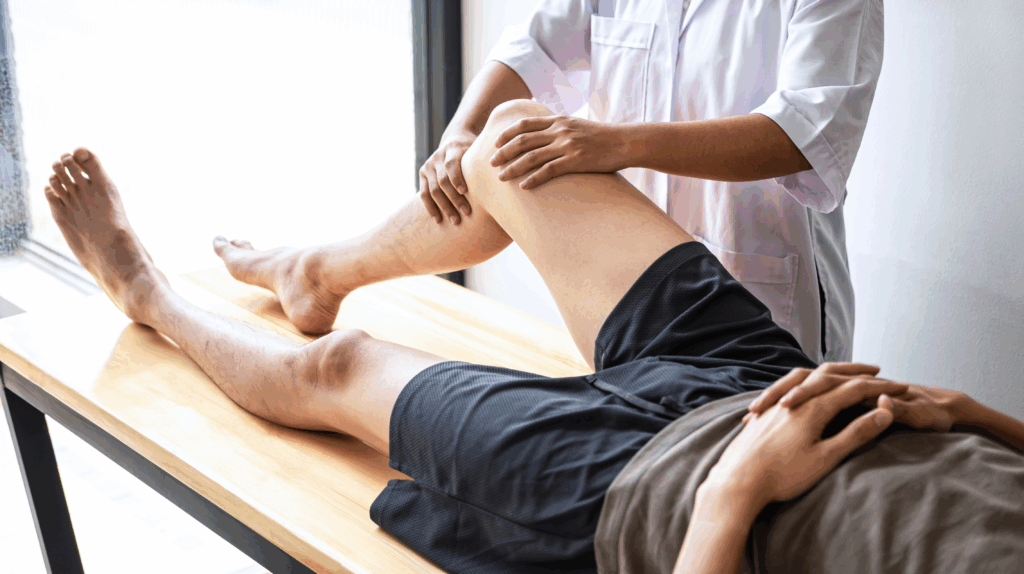
Preventing another hamstring strain requires addressing the factors that overload the biceps femoris in the first place. Consistent training habits and proper movement patterns help protect the outer hamstring from recurring tension.
Key prevention strategies include:
- Controlling training load increases and avoiding sudden spikes in intensity
- Improving running mechanics to reduce overstriding and outer-hamstring overload
- Warming up dynamically rather than using long passive stretches
- Building glute strength and hip stability to offload the hamstrings
- Integrating regular mobility work for the hips and posterior chain
- Strengthening the hamstrings eccentrically to improve resilience during high-speed movement
A Smarter, Faster Path to Pain-Free Movement
Biceps femoris pain does not have to limit your training or interfere with your daily life. With the right treatment plan, the hamstring can heal fully and regain its natural strength, flexibility, and stability. At ACA Acupuncture and Wellness, we take a holistic approach that goes beyond symptom relief. Our practitioners identify the underlying imbalance that placed stress on the outer hamstring and create a customized treatment plan that supports long-term recovery.
Acupuncture provides a safe, natural, and evidence-based way to ease pain and restore proper muscle function. If your symptoms keep returning or stretching has not helped, this may be the step that finally allows your body to move freely again. At ACA, we combine acupuncture with complementary therapies such as cupping therapy, tuina massage, ear seeding, moxibustion, reflexology, and sessions in our thermal therapy room to enhance circulation, release deep tension, and support the entire healing process.
We are here to help you move comfortably, recover fully, and return to the activities you love with confidence.
Sources:
Carvalho, R. M., Machado, J., Santos, M. J., & Matos, L. C. (2023). Can acupuncture improve the flexibility of hamstring muscles? A randomized, blinded, and controlled pilot study. Healthcare, 11(4), Article 616.
Mild Grade I strains typically improve within two to three weeks when acupuncture is combined with proper rest, mobility work, and glute activation. Grade II strains may require four to six weeks. Chronic or recurring outer-hamstring pain takes longer because pelvic mechanics, nerve tension, and muscle imbalances must be corrected. Many patients feel noticeable improvement within two to four acupuncture sessions.
Yes. Acupuncture can relieve pain referred from the lumbar spine, piriformis muscle, or sciatic nerve irritation. By improving local circulation, calming irritated nerve pathways, and releasing tight muscles in the posterior chain, acupuncture helps reduce both direct and referred pain patterns that mimic biceps femoris strain.
Acupuncture is considered safe for athletes when performed by a licensed practitioner. Most treatments do not require downtime, and many athletes receive acupuncture weekly during training blocks to maintain flexibility, reduce tightness, and prevent reinjury. Deep needling of the hamstring may cause temporary soreness, so scheduling sessions away from speed or heavy lifting days is recommended.
Yes. Research and clinical practice show that acupuncture improves neuromuscular coordination, reduces fascial tension, and corrects pelvic and hip imbalances that overload the biceps femoris. When combined with strength training and proper load management, acupuncture significantly lowers the risk of future strain.
Dry needling focuses solely on releasing trigger points in the muscle. Acupuncture includes trigger point work but also addresses circulation, nerve function, pelvic alignment, and channel pathways that influence the hamstring. For complex cases involving the biceps femoris, acupuncture often provides broader and longer-lasting results.
Acupuncture is effective for high hamstring tendinopathy because it increases microcirculation at the tendon, reduces local inflammation, and releases surrounding muscle tension that keeps the tendon irritated. Electroacupuncture and cupping can further improve healing by stimulating collagen repair and reducing deep adhesions at the sit-bone attachment.
Testimonials

Cart (0)
Your cart is currently empty.


Cart (0)
Your cart is currently empty.