

Acupuncture for Golfer’s Elbow: How It Helps with Pain and Tendon Healing
Key Takeaways
- Golfer’s elbow is usually a tendinopathy where the wrist-flexor tendons attach to the inner elbow, so lasting recovery requires progressive loading, not just symptom control.
- Acupuncture can reduce pain and forearm muscle guarding, which helps you tolerate tendon rehab and daily tasks with less flare-up.
- Many people feel meaningful relief within 3–6 sessions, but tendon remodeling typically takes weeks of consistent strengthening and load management.
- Best outcomes come from combining acupuncture with targeted forearm strengthening, grip capacity work, and practical changes to golf volume or work ergonomics.
- Get evaluated if you have numbness or tingling into the hand, clear weakness, severe swelling or redness, fever, or a traumatic onset.
What Is Golfer’s Elbow? Understanding the Tendon Injury Behind Inner Elbow Pain

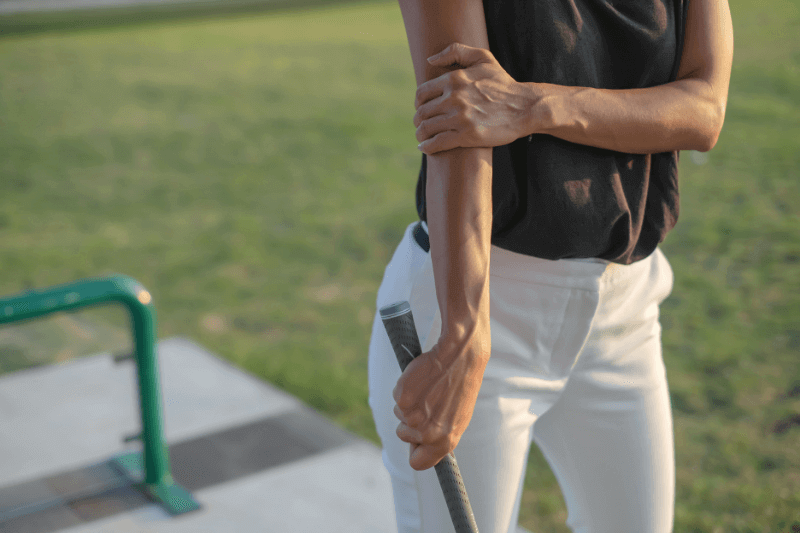
Golfer’s elbow, or medial epicondylitis, refers to pain on the inside of the elbow at the medial epicondyle, where the common flexor tendon anchors muscles that flex the wrist and support gripping. The tissues most often involved are the flexor-pronator group, which can include the pronator teres and wrist-flexor tendons that share that attachment point.
This is why it often hurts with:
- Gripping and carrying
- Wrist flexion under load (curling, lifting a pan, picking up a bag)
- Forearm pronation (turning the palm down)
- Repetitive pulling motions and tool use
A key nuance: inner elbow pain is not always golfer’s elbow. Ulnar nerve irritation can create tingling into the ring and pinky finger. Neck or shoulder mechanics can shift load to the elbow. A good plan screens for these contributors instead of treating the elbow as an isolated problem.
Symptoms of Golfer’s Elbow (Medial Epicondylitis)
Golfer’s elbow symptoms typically include pain and tenderness on the inside of the elbow, discomfort with gripping and wrist flexion, and aching that can spread into the inner forearm. Symptoms often build gradually from repetitive use and flare during activities that load the wrist flexor and pronator tendons.
Most common symptoms
- Inner elbow pain at the bony bump (medial epicondyle), especially when pressed
- Pain with gripping (opening jars, carrying bags, squeezing, shaking hands)
- Pain with wrist flexion (curling the wrist, lifting with palm up, pushing up from a chair)
- Pain with forearm pronation (turning the palm down, using a screwdriver, certain golf swing phases)
- Forearm tightness or a “ropey” feeling in the flexor-pronator muscles
- Reduced grip strength or endurance, often due to pain inhibition rather than true weakness
- Morning stiffness or soreness that eases as the arm warms up, then returns after use
Where the pain can radiate
- Down the inner forearm toward the wrist
- Sometimes into the palm side of the forearm muscles, especially after repetitive gripping
Symptoms that suggest it may not be “just” golfer’s elbow
These do not automatically mean something serious, but they change the workup:
- Tingling or numbness in the ring and pinky finger (possible ulnar nerve involvement)
- Frequent dropping of objects or clear loss of hand strength
- Pain that feels electric, persistent burning, or radiates beyond typical tendon patterns
- Significant swelling, redness, fever, or pain that wakes you at night
Quick self-check that matches common triggers
If pain reliably spikes with grip + wrist flexion + pronation, and the sore spot is on the inside elbow, golfer’s elbow becomes more likely. If symptoms are mostly tingling or numbness into the hand, nerve irritation moves higher on the list.
How Acupuncture Helps Golfer’s Elbow in the Body You Actually Live In

The reason acupuncture can feel helpful quickly is not because it “turns the tendon new.” It is because it changes the conditions that keep the tendon irritated: pain sensitivity, muscle guarding, circulation, and movement tolerance.
Pain reduction that improves function, not just comfort
With golfer’s elbow, pain can become amplified by a sensitized nervous system, especially when the issue has lingered. Acupuncture is commonly used to modulate pain through neurochemical pathways that influence how strongly pain signals are perceived. Practically, this often shows up as:
- Less sharp pain when gripping or lifting
- Reduced aching that spreads down the forearm
- Better tolerance for daily tasks and rehab exercises
When pain drops, people stop bracing and guarding. That alone can change elbow mechanics in a way that reduces ongoing tendon strain.
Releasing the forearm’s “protective clamp”
One of the most overlooked drivers of medial elbow pain is forearm muscle guarding. The flexor-pronator mass often tightens to protect the sore attachment point. The problem is that constant tightness keeps pulling on the tendon insertion all day, even when you are not doing anything athletic.
Skilled needling in the forearm muscles can reduce this guarding. When the flexors and pronators soften, many people notice:
- Easier wrist and elbow motion
- Less “tugging” sensation at the inner elbow
- Improved grip comfort and endurance
This is also why some patients report that acupuncture helps them return to rehab sooner. If your forearm is no longer clamped, exercise form improves and flare-ups become less frequent.
Improving local circulation where tendons heal slowly
Tendons generally have less robust blood supply than muscles, which is one reason tendon pain can linger. Needling near the involved tissues can increase local microcirculation. That supports a healthier tissue environment by improving oxygen and nutrient delivery and helping clear irritating byproducts.
This works best when it is paired with graded loading, because circulation and mechanical stimulus together are what push tendon adaptation forward.
Calming tendon reactivity and inflammatory signaling
In early or highly reactive cases, the inner elbow can behave like it is “on edge.” Even normal tasks can provoke symptoms. Acupuncture is commonly used as a non-drug approach to reduce pain and calm tissue irritability. For people who cannot tolerate anti-inflammatories or who want to avoid repeated medication cycles, this becomes a practical option to help them keep moving while they rebuild.
Restoring mobility and grip by lowering the pain barrier
Mobility often improves after pain decreases and muscles relax. This is not a placebo-style benefit. When pain is high, the brain limits motion and strength output as a protective strategy. When that protective alarm quiets, range of motion and grip performance often rebound, which becomes the gateway to real strengthening.
What an Acupuncture Plan Usually Looks Like for Golfer’s Elbow
A focused treatment approach typically blends three targets:
- Local needling around the medial epicondyle region for pain modulation and local tissue effects
- Forearm needling along the flexor-pronator chain to reduce tension that overloads the tendon
- Distal points (hand, wrist, opposite arm, sometimes shoulder or neck) to support analgesia and improve movement patterns that affect elbow load
Most sessions include needle retention in the 15–30 minute range. Many clinics start more frequently in the beginning, then space treatments as symptoms stabilize and strengthening becomes the primary driver.
Manual acupuncture, electroacupuncture, and dry needling: what’s different in practice
- Manual acupuncture tends to feel gentler and is often used for pain regulation and muscle relaxation.
- Electroacupuncture adds a mild pulsing stimulation and is sometimes used when pain is stubborn or guarding is strong.
- Dry needling is typically more trigger-point focused, can feel more intense, and may cause more post-treatment soreness.
The most important variable is not the label. It is whether the approach reduces pain and guarding enough to let you build tendon capacity without repeated flare-ups.
Acupuncture Points Commonly Used for Golfer’s Elbow (Medial Epicondylitis)
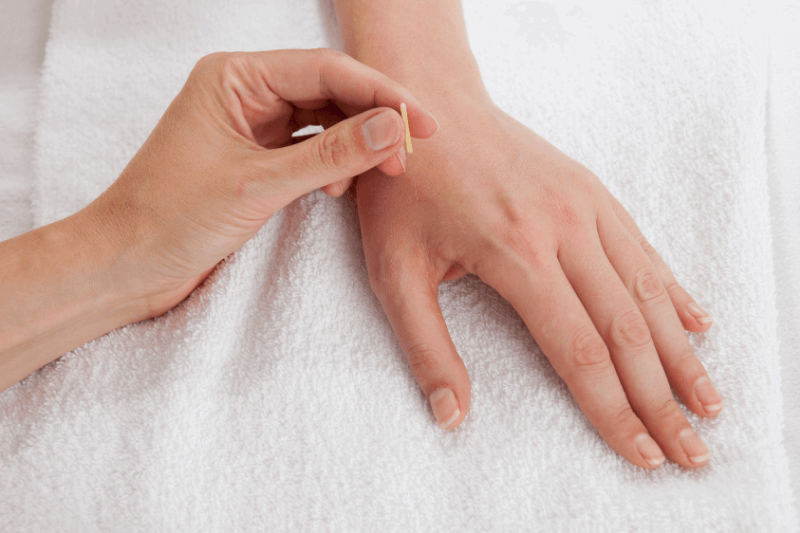
Practitioners typically combine local elbow points, forearm muscle points, and distal points that support pain modulation and tissue recovery. Point selection is individualized based on where tenderness concentrates (medial epicondyle vs flexor-pronator mass), whether pain refers into the forearm, and whether nerve irritation or shoulder mechanics are contributing.
Local elbow points (inner elbow focus)
These points are often used to address pain and tenderness at the medial epicondyle region and improve local tissue response:
- HT3 (Shaohai) – commonly used for inner elbow pain and local sensitivity near the medial elbow crease
- HT7 (Shenmen) – often paired when pain tracks along the Heart channel line into the forearm/wrist
- SI8 (Xiaohai) – frequently used for elbow pain around the joint region, especially when stiffness is present
- LI11 (Quchi) – widely used for elbow pain and to support pain and inflammation modulation (often combined with local medial points even though it’s lateral)
- Ashi points (tender points) – palpated points directly over the painful tendon attachment and along the flexor-pronator mass
Forearm points that target the flexor-pronator chain (tension and “tug” reduction)
These are often chosen to reduce the forearm’s protective clamping and decrease constant pull on the tendon origin:
- PC6 (Neiguan) – commonly used for forearm pain and tension patterns; often selected when symptoms radiate down the inner forearm
- PC7 (Daling) – used when wrist and forearm flexor tension is prominent
- LU7 (Lieque) – sometimes used when forearm mechanics and wrist mobility are part of the load pattern
- Local motor points in the flexor-pronator mass – not a single named acupoint, but clinically important for releasing pronator teres and wrist flexor trigger points
Distal points (systemic analgesia and regulation, used to “turn down” pain)
These points are often used to support nervous system regulation and reduce pain sensitivity when the elbow is highly reactive:
- LI4 (Hegu) – commonly used for pain modulation and as a general distal point for upper-limb conditions
- SJ5 (Waiguan) – frequently used for arm pain patterns and to support functional recovery along the forearm
- ST36 (Zusanli) – often used to support recovery capacity and systemic regulation in persistent cases
- SP6 (Sanyinjiao) – sometimes included when sleep, stress load, or systemic tension is amplifying pain sensitivity
When practitioners add shoulder/neck points
If shoulder mechanics, posture, or upper back tension are increasing elbow load, clinicians may include points such as:
- GB21 (Jianjing) and/or SI11 (Tianzong) – commonly used for shoulder and upper back tension patterns that affect arm mechanics
- LI15 (Jianyu) – used when shoulder motion restriction is contributing to overload downstream
Practical note to keep it credible
Point selection is not “one-size-fits-all.” A higher-quality approach is based on palpation (tenderness mapping), grip and wrist testing, and how symptoms behave after activity. That is why the same diagnosis can look like different point combinations in different patients.
Results Timeline: What Changes Fast and What Takes Real Time
Many people notice early changes within a few sessions, and a common pattern in clinical practice is meaningful relief within 3–6 sessions. That early improvement is usually driven by pain modulation and reduced muscle guarding.
But tendon recovery follows a different clock:
- Short-term (first 1–2 weeks): pain is lower, motion is easier, daily tasks feel less threatening
- Mid-term (weeks 3–8): grip endurance improves, flare-ups reduce, strength progression becomes steady
- Longer-term (2–4 months): tendon capacity catches up to sport and work demands, relapse risk drops
If you feel better but you have not rebuilt capacity, the condition often returns the moment you increase volume again. Treat early relief like a window of opportunity, not the finish line.
How to Cure Golfer’s Elbow: Acupuncture Plus Progressive Tendon Rehab

If you want results that last, the central goal is simple: reduce the tendon’s daily irritant load while steadily increasing its capacity to handle load.
Load management that actually works in real life
The most common reason golfer’s elbow becomes chronic is that the elbow keeps getting exposed to the same trigger dose:
- Too much gripping volume
- Repetitive wrist flexion and pronation under load
- Spike weeks, like intense range time or back-to-back manual workdays
The fix is rarely “stop everything.” It is usually “reduce the dose that causes next-day pain, then rebuild.”
Early-stage strengthening that calms pain while building tolerance
Common early strategies include:
- Isometrics that calm pain and reintroduce tendon load safely
- Gentle wrist and elbow mobility to reduce stiffness
- Light grip work that stays below flare threshold
Mid-to-late strengthening that remodels tendon capacity
As symptoms settle, progressive strengthening becomes the priority:
- Eccentric or combined eccentric-concentric work for the wrist flexors
- Gradual load increases with controlled tempo
- Grip strength progressions that match your sport or job demands
This is also where many people benefit from technique and equipment changes:
- Golf grip pressure, grip size, and practice volume
- Tool handle diameter and lifting mechanics
- Keyboard and mouse setup that keeps the wrist neutral and reduces sustained forearm tension
Acupuncture can make this plan easier to execute. The plan is what makes the tendon durable.
Who Benefits Most, and When You Need More Than Acupuncture
Acupuncture tends to be most useful if you have:
- Pain that spikes with grip and lifting
- Tight, guarded forearm flexors and pronators
- Difficulty progressing rehab because pain keeps flaring
- A chronic “on and off” pattern that never fully resolves
You should consider medical evaluation if:
- You have tingling or numbness into the ring and pinky finger
- You are losing grip strength or dropping objects
- There is marked swelling, redness, fever, or severe night pain
- Symptoms started after a traumatic event
Safety and Side Effects
Most side effects are mild and short-lived, such as soreness, small bruising, or temporary fatigue. Let your practitioner know if you are on anticoagulants, have a bleeding disorder, or have a skin infection near the area.
Golfer’s Elbow Treatments: Turning Pain Relief Into Tendon Strength That Lasts

Acupuncture for golfer’s elbow can be a powerful reset button when pain, muscle guarding, and forearm tightness keep you stuck in a flare-up cycle. By lowering pain sensitivity and releasing the flexor-pronator “clamp” that keeps tugging on the irritated tendon attachment, acupuncture often makes it easier to grip, lift, and move without that next-day rebound. The key is to use that relief as your opening to rebuild tendon capacity through progressive strengthening and smart load management, because that is what makes the results durable.
At ACA Acupuncture & Wellness, we take a whole-body, tendon-smart approach to medial epicondylitis, not a quick symptom patch. Along with acupuncture, your plan may include cupping to decompress tight forearm tissues, moxibustion to warm and support local circulation in stubborn or cold-sensitive cases, and ear seeding (auricular therapy) to reinforce pain regulation and recovery between visits. Depending on your needs, we may also integrate other supportive modalities such as electroacupuncture, gua sha, targeted manual therapy, and personalized lifestyle and ergonomic guidance to reduce the daily load that keeps the tendon irritated.
If inner elbow pain is limiting your golf swing, your workouts, or even simple tasks like opening jars and carrying bags, you do not have to guess your way through recovery. Contact ACA Acupuncture & Wellness to schedule an evaluation, and we’ll help you calm the tendon, reduce flare-ups, and build a step-by-step plan that supports real tendon healing over time.
Sources:
Yang, W., & Wang, F. (2022). The effect of acupuncture on elbow joint sports injuries based on magnetic resonance imaging. Computational and Mathematical Methods in Medicine, 2022, Article 9005792.
Testimonials

Cart (0)
Your cart is currently empty.


Cart (0)
Your cart is currently empty.