

Acupuncture for Sprained Ankle: TCM Approach to Natural Ankle Recovery
Key Takeaways
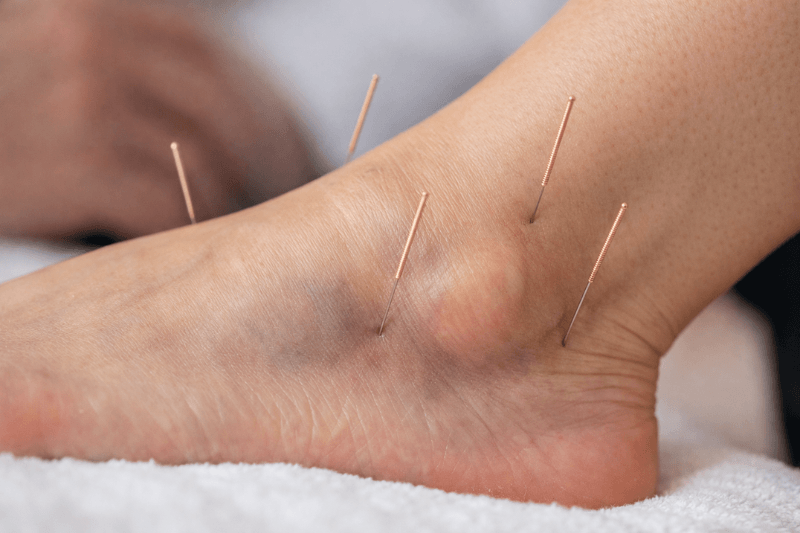
- Acupuncture for sprained ankle care may help reduce pain, ankle swelling, and post-injury stiffness.
- In TCM, ankle sprains are often treated by improving circulation and reducing local stagnation after trauma.
- Acupuncture points in ankle treatment are selected based on the location and stage of the injury.
- Gentle ankle pressure points may support comfort at home, but self-care is not a substitute for professional evaluation.
- Severe pain, deformity, or inability to bear weight should be assessed medically before starting conservative care.
What Is a Sprained Ankle?
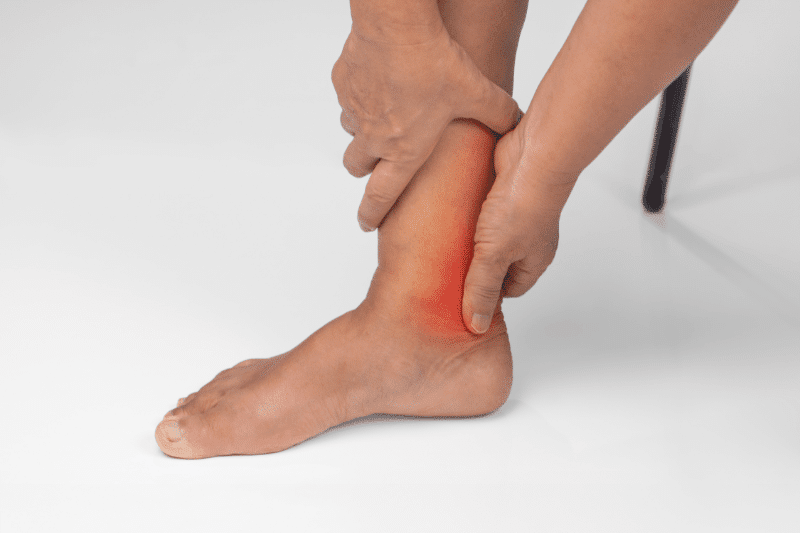
A sprained ankle is a ligament injury. It happens when the ankle twists, rolls, or moves beyond its normal range, stretching or tearing the connective tissue that stabilizes the joint.
This injury is extremely common. It can happen during sports, while stepping off a curb, walking on uneven ground, wearing unstable footwear, or simply losing balance for a moment. Although many ankle sprains are labeled minor, the symptoms can be surprisingly disruptive.
Common signs of a sprained ankle include:
- Pain with standing or walking
- Swelling around the joint
- Bruising or discoloration
- Tenderness to touch
- Warmth or throbbing
- Reduced range of motion
- A feeling of weakness or instability
Clinically, ankle sprains are often grouped into three grades:
- Grade 1: Mild stretching of the ligament with pain and light swelling
- Grade 2: Partial tearing with more noticeable swelling, bruising, and instability
- Grade 3: Complete tear with significant pain, swelling, loss of function, or marked instability
Even a lower-grade sprain can linger if the swelling is not managed well, if the ankle becomes stiff, or if the person returns to activity too quickly.
Why a Sprained Ankle Can Take Longer to Heal Than Expected
A sprained ankle often takes longer to heal than people expect because ligaments recover more slowly than muscle, and swelling can limit motion, alter walking mechanics, and increase the risk of repeat injury.
People often assume an ankle sprain should resolve quickly, but that is not always the case. Once the joint becomes swollen and painful, the body often starts guarding the area. That protective tension can affect how you walk, how you distribute weight, and how well you regain motion.
Several issues can slow recovery:
- Persistent swelling that blocks normal movement
- Protective muscle tightness around the ankle and calf
- Reduced balance and proprioception
- Incomplete rehabilitation
- Returning to sports or exercise before stability is restored
This is one reason acupuncture for sprains is often sought out. People are not just looking for pain relief. They also want to move normally again, reduce ankle swelling, and avoid the cycle of repeated sprains.
How Traditional Chinese Medicine Views Ankle Sprains
In Traditional Chinese Medicine, ankle sprains are often understood as a form of local Qi and blood stagnation caused by trauma, leading to pain, swelling, bruising, and restricted movement.
From a TCM perspective, the stage of healing matters.
Acute Phase
In the early phase, the ankle may be:
- Hot
- Swollen
- Sharp or throbbing
- Bruised
- Very tender to touch
This stage is often associated with local stagnation and inflammatory signs following trauma.
Subacute Phase
As the sharpest pain begins to settle, the ankle may still feel:
- Tight
- Heavy
- Stiff
- Weak during walking
- Painful at end-range motion
Recovery and Chronic Phase
Later on, the main issue may no longer be swelling alone. Instead, people may notice:
- Residual stiffness
- Tight calves or foot muscles
- A lingering ache
- Reduced confidence in the joint
- Recurring sprains with activity
This staged view is one reason acupuncture care should not be formulaic. The treatment strategy for a newly swollen ankle is not the same as the strategy for an older ankle injury that now feels unstable and chronically tight.
How Acupuncture May Help a Sprained Ankle
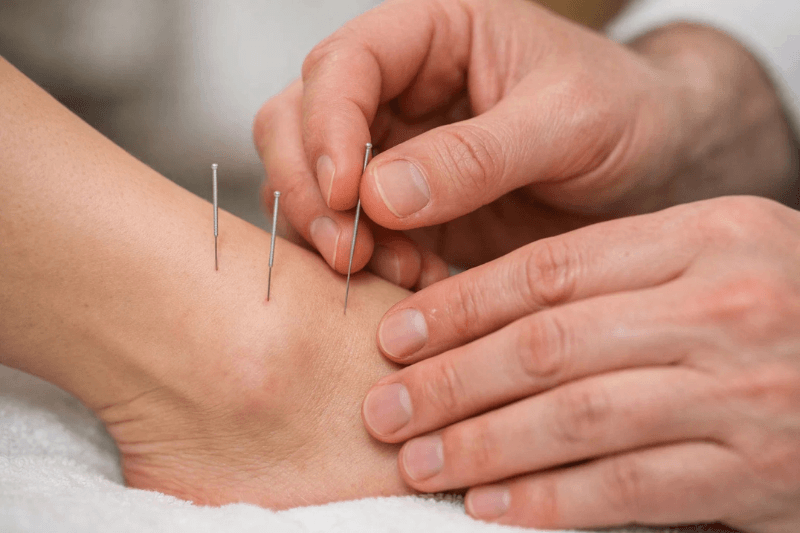
Acupuncture for sprained ankle symptoms is used to support the body’s natural recovery response. In modern clinical language, treatment may help by affecting pain signaling, local circulation, swelling, and muscle guarding. In TCM language, it helps move stagnation and restore more functional flow through the injured area.
It May Help Reduce Pain
After an ankle sprain, pain is not just about damaged tissue. It is also about how the nervous system responds to injury. Acupuncture may help calm pain pathways, which can make the ankle more comfortable at rest and during movement.
It May Help Reduce Ankle Swelling
Acupuncture for ankle swelling is often requested in the first days or weeks after injury. When swelling is high, motion becomes limited and even gentle walking can feel awkward. Treatment may help improve local circulation and reduce the sense of congestion around the joint.
It May Improve Mobility
Pain and swelling tend to shut movement down. Once the ankle stiffens, recovery becomes more frustrating. By easing pain and soft tissue tension, acupuncture may make it easier to tolerate the mobility work needed for fuller recovery.
It May Reduce Protective Muscle Tension
An ankle injury rarely affects the ankle alone. The calf, foot, and lower leg may tighten in response. That tension can pull on the joint and create a cycle of stiffness. Acupuncture can be used to address these related tissues, not only the ligament area itself.
It May Support a More Complete Recovery Plan
Acupuncture is often most useful as part of a broader strategy that includes appropriate rest, compression, movement progression, and medical evaluation when indicated. For many patients, it fills the gap between passive rest and more invasive care.
Acupuncture for Sprains: Why the Ankle Is a Common Treatment Area
Acupuncture for sprains is commonly used for joints that are mobile, vulnerable to overload, and slow to feel fully normal again. The ankle fits all three.
The ankle absorbs force every time you stand, walk, pivot, or climb stairs. Even a mild ligament injury can cause a major interruption in daily life. That makes the ankle one of the most practical places for conservative, symptom-focused treatment.
At ACA Acupuncture & Wellness, when we provide acupuncture for sprains involving the ankle, we are often looking at several goals at once:
- Reduce pain enough to allow better movement
- Calm swelling and tissue irritation
- Improve confidence in weight-bearing
- Address compensation patterns in the foot and lower leg
- Support the transition from rest to controlled movement
Acupuncture Points in Ankle Treatment
Acupuncture points in ankle care are chosen based on the location of the sprain, the degree of swelling, the patient’s mobility, and whether the injury is acute or lingering. A lateral ankle sprain may call for a different point strategy than a medial ankle injury. A bruised, hot ankle is treated differently than a stiff ankle that no longer swells but still feels restricted.
Commonly referenced acupuncture points in ankle treatment include:
ST-41 (Jiexi)
Located near the front of the ankle, this point is often discussed in relation to ankle mobility and pain at the joint line.
GB-40 (Qiuxu)
Often used for the lateral ankle region, especially when the outer ankle is involved.
BL-60 (Kunlun)
Located near the back-lateral ankle region, this point is often relevant in ankle pain patterns involving stiffness and restricted motion.
KI-3 (Taixi)
Used in the medial ankle region and often considered when the inside of the ankle or surrounding tissues need support.
SP-5 (Shangqiu)
Another point associated with the medial ankle and local function.
Ashi Points
These are tender, clinically relevant points found by examination rather than by textbook name alone. In many musculoskeletal cases, Ashi points are highly important because they reflect the specific injured tissues and pain map of the individual patient.
In practice, our acupuncturists at ACA Acupuncture & Wellness may also use distal points away from the ankle. Not every effective treatment requires needling directly into the most painful area. Sometimes a combination of local and distal points creates a more comfortable and useful response.
Ankle Pressure Points: Can You Use Them at Home?
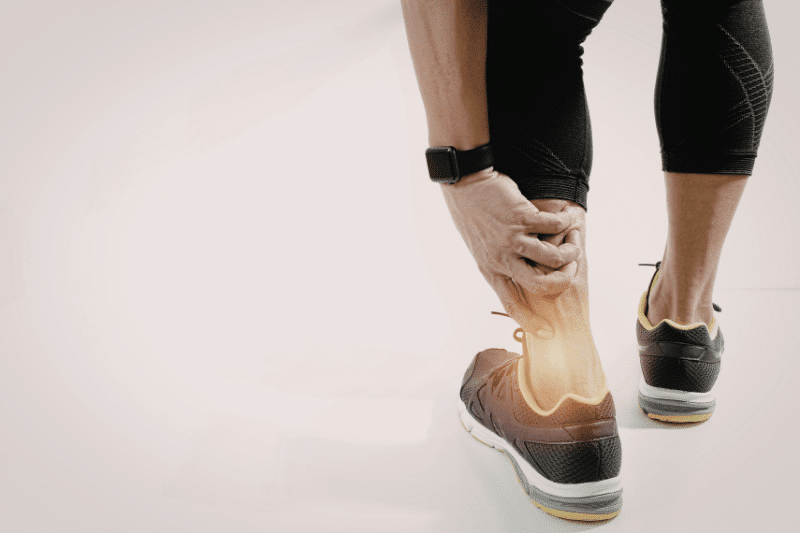
Ankle pressure points are areas around the ankle that may feel tender or responsive to gentle acupressure, and they can sometimes be used at home for mild comfort support after a sprain.
Many people search for ankle pressure points because they want a simple way to support comfort between visits. In everyday language, ankle pressure points usually refer to spots around the ankle that feel tender, tight, or responsive when gently pressed.
This is closer to acupressure than acupuncture.
Gentle pressure around the ankle may help with:
- Body awareness
- Temporary comfort
- A sense of release in surrounding tissues
- Mild support for relaxation
However, fresh injuries do not usually respond well to aggressive pressing, deep massage, or repeated poking at painful tissue. A newly sprained ankle is already irritated, and too much pressure can increase soreness.
If you explore ankle pressure points at home, keep these guidelines in mind:
- Use light pressure only
- Stop if the pain sharpens
- Avoid pressing directly into intense swelling
- Do not force the ankle into stretch while pressing
- Use acupressure as support, not as the whole treatment plan
You should not rely on ankle pressure points alone if the injury is severe, unstable, or not improving.
Acupuncture for Ankle Swelling
Acupuncture for ankle swelling is one of the most relevant reasons people seek care after an ankle sprain because swelling can create stiffness, pressure, tenderness, and difficulty walking.
From a TCM standpoint, swelling after trauma is related to local stagnation and impaired movement of fluids and blood in the injured tissues. From a modern rehab standpoint, swelling can inhibit muscle function, reduce joint motion, and delay confidence in movement.
Treatment may help by:
- Supporting local circulation
- Reducing the sense of pressure and congestion
- Making the ankle easier to move
- Improving comfort during the recovery phase
Some swelling is expected after injury. But severe swelling, rapidly increasing swelling, or swelling accompanied by deformity, severe bruising, numbness, or inability to bear weight should be medically assessed first.
What to Expect During Treatment at ACA Acupuncture & Wellness
At ACA Acupuncture & Wellness, treatment begins with a clinical conversation and physical assessment. We want to know:
- How the injury happened
- When it happened
- Where the pain is located
- Whether the swelling is getting better or worse
- Whether you can walk normally
- Whether there are any red flags that suggest imaging or urgent care may be needed
We also look at function, not just symptoms. Can the ankle flex? Can it rotate comfortably? Is the pain more lateral, medial, anterior, or posterior? Is there bruising, guarding, or instability?
During treatment, our acupuncturists may use:
- Local acupuncture points in ankle treatment
- Supportive points elsewhere on the body
- A gentle approach based on the stage of injury
- Adjunctive TCM strategies when appropriate
Most patients describe the sensation as mild, with pressure, warmth, heaviness, or a subtle ache rather than sharp pain. The goal is not to challenge the injury. The goal is to help the body shift into a more functional recovery response.
After treatment, we may recommend:
- Relative rest, not complete immobilization unless medically advised
- Compression or elevation if appropriate
- Avoiding activities that reproduce instability
- Gradual reintroduction of mobility and strengthening work
- Continued monitoring if symptoms are not progressing
How Many Sessions Might Be Needed?
The number of acupuncture sessions for a sprained ankle depends on the severity of the injury, how long the symptoms have been present, and whether there is ongoing swelling, stiffness, or repeat instability.
A recent mild sprain may respond relatively quickly. A recurring or poorly healed ankle issue may take longer because the treatment is addressing both the current symptoms and the residual movement dysfunction around the joint.
In general, early consistency matters. It is often easier to guide recovery while the body is actively adapting than to wait until a poor movement pattern becomes established.
Acupuncture vs. Acupressure vs. Massage vs. Physical Therapy
Patients often want to know how acupuncture compares with other conservative approaches.
| Approach | What It Involves | Best Used For | Key Note |
| Acupuncture | Precise point selection performed by a licensed professional. | Supporting pain relief, circulation, tissue response, and the overall recovery environment. | May help patients move better and hurt less during recovery. |
| Acupressure | Gentle manual stimulation of points, including ankle pressure points. | At-home support between treatments. | Helpful but more limited than acupuncture and should be done gently. |
| Massage or Tui Na | Manual therapy focused on surrounding soft tissues. | Tightness in the calf, foot, and lower leg after an ankle sprain. | Timing matters, especially during the acute stage. |
| Physical Therapy | Strength, balance, proprioception, and return-to-activity exercises. | Restoring control, stability, and readiness to return to movement. | Addresses what pain relief alone cannot. |
The strongest recovery plan is often coordinated care rather than an either-or choice. Acupuncture may help reduce pain and improve movement, while rehabilitation exercises help restore strength, balance, and stability.
Can Acupuncture Help Prevent Repeat Ankle Sprains?
Acupuncture may help reduce lingering pain and stiffness after an ankle sprain, which can support better movement quality, but long-term prevention also depends on strength, balance, and proper rehabilitation.
A history of ankle sprain increases the risk of another one. That is because the issue is often not just tissue healing. It is also balance, joint awareness, mobility, and how confidently the body loads the foot again.
Acupuncture may support this process by:
- Reducing lingering pain that alters walking mechanics
- Easing stiffness that limits normal ankle motion
- Helping patients tolerate rehab and mobility work more comfortably
- Addressing surrounding soft tissue tension in the lower leg and foot
But prevention requires more than symptom management. A resilient ankle usually needs:
- Strengthening
- Balance training
- Gradual return to impact
- Footwear awareness
- Sport-specific progression when relevant
At ACA Acupuncture & Wellness, our goal is not just to calm the ankle down for the moment. It is to support better recovery quality so you can return to daily life and activity with more confidence.
When to Seek Medical Care First

Some ankle injuries need medical evaluation before conservative treatment. Seek prompt care if you have:
- Inability to bear weight
- Visible deformity
- Severe or rapidly increasing swelling
- Intense bone tenderness
- Numbness or a cold foot
- Severe bruising with loss of function
- Suspected fracture
- Open wound
- Fever, redness, or signs of infection
Acupuncture should complement appropriate medical care, not replace it. If imaging, orthopedic evaluation, or urgent treatment is needed, that comes first.
Who May Be a Good Candidate for Acupuncture After an Ankle Sprain?
You may be a good candidate if:
- You have a recent mild to moderate sprain that has been appropriately assessed
- Your main issues are pain, ankle swelling, stiffness, or reduced mobility
- You have a lingering ankle injury that never felt fully resolved
- You want non-drug support for recovery
- You are trying to return to work, exercise, or sport and need the ankle to function better
Acupuncture for sprains can be especially appealing to people who want a more natural, hands-on recovery strategy that still respects clinical structure and individualized treatment.
Supporting Natural Recovery After a Sprained Ankle
A sprained ankle may look simple from the outside, but anyone who has had one knows how disruptive it can be. Pain, swelling, stiffness, and instability can linger long after the initial injury. That is why a thoughtful recovery plan matters.
Acupuncture for sprained ankle care offers a Traditional Chinese Medicine approach that may help reduce pain, support circulation, improve mobility, and ease ankle swelling as the body heals. When the treatment plan is individualized, it can be a valuable part of a broader recovery strategy that also includes proper evaluation, activity modification, and rehabilitation.
At ACA Acupuncture & Wellness, our acupuncturists take ankle injuries seriously and provide personalized care with a whole-body approach. We look at where the pain is, how the ankle is functioning, and what stage of healing you are in so we can offer the support that may help most. Whether you are dealing with a fresh sprain, lingering stiffness, or recurring ankle issues, we focus on helping you recover in a way that is natural, practical, and tailored to your body. For more complete healing, acupuncture for ankle recovery can also be paired with other supportive services at ACA Acupuncture & Wellness to help improve function, ease tension, and promote lasting relief.
Sources:
American Academy of Orthopaedic Surgeons. (n.d.). Sprained ankle. OrthoInfo.
National Center for Complementary and Integrative Health. (n.d.). Acupuncture: Effectiveness and safety. U.S. Department of Health and Human Services, National Institutes of Health.
Martin, R. L., Davenport, T. E., Fraser, J. J., Sawdon-Bea, J., Carcia, C. R., Carroll, L. A., Kivlan, B. R., Carreira, D., Beattie, P., Hertel, J., Houck, J., Neville, C., Paulseth, S., & Silbernagel, K. G. (2021). Ankle stability and movement coordination impairments: Lateral ankle ligament sprains revision 2021. Journal of Orthopaedic & Sports Physical Therapy, 51(4), CPG1-CPG80.
Yes, acupuncture may help support recovery from a sprained ankle by reducing pain, easing ankle swelling, improving local circulation, and helping the joint move more comfortably. In Traditional Chinese Medicine, treatment is designed to address the stagnation that can follow trauma, while in modern terms, acupuncture may help calm pain signaling and reduce soft tissue tension around the ankle. At ACA Acupuncture & Wellness, we tailor treatment based on the severity of the sprain, the location of the pain, and whether the injury is acute or lingering.
Many people seek acupuncture soon after an ankle sprain, especially when pain, swelling, or stiffness start interfering with walking and daily activity. The right timing depends on how severe the injury is and whether there are signs that need medical evaluation first, such as inability to bear weight, deformity, numbness, or suspected fracture. Once serious injury has been ruled out, acupuncture can often be used as part of a conservative recovery plan to support healing and comfort.
Some of the most commonly discussed acupuncture points in ankle treatment include ST-41 (Jiexi), GB-40 (Qiuxu), BL-60 (Kunlun), KI-3 (Taixi), and SP-5 (Shangqiu), along with individualized Ashi points based on where the ankle is most tender. These acupuncture points in ankle care are selected according to the exact location of the sprain, whether the pain is on the inner or outer ankle, and whether the main concern is swelling, bruising, stiffness, or instability. At ACA Acupuncture & Wellness, our acupuncturists choose points based on the person in front of us, not a one-size-fits-all formula.
Acupuncture for ankle swelling may help by improving circulation, easing local congestion, and making the joint feel less stiff and heavy during recovery. Swelling after a sprain can limit range of motion and make even simple walking feel uncomfortable, so reducing that pressure can be an important part of healing. While acupuncture can be a helpful supportive therapy, severe or rapidly worsening swelling should still be assessed medically to rule out a more serious injury.
Gentle ankle pressure points may be used at home for mild comfort support, but they should be approached carefully, especially in the first few days after an injury. Light acupressure may help with relaxation and body awareness, but aggressive pressing on a fresh sprain can increase soreness and irritation. If the ankle is severely swollen, bruised, unstable, or too painful to touch, home pressure techniques are not appropriate and a professional evaluation is a better next step.
Acupuncture can be a valuable part of ankle sprain recovery, but it does not usually replace physical therapy entirely. Acupuncture may help reduce pain, ankle swelling, and stiffness, while physical therapy focuses more directly on strength, balance, proprioception, and safe return to activity. For many patients, the best results come from combining acupuncture with a structured rehab plan rather than relying on only one approach.
Testimonials

Cart (0)
Your cart is currently empty.


Cart (0)
Your cart is currently empty.