

Embracing the Autumn Season with Acupuncture: Tips for a Healthy Transition

As the vibrant colors of autumn unfold, the importance of seasonal wellness becomes increasingly apparent. This transition period invites us to reflect on our health and well-being, making it an ideal time to explore the benefits of acupuncture. Rooted in Traditional Chinese Medicine (TCM), acupuncture plays an important role in maintaining balance within our bodies as we navigate the changes that autumn brings.
TCM emphasizes the interconnectedness of nature and our health, advocating for lifestyle adjustments that align with seasonal shifts. Autumn, characterized by its cooling temperatures and dry air, calls for a focus on nurturing our internal systems, particularly the lungs and large intestine. Understanding these principles can help us harness the power of acupuncture to support our health during this transformative season.
Key Takeaways
- Acupuncture for autumn wellness supports the lungs and large intestine, helping your body adapt to cooler, drier weather.
- Boosting immunity with acupuncture strengthens your natural defenses and reduces the risk of seasonal colds and respiratory issues.
- Acupuncture for autumn allergies targets nasal congestion and inflammation, offering natural relief from common fall allergens.
- Managing stress and fatigue with acupuncture balances energy levels and promotes emotional well-being as days grow shorter.
- Regular seasonal treatments align your body with autumn’s rhythms, keeping you resilient and balanced throughout the transition.
The Autumn Season in TCM

In Traditional Chinese Medicine, autumn is associated with the metal element, which symbolizes clarity, discernment, and the process of letting go. This season encourages introspection and reflection, mirroring the natural world as trees shed their leaves in preparation for winter. The lungs and large intestine are the primary organs linked to autumn, emphasizing the need to focus on respiratory health and digestive function during this time.
The transition into autumn often brings a shift in energy, as yang energy begins to decline and yin energy increases. This fluctuation can lead to various physical and emotional symptoms, such as increased dryness in the body and heightened sensitivity to external factors. Understanding these changes allows us to adapt our self-care practices and maintain harmony within our bodies.
As the air becomes cooler and drier, TCM advises incorporating nourishing foods and practices that support lung function and digestive health. This includes consuming moistening foods and engaging in activities that promote relaxation and introspection, helping us align with the natural rhythms of the season.
Acupuncture for Autumn Wellness
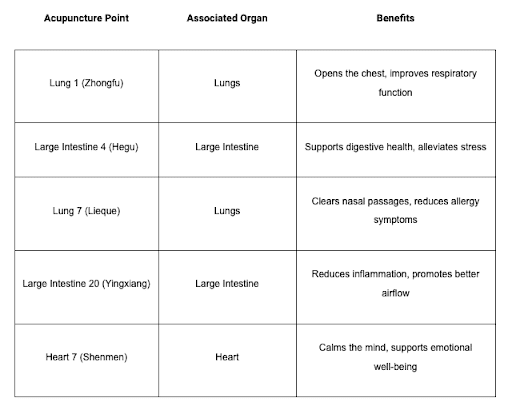
Acupuncture offers seasonal support by helping the body adapt to cooler, drier weather while strengthening lung and large intestine function. By activating specific points, it supports immunity, breathing, digestion, and emotional steadiness. This gentle approach brings both physical relief and mental clarity during autumn.
Lung 1 (Zhongfu) for Opening the Chest and Supporting Breath
Stimulating Lung 1 can expand the chest and improve airflow during colder months when breathing issues are more common. This point is often used for tightness, shallow breath, and early cold symptoms. It helps keep respiration strong when lung energy is vulnerable.
Large Intestine 4 (Hegu) for Digestive Stability and Stress Relief
Large Intestine 4 encourages smoother digestion and can help ease seasonal stress that often intensifies with schedule changes. It promotes healthy gut movement and energy flow, relieving tension in both body and mood. This point is grounding and stabilizing during transitional weather.
Lung 7 (Lieque) for Clearing Nasal Passages and Allergy Reduction
Lung 7 helps open the airways and calm sensitivities from seasonal allergies. It is especially supportive for congestion and sinus discomfort triggered by dry, shifting air. It strengthens the lung’s defensive qi, supporting resilience.
Large Intestine 20 (Yingxiang) for Reducing Inflammation and Improving Airflow
Located near the nose, this point helps reduce swelling and improve nasal breathing. It’s ideal for inflammation and blockage associated with autumn allergies and dryness. With regular stimulation, it can support clearer, steadier airflow.
Heart 7 (Shenmen) for Emotional Calm and Mental Balance
This point soothes the nervous system and supports inner calm during a season known for introspection and contraction. It is often used for anxiety, sleep trouble, and emotional unease. Heart 7 steadies the mind and anchors emotional balance.
Boosting Autumn Immunity with Acupuncture

Acupuncture can help fortify immunity as temperatures drop and the body becomes more vulnerable to seasonal pathogens. By supporting the circulation of qi and strengthening defensive energy, acupuncture assists in preventing illness and accelerating recovery. This makes it a proactive tool for staying well through autumn.
Acupuncture for Supporting Immune Function
Stimulating key acupuncture points can activate the body’s natural defenses against viruses and environmental stressors. It helps the immune system respond more efficiently and recover faster. This creates a protective foundation during colder weather.
Improving Sleep and Stress Balance for Better Immunity
Rest and emotional balance directly influence immune resilience. Acupuncture helps calm the nervous system, encourages quality sleep, and reduces the overall burden of stress. This allows the body to stay stronger and more resistant to illness.
Pairing Acupuncture with Warming Autumn Foods
Practitioners often recommend nourishing, warm foods such as soups, ginger, pumpkin, and root vegetables to complement treatments. These foods support the digestive system and internal warmth. Together with acupuncture, they create a synergistic boost for immunity.
Consistency of Treatment Throughout the Season
Regular acupuncture sessions provide ongoing regulation of energy and immune strength. This steady support helps the body adapt to colder, drier conditions over time. Consistent treatment can make a noticeable difference in preventing seasonal colds and respiratory issues.
Acupuncture for Autumn Allergies
Allergy symptoms often rise in autumn due to environmental shifts, increased mold exposure, and lingering pollen. Acupuncture offers natural relief by addressing internal imbalances rather than only masking symptoms. By stimulating specific points, this approach can reduce inflammation, open nasal passages, and support both respiratory and emotional well-being.
Points frequently used for allergy relief include:
- Lung 7 (Lieque): Clears nasal passages and reduces congestion
- Large Intestine 20 (Yingxiang): Minimizes inflammation and supports better airflow
Traditional Chinese Medicine may also incorporate herbal formulas that help cool inflammation and calm reactivity to allergens. These supportive remedies work together with acupuncture to provide deeper, longer-lasting symptom relief throughout the autumn season.
Acupuncture for Autumn Stress and Fatigue
 Spleen
- Heart 7 calms the mind and steadies emotional turbulence
- Spleen 6 nourishes the body, improves energy, and supports restorative balance
Integrating acupuncture into a seasonal self-care routine helps build resilience and protect against stress accumulation. With regular sessions, the body stays more regulated, energy becomes steadier, and the mind remains clearer and more grounded, leading to a calmer and more supported autumn experience.
Boosting Immunity and Energy in Autumn: Lung and Large Intestine Qi Flow Over Time
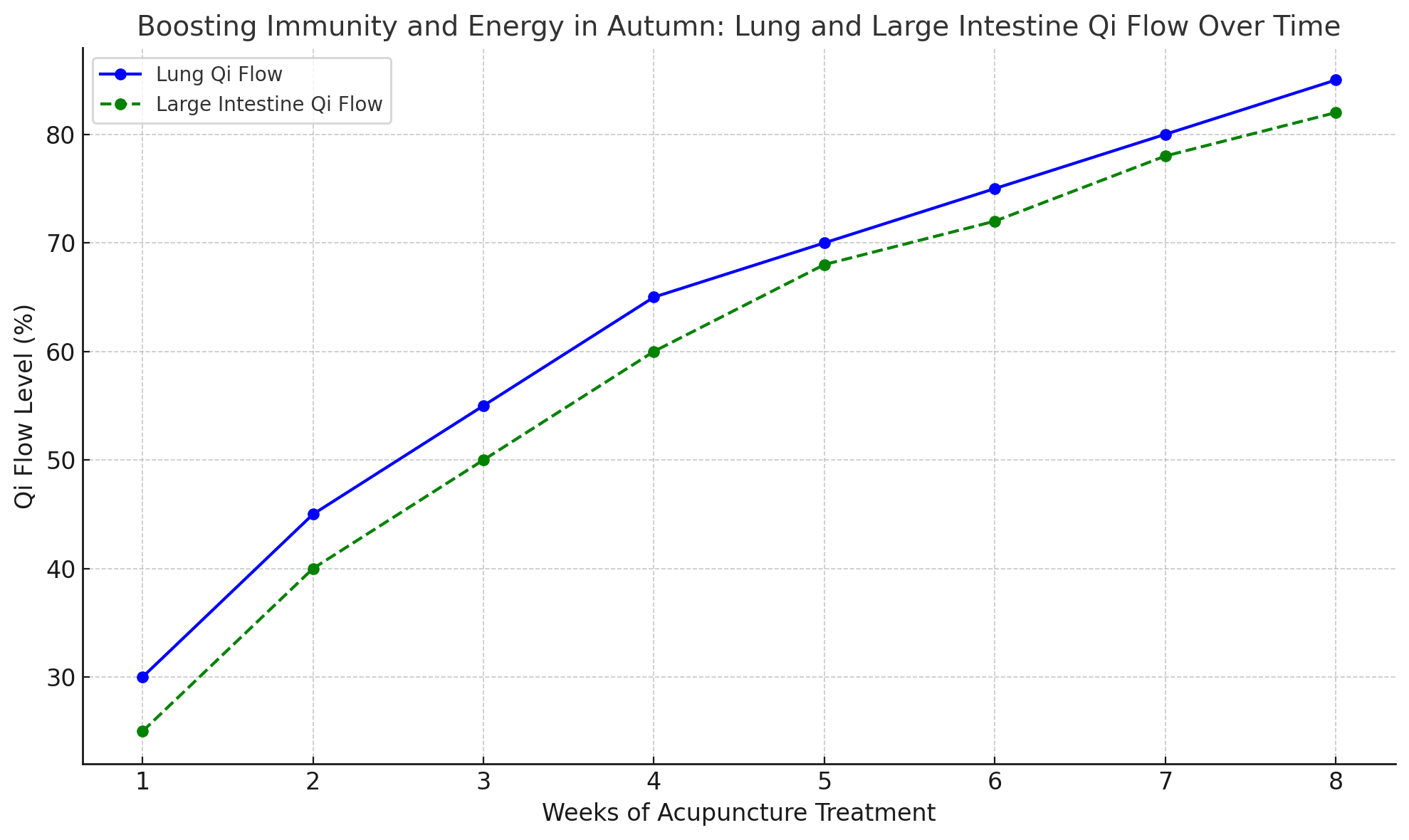
The chart’s illustration of the impact of consistent acupuncture treatments on qi flow in the lungs and large intestine aligns with research findings in Traditional Chinese Medicine (TCM). According to TCM, these organs are particularly sensitive during the autumn season, and regular acupuncture sessions can enhance qi flow, which is essential for optimal organ function.
The chart indicates that over an eight-week period, lung function can improve significantly, increasing from 30% to 85%, while the large intestine’s function can rise from 25% to 82%. These improvements reflect the body’s enhanced ability to ward off respiratory issues and digestive imbalances, which are more prevalent during autumn. Such claims are supported by research that demonstrates acupuncture’s effectiveness in improving lung function and overall quality of life in patients with respiratory conditions, including chronic obstructive pulmonary disease (COPD) (BMC Complementary Medicine and Therapies, BioMed Central, 2024)(BioMed Central)(BioMed Central).
At ACA Acupuncture and Wellness, our approach to seasonal care focuses on strengthening the body’s internal systems, especially during times of transition. By concentrating on the lungs and large intestine, we aim to fortify the immune system and enhance overall well-being, preparing the body for the cooler, drier conditions of autumn.
This visual representation of qi flow underscores the effectiveness of acupuncture in aligning the body with seasonal changes, making it particularly relevant for those seeking to maintain balance and prevent illness during the fall. Supported by TCM principles, this proactive approach helps address common health concerns like colds, allergies, and fatigue, ensuring that the body remains resilient throughout the changing season.
Nurturing Wellness Through Autumn: How ACA Acupuncture and Wellness Supports Your Seasonal Health
At ACA Acupuncture and Wellness, we embrace the autumn season as a time to align with nature’s rhythms and prioritize holistic well-being. The transitional period between warmer months and the cooler, drier autumn brings unique challenges to our respiratory and digestive systems. With acupuncture, we address these challenges by targeting key acupuncture points that support the lungs and large intestine, helping our patients strengthen their immune systems and restore balance during this seasonal shift.
Our practitioners are committed to offering personalized care that supports your body’s natural ability to adapt to the changes of autumn. Whether you’re seeking to alleviate stress, boost immunity, or address seasonal allergies, acupuncture offers a gentle yet effective solution. By integrating Traditional Chinese Medicine (TCM) principles with modern wellness practices, we provide treatments that not only address immediate symptoms but also promote long-term vitality.
Reference: Efficacy of acupuncture as an adjunctive treatment to patients with stable COPD: a multicenter, randomized, sham-controlled trial protocol. BMC Complementary Medicine and Therapies. BioMed Central, 2024.

Cart (0)
Your cart is currently empty.



Cart (0)
Your cart is currently empty.