

Traditional Chinese Medicine Diet: How to Eat for Balance and Wellness
[et_pb_section fb_built=”1″ _builder_version=”4.20.2″ custom_margin=”0px||||false|false” custom_padding=”0px|||||” global_colors_info=”{}” theme_builder_area=”post_content”][et_pb_row _builder_version=”4.24.0″ _module_preset=”default” min_height=”2128.4px” custom_padding=”27px||0px|||” global_colors_info=”{}” theme_builder_area=”post_content”][et_pb_column type=”4_4″ _builder_version=”4.20.2″ _module_preset=”default” global_colors_info=”{}” theme_builder_area=”post_content”][et_pb_text _builder_version=”4.26.0″ _module_preset=”default” custom_margin=”8px|40px|8px|20px|true|false” custom_padding=”||||false|false” hover_enabled=”0″ global_colors_info=”{}” theme_builder_area=”post_content” header_3_text_color=”#0084B2″ sticky_enabled=”0″]
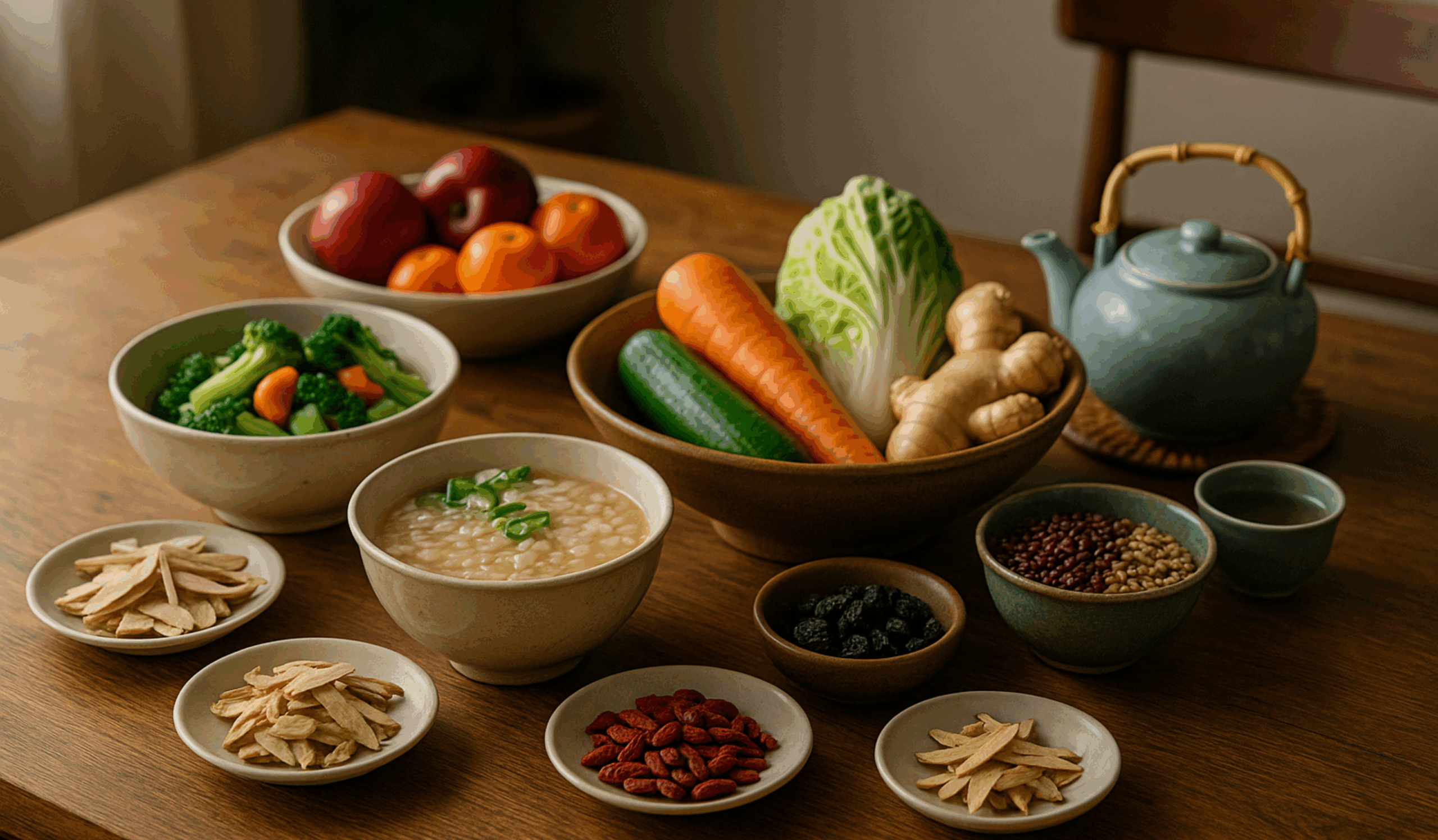
The Traditional Chinese Medicine (TCM) Diet views food as the first step toward restoring balance when your body feels off. Instead of counting calories or obsessing over macros, TCM looks at how each meal supports harmony inside you: warm or cool, moist or dry, yin or yang. The main goal is to help your body adjust smoothly to everyday changes and the natural seasons.
This approach has shaped daily life in China for thousands of years. Long before modern nutrition labels, healers learned how different foods could ease digestion, calm irritation, or help the body bounce back after an illness. Over time, these insights turned into a practical guide for choosing foods based on their warming or cooling nature, taste, and how they affect each organ.
What sets this diet apart is that it never assumes everyone needs the same thing. A snack that energizes one person could make someone else feel sluggish. By noticing your own signs and making small shifts like a bowl of warming soup on a cold day, fresh fruits when feeling overheated, you can keep your energy steady without strict meal plans or fad diets.
Key Takeaways
- The Traditional Chinese Medicine Diet focuses on warm, seasonal, and balanced foods to strengthen digestion and support harmony.
- Foods are selected by their warming or cooling nature and their taste, which helps the body adapt to daily changes and the seasons.
- Small signs of imbalance like heat, cold, dampness, or dryness can be eased with simple ingredient choices and gentle cooking.
- Seasonal eating keeps the body in sync with nature, with lighter greens in spring, cooling fruits in summer, and warming stews in winter.
- Mindful habits such as eating slowly, drinking warm liquids, and choosing freshly cooked meals protect digestion and steady energy.
- Personalized guidance from a licensed TCM practitioner can help match your diet to your body’s unique needs for year-round balance.
Core Principles of a Balanced TCM Diet
Eating well in Traditional Chinese Medicine means finding balance, not chasing extremes. Meals should feel simple, nourishing, and easy on the stomach. When you skip meals, overeat, or snack at odd times, it can weaken your digestive fire and create sluggishness or unwanted dampness that burdens the body. Instead, aim for regular, calm mealtimes that match the rhythms of your day.

Foods Are Classified by Nature and Taste
Each ingredient affects your system in its own way:
- Thermal Nature: Foods carry warming, cooling, or neutral properties that can adjust your internal climate.
- Flavors: Sweet, salty, sour, bitter, and pungent tastes each connect to different organs and functions.
For example, bitter greens like dandelion or mustard leaves can clear excess heat and ease inflammation. Pungent herbs such as ginger, garlic, or spring onion stimulate warmth, boost circulation, and help expel cold from the body. Mildly sweet ingredients like pumpkin or carrots strengthen and nourish without being overly rich.
Mindful Meals Matter
How you eat shapes how well you digest and absorb nutrients. Take time to slow down, sit at a table, and chew thoroughly. Avoid eating when distracted or stressed. Cold drinks with meals can weaken your stomach’s warmth, so stick to room-temperature or lightly warm teas and soups. When possible, choose freshly cooked dishes over heavily processed or leftover meals. Warm, easy-to-digest foods strengthen your digestive fire and help you draw more energy from what you eat.
Listen and Adjust
A balanced TCM diet works best when you respond to your body’s subtle signals. If you feel chilled, add more warming spices or soups. If you feel overheated or inflamed, bring in cooling foods like cucumber, melon, or chrysanthemum tea. Seasonal shifts matter too: eat lighter, cooling meals in summer and heartier, warming dishes in winter. By paying attention, you can gently correct imbalances before they turn into bigger issues.
Common Imbalances and How Food Can Help
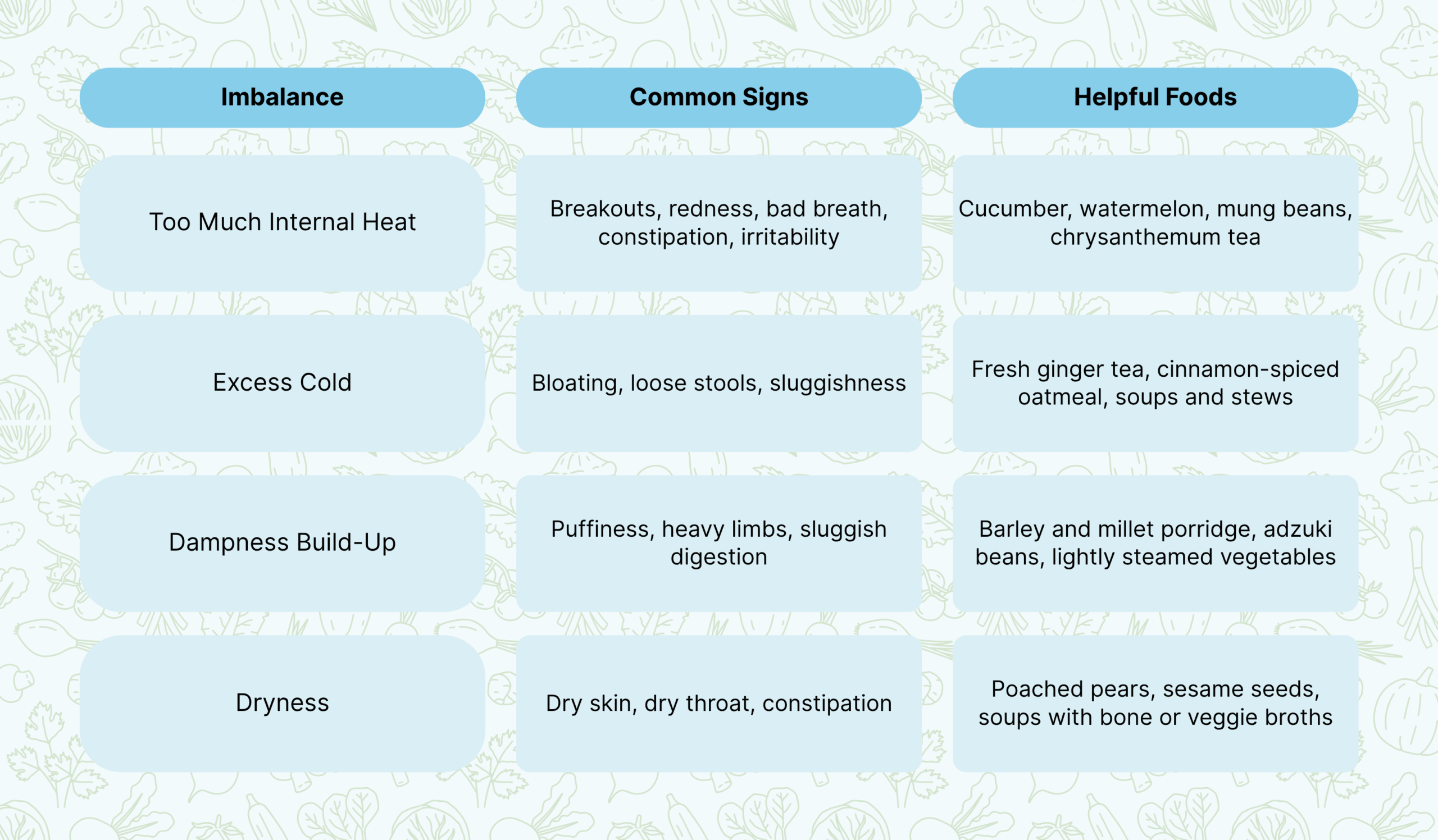
Tuning in to subtle changes in your body is a core part of the Traditional Chinese Medicine approach. When you notice small signs of imbalance early, you can choose simple, familiar foods to help guide your body back to center. Here are some everyday patterns to watch for and practical ways to ease them.
Too Much Internal Heat
When your body holds onto excess heat, you might notice breakouts, facial redness, bad breath, constipation, or a short temper that flares up easily. Spicy fried dishes and alcohol can add fuel to the fire, so it helps to reach for cooling, soothing ingredients instead. Fresh fruits and light soups calm heat gently and keep your digestion moving.
You may notice:
- Breakouts or redness
- Bad breath
- Constipation
- Irritability
Cooling foods help clear excess heat:
- Cucumber
- Watermelon
- Mung beans
- Chrysanthemum tea
Excess Cold
Too many raw salads, iced drinks, or chilled desserts can leave you feeling cold on the inside, especially in cooler weather. This internal chill can weaken digestion, leaving you bloated, low in energy, or dealing with loose stools. Warming foods and spices gently rekindle your inner fire and help your body absorb nutrients more easily.
You might feel:
- Bloating
- Loose stools
- Sluggishness
Warm your system with:
- Fresh ginger tea
- Cinnamon-spiced oatmeal
- Soups and slow-cooked stews
Dampness Build-Up
Dampness is a common pattern when the body feels heavy, puffy, or weighed down. It often comes from greasy foods, too much dairy, or excess sweets. Instead of cutting everything out, add foods that naturally help drain dampness and lighten your system. Simple grains, mild beans, and lightly cooked vegetables clear heaviness without drying you out.
Signs you may feel:
- Puffiness or swelling
- Heavy limbs
- Sluggish digestion
To clear it gently, try:
- Barley and millet porridge
- Adzuki beans in soups
- Lightly steamed vegetables
Dryness
Modern living can dry out the body, whether from dry indoor air, too many processed snacks, or not enough warm, moist foods. Dryness often shows up as flaky skin, a scratchy throat, or constipation. Moistening foods help build healthy fluids and keep your body comfortable through dry spells.
Common signs:
- Dry skin
- Dry throat
- Constipation
Add moisture with:
- Poached pears
- Sesame seeds
- Soups with bone or veggie broths
Seasonal Eating in Traditional Chinese Medicine
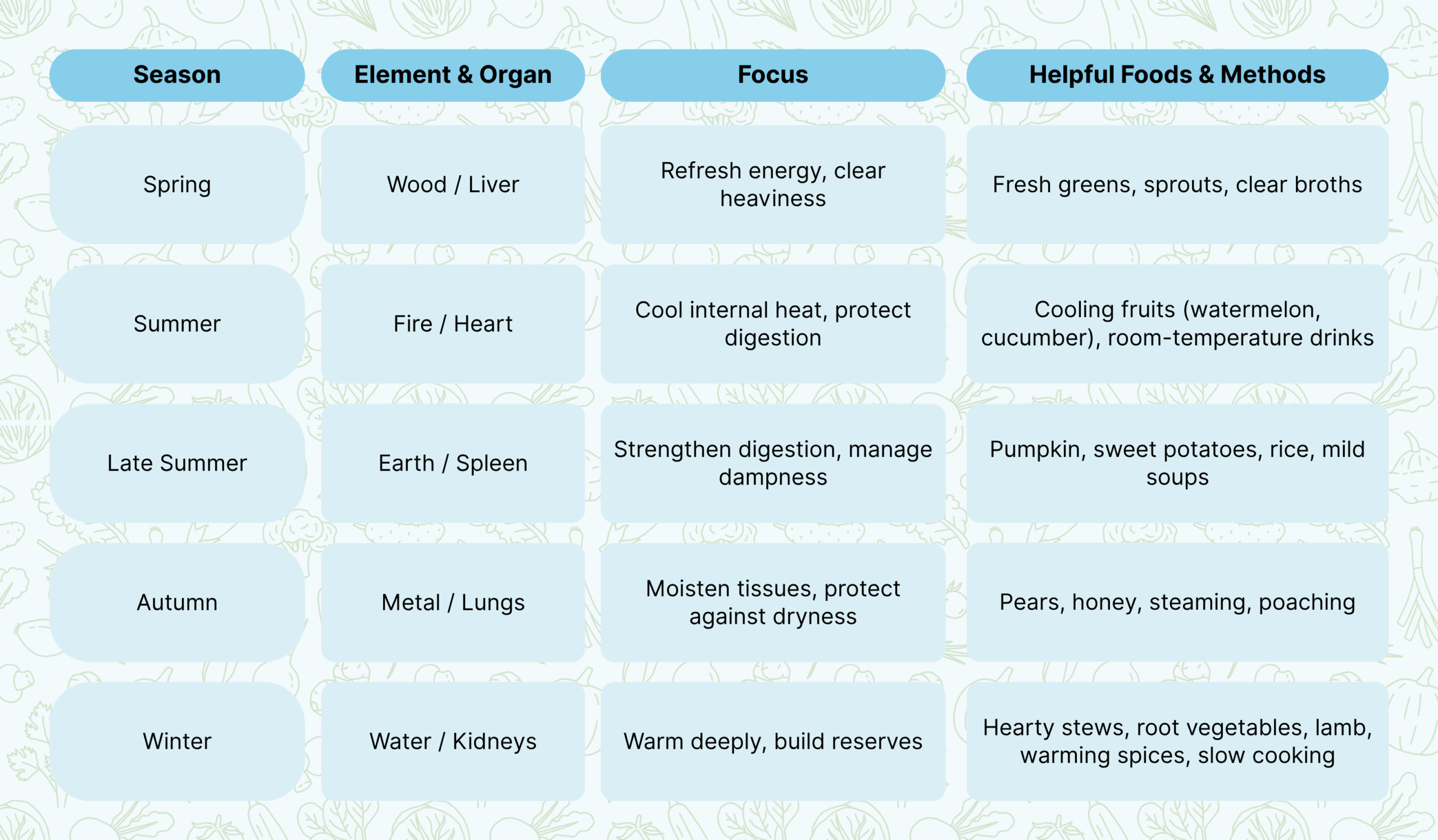
Each part of the year brings its own energy and gentle shifts in how your body feels. Traditional Chinese Medicine encourages small changes in your meals to stay in tune with nature’s rhythm. Aligning what you eat with the seasons can protect your organs, keep digestion steady, and help your energy stay balanced all year long.
Spring
When daylight lengthens and nature begins to soften, the body naturally shifts into a lighter, more active state. This season is linked to the liver and the Wood element, making it a good time to refresh energy and clear out what feels heavy from winter. Light, tender greens and clear broths help get Qi moving freely again.
- Fresh greens, sprouts, and gentle broths
- Helps sweep away winter heaviness
Summer
Long warm days can easily build up internal heat. Summer relates to the heart and the Fire element, so meals should help you stay cool without weakening digestion. Juicy fruits and mild, room-temperature drinks protect your energy while easing excess heat.
- Cooling fruits like watermelon and cucumber
- Room-temperature drinks that hydrate gently
Late Summer
This short transition season comes just before cooler days settle in. It supports the spleen and the Earth element, which together anchor healthy digestion. Mildly sweet vegetables, simple grains, and soothing soups steady the stomach and help manage dampness leftover from humid weather.
- Gentle sweet flavors that strengthen digestion
- Pumpkin, sweet potatoes, rice, and mild soups
Autumn
As dry, crisp air arrives, your skin and lungs often feel it first. Autumn is connected to the lungs and the Metal element. Moistening foods keep tissues comfortable and protect against dryness that can lead to coughs or dry throats. Gentle cooking methods help seal in moisture.
- Moistening foods like pears and a touch of honey
- Steaming and poaching to preserve natural moisture
Winter
Colder months call for meals that warm you deeply and build reserves. Winter supports the kidneys and the Water element, which store energy for the year ahead. Slow-cooked stews, root vegetables, lamb, and warming spices like ginger and cinnamon help your body stay nourished and steady through cold spells.
- Hearty stews, root vegetables, lamb, and warming spices
- Slow cooking for gentle, lasting warmth
TCM Diet: What to Eat and What to Limit

A balanced Traditional Chinese Medicine diet focuses on foods that strengthen digestion and help your body stay steady with the seasons. Small daily choices make a big difference in how well your energy flows and how smoothly your system adjusts to changes in weather, stress, or routine.
Include Plenty Of
Build your meals around warm, cooked, and gently nourishing foods that are easy to digest and support your inner warmth.
- Cooked seasonal vegetables that match the time of year
- Warm soups and stews that comfort the stomach
- Non-gluten grains like rice and millet to keep digestion light
- Root vegetables such as sweet potatoes and carrots for gentle sweetness
- Light proteins like eggs, fish, or poultry to build strength without heaviness
- Mild warming herbs including ginger, garlic, or cinnamon to boost digestive warmth
Limit or Avoid Excess
Some foods can burden digestion, weaken your internal warmth, or create unwanted dampness when eaten in excess — especially during cooler months.
- Cold salads and raw smoothies when the weather is chilly
- Iced drinks with meals, which can slow digestion
- Heavy dairy products and sugary snacks that add dampness
- Deep-fried or greasy fast foods that stress the digestive system
Daily Practices for Gentle Digestion
Small daily habits have a big influence on how well your digestion works and how steady your energy feels. Gentle routines protect your digestive fire and help your body handle changes with ease.
- Start your morning with warm water to wake up your stomach and support healthy elimination
- Sip herbal teas instead of iced sodas or cold juices, especially in cooler weather
- Eat dinner earlier in the evening to give your stomach time to rest before sleep
- Chew slowly, sit down, and put your phone aside so you can focus fully on your meal
- Use gentle seasonal cleanses if needed; mild soups, steamed vegetables, and warm broths help reset digestion without harsh fasting
Modern Tips for Using TCM Wisdom
The Traditional Chinese Medicine approach blends naturally with modern routines and different ways of eating. If you follow a vegetarian or vegan diet, it helps to choose foods and cooking methods that protect your inner warmth and keep meals easy to digest.
- Make warm dishes with legumes, tofu, and cooked nuts instead of relying too heavily on raw salads
- Choose seasonal produce from local farmers markets to stay connected to nature’s cycle
- Add simple herbs like green onions, garlic, or mild spices to bring gentle warmth to plant-based meals
When bigger imbalances appear or you feel unsure which foods match your body’s needs, it helps to get personalized guidance. At ACA Acupuncture and Wellness, our licensed TCM practitioners can help adjust your diet, suggest gentle herbs, or recommend safe acupuncture to restore balance
Frequently Asked Questions
What should I avoid in a TCM diet?
In Traditional Chinese Medicine, raw, cold, overly sugary, and greasy foods are best limited. These can weaken digestion and lead to unwanted dampness or stagnation. For many people, too much dairy can also slow digestion, so warm plant-based alternatives are often a better fit.
Can a TCM diet help with weight loss?
TCM does not focus on calorie counting but instead supports healthy digestion and balance. Many people naturally lose excess weight when they choose warm, nourishing meals, avoid foods that create dampness, and follow gentle daily habits that keep the stomach strong and metabolism steady.
Does TCM discourage dairy?
Dairy is often limited because it can create dampness, which may cause bloating, mucus, or sluggish digestion in some people. Many feel lighter and more comfortable when they swap cold cow’s milk for warm nut milks or gentle oat milk.
What herbs go well with TCM meals?
Mild herbs like fresh ginger, cinnamon, garlic, and green onions add gentle warmth and help support healthy circulation. They encourage the stomach to wake up and turn food into steady, usable energy. For deeper or more specific herbal support, it is always best to speak with one of our licensed TCM practitioners at ACA Acupuncture and Wellness. We can recommend the right herbs and formulas to match your unique needs and keep your body in balance throughout the year.
How does the Traditional Chinese Medicine diet support the body’s health?
A Traditional Chinese Medicine diet helps the body stay balanced by focusing on warm, seasonal, and easily digestible foods. By choosing meals that match the body’s needs and the time of year, you support healthy digestion, steady energy, and natural immunity. This gentle approach protects the stomach and strengthens the whole system without harsh restrictions.
What vegetables are best in a Chinese medicine diet?
The best vegetables in a Chinese medicine diet are seasonal, lightly cooked, and easy to digest. Leafy greens, bok choy, napa cabbage, carrots, pumpkins, and sweet potatoes are all common choices. These vegetables help nourish the body without creating dampness and work well in soups, stir-fries, or warm broths that protect the digestive fire.
What is the best way to eat a healthy balanced diet?
The best way to eat well is to notice how food makes you feel. In TCM, this means eating at regular times, choosing warm and freshly cooked foods, avoiding extremes, and adjusting meals with the seasons. Sit down to eat, chew thoroughly, and stay present with your meal. Small daily habits like drinking warm water in the morning and avoiding iced drinks at meals protect your digestion and help you feel balanced.
A Simple Way to Eat for Balance

Bringing Traditional Chinese Medicine into your daily meals begins with listening to what your body truly needs and choosing warm, nourishing foods that suit the season. Focus on simple cooked vegetables, light soups, and gentle herbs that support digestion and keep your energy steady. Staying mindful, sipping warm tea instead of cold drinks, taking time to chew, and eating at regular times all help your body stay balanced and resilient throughout the year. Small, consistent changes can make feeling well feel natural again.
At ACA Acupuncture and Wellness, we believe caring for your body extends far beyond the treatment room. We encourage our clients to bring simple Traditional Chinese Medicine principles into daily life, from the meals they prepare to the way they sit down and enjoy each bite. Choosing seasonal ingredients, cooking with care, and staying attentive to how your body responds can strengthen the benefits of acupuncture, herbal medicine, and our other supportive therapies.
With a few thoughtful adjustments, your meals can help your body maintain warmth, balance, and steady vitality in every season. If you are ready to discover which foods and daily habits will help you feel your best, book a consultation with our practitioners and let’s create a plan that nourishes you from within.
[/et_pb_text][/et_pb_column][/et_pb_row][et_pb_row column_structure=”1_2,1_2″ _builder_version=”4.16″ min_height=”61.4px” global_colors_info=”{}” theme_builder_area=”post_content”][et_pb_column type=”1_2″ _builder_version=”4.16″ global_colors_info=”{}” theme_builder_area=”post_content”][et_pb_button button_url=”https://acaacupuncture.com/contact-us/request-an-appointment/” button_text=”REQUEST AN APPOINTMENT” _builder_version=”4.16″ background_layout=”dark” locked=”off” global_colors_info=”{}” theme_builder_area=”post_content”][/et_pb_button][/et_pb_column][et_pb_column type=”1_2″ _builder_version=”4.16″ global_colors_info=”{}” theme_builder_area=”post_content”][et_pb_button button_url=”https://acaacupuncture.com/locations/” button_text=”FIND A LOCATIONS” _builder_version=”4.16″ background_layout=”dark” locked=”off” global_colors_info=”{}” theme_builder_area=”post_content”][/et_pb_button][/et_pb_column][/et_pb_row][/et_pb_section]

Cart (0)
Your cart is currently empty.



Cart (0)
Your cart is currently empty.