

Acupuncture for Tinnitus: A Holistic Approach to Lasting Symptom Relief

Acupuncture for Tinnitus: Benefits, Evidence, Pressure Points, and What to Expect
Acupuncture may help some people manage tinnitus by reducing perceived loudness, stress reactivity, sleep disruption, muscle tension, and overall symptom burden. It is not a guaranteed cure for ringing in the ears. Acupuncture works best as a complementary therapy after serious medical causes of tinnitus have been ruled out.
Tinnitus can feel like ringing, buzzing, hissing, clicking, pulsing, or roaring in the ear. For some people, it is mild and temporary. For others, it affects sleep, concentration, mood, hearing comfort, and daily quality of life.
Because tinnitus has many possible causes, treatment should never be one-size-fits-all. A person with stress-reactive tinnitus may need a different care plan from someone with hearing-loss-related tinnitus, TMJ-related tinnitus, medication-related tinnitus, or pulsatile tinnitus.
Acupuncture offers a whole-person approach that may support nervous system regulation, circulation, jaw and neck tension, sleep quality, and stress response. In Traditional Chinese Medicine, tinnitus is also evaluated through pattern differentiation, which means the practitioner looks beyond the ear to understand the body systems involved.
Key Takeaways
- Selected patients may experience reduced tinnitus severity, perceived loudness, stress sensitivity, and sleep disturbance with acupuncture.
- Sudden, one-sided, pulsatile, painful, or dizziness-related tinnitus should be medically evaluated before acupuncture.
- No single pressure point reliably stops tinnitus. Treatment usually uses a personalized combination of ear, head, neck, body, and auricular points.
- Current research on acupuncture for tinnitus is promising but mixed, with stronger support for symptom improvement than permanent elimination.
- Effective tinnitus care often combines medical evaluation, hearing support, sound therapy, stress regulation, sleep support, and individualized acupuncture.
Realistic Goals for Tinnitus Acupuncture
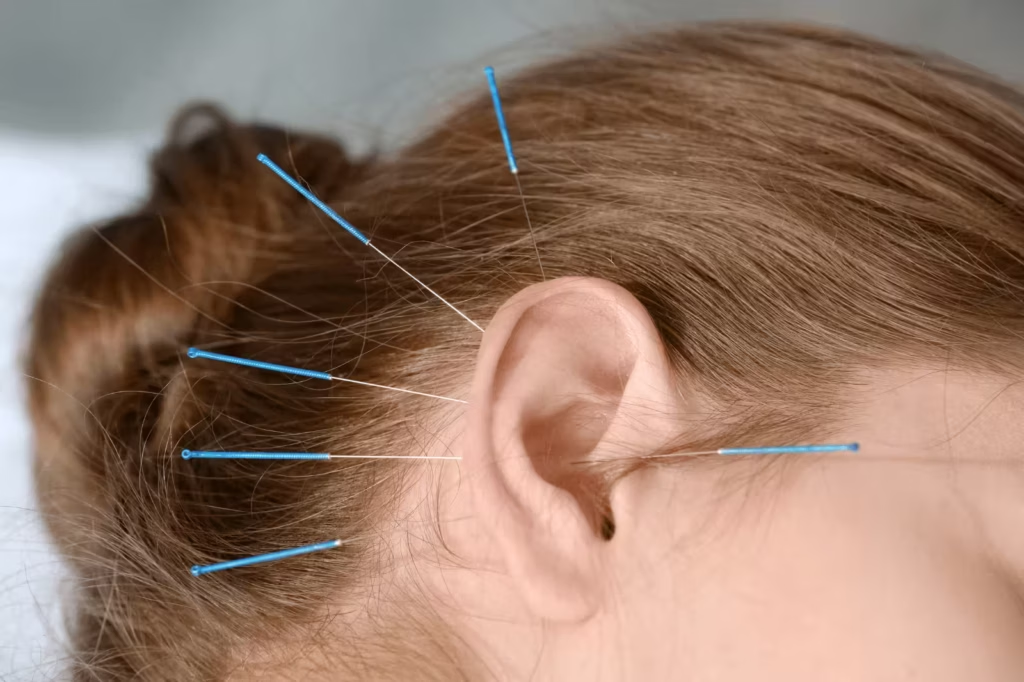
Many people with tinnitus may benefit from acupuncture, especially when symptoms are chronic, stress-reactive, or connected with jaw, neck, or nervous system tension. It should be viewed as a supportive therapy, not a guaranteed cure.
The most realistic goal of acupuncture for tinnitus is symptom management. That may include quieter perceived ringing, less distress, better sleep, reduced tension, and improved ability to cope with the sound.
Some people seek acupuncture after trying hearing aids, sound therapy, counseling, medication review, or lifestyle changes. Others use it alongside these approaches. This combination-care model is often more realistic than looking for one treatment that makes tinnitus disappear completely.
What acupuncture may improve
Acupuncture may support several tinnitus-related outcomes:
- Tinnitus loudness
- Tinnitus severity
- Stress reactivity
- Sleep quality
- Neck and jaw tension
- Head pressure or muscle tightness
- Emotional distress
- Quality of life
- Relaxation and nervous system balance
These outcomes matter because tinnitus is not only an ear symptom. It often involves the auditory system, brain attention networks, stress pathways, sleep patterns, and emotional processing.
What acupuncture has not been proven to do
Acupuncture has not been proven to cure every type of tinnitus, instantly silence ringing in the ears, or replace medical evaluation when tinnitus may be linked to sudden hearing changes, vascular issues, infection, medication effects, or another underlying condition.
This distinction is important. Acupuncture may support ear health, circulation, nervous system regulation, and hearing-related symptoms in some cases, but tinnitus with sudden hearing loss, pulsatile sounds, dizziness, ear pain, or rapid changes should be properly evaluated before treatment begins.
What Is Tinnitus and Why Does It Happen?
Tinnitus is the perception of sound when no external sound source is present. It is a symptom, not a disease. The sound may come from changes in the ear, auditory nerve, brain, blood vessels, jaw, neck, or nervous system.
Many people describe tinnitus as ringing, but the sound can also feel like buzzing, hissing, humming, clicking, roaring, whooshing, or pulsing.
Subjective tinnitus
Subjective tinnitus is the most common type. Only the person experiencing it can hear the sound. It is often linked with hearing loss, noise exposure, aging, stress, ear injury, or changes in auditory processing.
In many cases, the brain receives reduced or altered input from the ear. The auditory system may then increase its internal sensitivity, a process often described as central gain. This can make the brain perceive sound even when no external sound is present.
Objective tinnitus
Objective tinnitus is rare. In some cases, a clinician may be able to detect the sound during examination. It may be linked with blood flow, muscle movement, or structural issues near the ear.
Because objective tinnitus can have vascular or mechanical causes, it deserves proper medical evaluation.
Pulsatile tinnitus
Pulsatile tinnitus sounds rhythmic, like a heartbeat or whooshing pulse. It can be related to blood flow, blood vessel changes, blood pressure, or other vascular factors.
Pulsatile tinnitus should be medically evaluated before acupuncture. Acupuncture may support stress regulation or tension, but it should not be used as the first step when a vascular cause has not been ruled out.
Somatic tinnitus
Somatic tinnitus changes with jaw movement, neck position, posture, chewing, clenching, or pressure around the head and neck. It may involve the temporomandibular joint, cervical spine, muscle tension, or somatosensory input.
This type may be especially relevant for acupuncture because treatment can target neck tension, jaw tension, trigger points, and nervous system sensitivity.
Stress-related tinnitus
Stress does not always cause tinnitus, but it can make tinnitus feel louder, sharper, or harder to ignore. The limbic system, autonomic nervous system, sleep patterns, and attention networks can all influence tinnitus distress.
This is why relaxation-based therapies, counseling, sleep support, and acupuncture may help reduce the burden of tinnitus even when the sound does not fully disappear.
When Should Tinnitus Be Medically Evaluated Before Acupuncture?

Sudden tinnitus, one-sided tinnitus, pulsatile tinnitus, tinnitus with hearing loss, or tinnitus with dizziness, ear pain, weakness, facial symptoms, or neurological changes should be medically evaluated before acupuncture.
Acupuncture can be helpful as part of a broader care plan, but it should not replace diagnosis when tinnitus may signal an urgent or treatable medical issue.
Red flags that need medical attention
Seek medical guidance before starting acupuncture if tinnitus is:
- Sudden in onset
- Only in one ear
- Pulsing with the heartbeat
- Associated with sudden hearing loss
- Associated with dizziness or vertigo
- Linked with ear pain, drainage, or infection
- Present after head or neck trauma
- Paired with facial weakness, numbness, severe headache, or neurological symptoms
- Triggered after starting a new medication
- Rapidly worsening
These signs do not always mean something dangerous is happening, but they should be evaluated.
Why hearing tests matter
A hearing test can reveal whether tinnitus is linked with hearing loss. This matters because hearing aids, sound therapy, and audiology-based care may be important when the auditory system is under-stimulated.
Many people with tinnitus do not realize they have measurable hearing changes. Treating the hearing component can reduce the contrast between tinnitus and external sound, which may make symptoms easier to manage.
How Acupuncture May Help Tinnitus
Acupuncture may help tinnitus by influencing nervous system regulation, stress response, blood flow, pain pathways, sleep quality, and jaw or neck tension. In TCM, treatment is also guided by the underlying pattern behind the symptom.
Tinnitus is not treated as one uniform condition. A careful practitioner asks when the sound started, what it sounds like, what makes it worse, what improves it, and whether it is connected with hearing loss, stress, sleep, jaw tension, digestion, fatigue, or other symptoms.
Traditional Chinese Medicine Explanation
In Traditional Chinese Medicine, tinnitus is commonly associated with the ear, Kidney system, Liver system, Gallbladder channel, Qi movement, blood flow, phlegm-damp obstruction, and Shen regulation.
The sound itself can also matter. In TCM, the pitch, tone, volume, and quality of tinnitus may offer clues about the underlying imbalance. A high-pitched ringing may be interpreted differently from a low roaring sound, a sudden loud noise, or a dull sensation of ear fullness, which is why tinnitus pitch in Traditional Chinese Medicine is often considered alongside timing, triggers, stress, sleep, digestion, and overall constitution.
Common TCM patterns may include:
- Kidney deficiency: Often discussed in chronic tinnitus, age-related symptoms, fatigue, low back weakness, or gradual decline.
- Kidney Yin deficiency: May involve high-pitched tinnitus, dryness, restlessness, night sweats, or heat sensations.
- Liver Yang rising: May involve tinnitus that worsens with stress, anger, headaches, dizziness, or pressure.
- Liver and Gallbladder fire: May involve loud, sudden, intense ringing, irritability, bitter taste, heat signs, or temporal headaches.
- Phlegm-damp obstruction: May involve ear fullness, heaviness, brain fog, dizziness, poor digestion, or a thick sensation in the head.
- Qi and blood stagnation: May appear when tinnitus is linked with trauma, tension, pain, clenching, or restricted movement.
These are TCM diagnostic frameworks, not biomedical diagnoses. Their value is that they help the acupuncturist choose a more individualized treatment strategy.
Modern Biomedical Theories
From a biomedical perspective, acupuncture may influence tinnitus through several possible mechanisms.
It may stimulate peripheral nerves and affect sensory processing pathways. It may also influence autonomic nervous system activity, which can reduce the stress response that makes tinnitus feel more intrusive.
For people with neck or jaw-related tinnitus, acupuncture may help reduce muscle tension and somatosensory input that can modulate ringing. For people with stress-reactive tinnitus, acupuncture may support relaxation, sleep, and emotional regulation.
Some theories also suggest effects on circulation, inflammatory signaling, endorphins, neurotransmitters, and auditory network activity. These mechanisms are still being studied, and acupuncture should be presented as a supportive intervention rather than a proven biological repair for tinnitus.
The most practical way to understand acupuncture for tinnitus is this: it may help reduce the body’s sensitivity and reactivity around the symptom. Even when the sound does not disappear completely, less stress, better sleep, reduced jaw or neck tension, and improved nervous system regulation can make tinnitus easier to live with.
Which Types of Tinnitus May Respond Best to Acupuncture?
Chronic subjective tinnitus, stress-related tinnitus, and somatic tinnitus may be more appropriate for acupuncture support than sudden, pulsatile, or medically unexplained tinnitus.
The type of tinnitus matters because the treatment priority changes depending on the likely cause.
|
Tinnitus Pattern |
What It May Suggest |
Role of Acupuncture |
|
Chronic subjective tinnitus |
Often linked with auditory processing, hearing loss, stress, or long-term nervous system adaptation |
May help reduce symptom burden, stress reactivity, and sleep disruption |
|
Stress-reactive tinnitus |
Worsens with anxiety, poor sleep, emotional strain, or overwork |
May support relaxation, autonomic balance, and Shen calming in TCM |
|
Somatic tinnitus |
Changes with jaw movement, neck position, posture, or muscle tension |
May help reduce jaw, neck, and head tension |
|
Age-related tinnitus |
Often connected with gradual hearing changes |
May support overall symptom management, but hearing evaluation is important |
|
Medication-related tinnitus |
Begins or worsens after medication exposure |
Medication review comes first |
|
Pulsatile tinnitus |
Rhythmic sound that follows the heartbeat |
Medical evaluation comes first |
|
Sudden tinnitus with hearing loss |
Possible urgent ear condition |
Urgent medical care comes first |
Acupuncture is most appropriate when serious medical causes have been ruled out and the goal is to reduce the intensity, distress, and functional impact of tinnitus.
Acupuncture Points for Tinnitus
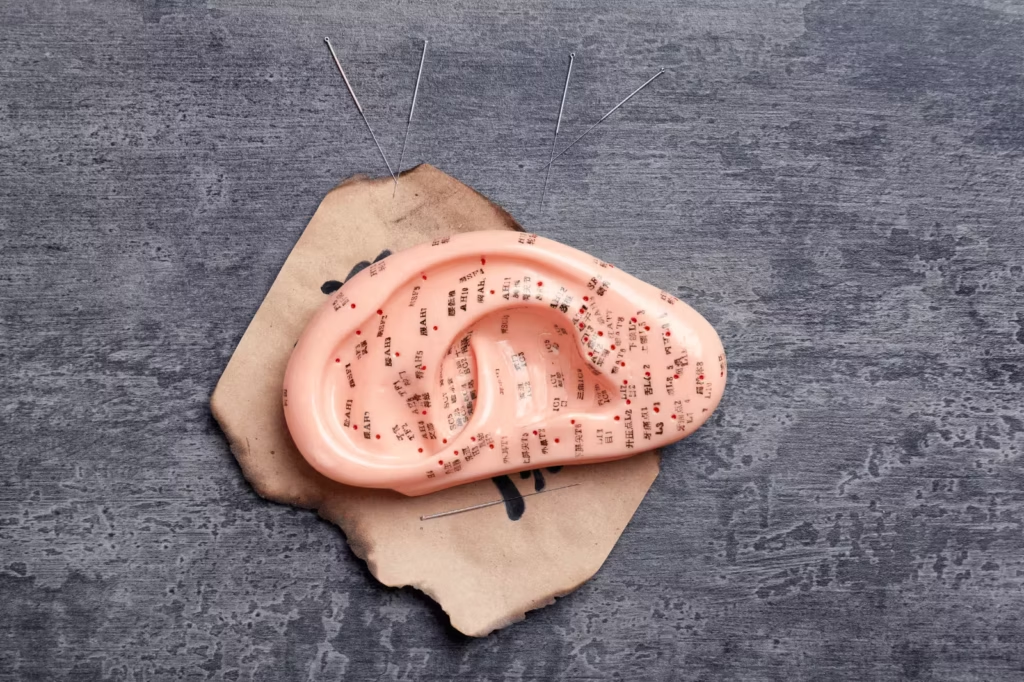
There is no single pressure point that reliably stops tinnitus. Acupuncturists usually combine local ear points, head and neck points, distal body points, and calming points based on the person’s tinnitus pattern.
Point selection depends on the sound quality, tinnitus duration, medical history, stress level, sleep, hearing status, jaw tension, neck tension, digestion, energy level, and TCM diagnosis.
Local ear points
Local points are used near the ear to influence the surrounding channels, muscles, nerves, and regional circulation.
Commonly used local points include:
- SI19, Tinggong: Often used for ear symptoms, hearing concerns, and local channel regulation.
- GB2, Tinghui: Commonly used near the ear for tinnitus, ear fullness, and jaw-related symptoms.
- SJ21, Ermen: Used around the ear region and sometimes written as TE21 or TB21 depending on naming convention.
- SJ17, Yifeng: Located behind the earlobe and often used for ear, jaw, and facial tension patterns.
These points are often combined rather than used alone.
Head and neck points
Head and neck points may be selected when tinnitus is linked with tension, headaches, dizziness, stress, or cervical tightness.
Common examples include:
- GB20, Fengchi: Frequently used for neck tension, head pressure, dizziness patterns, and stress-related symptoms.
- GV20, Baihui: Often used for calming, regulation, and head-related patterns.
- Anmian: Commonly used when tinnitus affects sleep.
For somatic tinnitus, a practitioner may also assess the neck, jaw, temples, shoulders, and upper back.
Distal body points
Distal points are located away from the ear but may be used to regulate systemic patterns.
Common examples include:
- LI4, Hegu: Often used for head, face, jaw, pain, and stress-related patterns.
- SJ5, Waiguan: Often used for ear, head, and channel-related symptoms.
- LR3, Taichong: Commonly used when stress, irritability, tension, or Liver Qi constraint is involved.
- KI3, Taixi: Often used in Kidney-related TCM patterns.
- SP6, Sanyinjiao: Often used for Yin, blood, sleep, and systemic regulation patterns.
- ST36, Zusanli: Often used to support Qi, digestion, resilience, and overall regulation.
Ear acupuncture and ear seeds
Auricular acupuncture targets points on the ear that correspond to nervous system, stress, and organ-related patterns in TCM and auriculotherapy.
Common auricular points for tinnitus support may include:
- Shen Men
- Inner Ear
- Kidney
- Subcortex
- Sympathetic
- Liver
- Occiput
Ear seeds may be placed after treatment for gentle stimulation between sessions. They are usually considered an adjunct, not a complete tinnitus treatment by themselves.
How Many Acupuncture Sessions Are Needed for Tinnitus?
There is no fixed number of acupuncture sessions that cures tinnitus. Many treatment plans begin with several weeks of care, then reassess changes in loudness, sleep, stress, and daily function.
Clinical protocols vary, but tinnitus acupuncture plans often begin with 1 to 3 sessions per week for several weeks. Some studies have used treatment courses around 10 to 15 sessions, though real-world plans should be individualized.
When improvement may appear
Some people notice early changes after a few sessions, especially in sleep, relaxation, jaw tension, or stress sensitivity. Tinnitus loudness may take longer to change.
Others may need a full initial course before deciding whether acupuncture is helping.
How progress should be tracked
Progress should be measured with more than one question. Useful markers include:
- Tinnitus loudness
- Tinnitus severity
- Sleep quality
- Concentration
- Stress level
- Anxiety or irritability
- Neck and jaw tension
- Daily function
- Quality of life
- Trigger patterns
Validated tools such as the Tinnitus Handicap Inventory or Tinnitus Functional Index may also help track change.
When to reassess
If there is no meaningful improvement after a reasonable trial, the treatment plan should be reassessed. That may mean changing the point strategy, adding audiology care, addressing TMJ or neck issues, reviewing sleep, or considering CBT or sound therapy.
Acupuncture Compared With Other Tinnitus Treatments
Acupuncture is best viewed as a complementary therapy, while CBT, hearing aids, sound therapy, medical evaluation, and audiology care remain important parts of tinnitus management.
The most effective tinnitus care depends on the driver of the symptom.
|
Treatment |
Best For |
Strengths |
Limits |
|
Medical evaluation |
Sudden, one-sided, pulsatile, painful, or complex tinnitus |
Identifies urgent or treatable causes |
Does not always provide immediate symptom relief |
|
Hearing aids |
Tinnitus with hearing loss |
Improves access to external sound and hearing function |
Requires audiology evaluation |
|
CBT |
Tinnitus distress, anxiety, sleep disruption, coping difficulty |
Strong support for reducing tinnitus-related distress |
Usually does not remove the sound itself |
|
Sound therapy |
Quiet environments, sleep disruption, habituation support |
Helps reduce contrast between tinnitus and silence |
Results vary |
|
TMJ or neck therapy |
Somatic tinnitus linked with jaw or cervical tension |
Targets mechanical and muscular contributors |
Requires correct identification of somatic triggers |
|
Acupuncture |
Stress-reactive, chronic subjective, or tension-related tinnitus |
Supports nervous system regulation, tension, sleep, and whole-person care |
Evidence is mixed and response varies |
Where acupuncture fits
Acupuncture may be especially useful when tinnitus worsens with stress, poor sleep, jaw clenching, neck tightness, headaches, or body tension.
It may also be useful for people who want a non-drug supportive therapy and are already receiving appropriate medical or audiology care.
It should not be positioned as a replacement for hearing aids when hearing loss is present, or as a substitute for CBT when tinnitus distress, anxiety, or insomnia is severe.
How to Improve Results Between Acupuncture Sessions
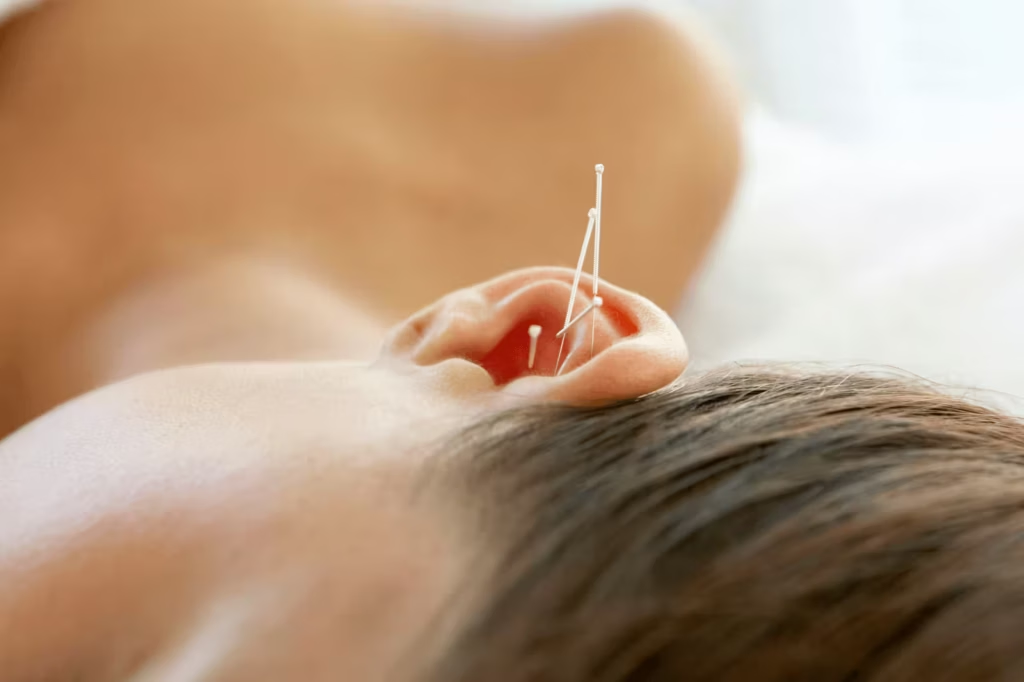
Acupuncture results are easier to evaluate when tinnitus loudness, sleep quality, stress level, and daily function are tracked before and during treatment. Combining acupuncture with hearing care, sound support, stress regulation, and jaw or neck care may improve outcomes for selected patients.
Protect your hearing wisely
Use hearing protection in loud settings such as concerts, construction zones, clubs, gyms, or noisy work environments.
Avoid overprotecting your ears in normal everyday sound environments unless advised by a clinician. Constantly blocking normal sound can make tinnitus more noticeable for some people.
Use sound enrichment
Quiet rooms can make tinnitus feel louder. Gentle background sound may help reduce contrast.
Options include:
- White noise
- Nature sounds
- Soft music
- Fan noise
- Sound apps
- Bedside sound machines
Sound should be comfortable, not loud.
Track triggers
A tinnitus diary can help identify patterns. Track:
- Sleep
- Stress
- Caffeine
- Alcohol
- Sodium
- Noise exposure
- Jaw clenching
- Neck tension
- Screen time
- Exercise
- Menstrual cycle changes if relevant
- Medication changes
This information helps personalize treatment.
Support sleep and nervous system regulation
Poor sleep can make tinnitus feel more intrusive. A calming evening routine may help reduce nervous system arousal.
Helpful habits include consistent sleep timing, dim lights before bed, reduced late caffeine, gentle stretching, sound enrichment, and breathing practices.
Address jaw and neck tension
If tinnitus changes when you clench your jaw, turn your head, press on your neck, or chew, tell your practitioner. TMJ and cervical tension may be part of the pattern.
In these cases, acupuncture may work best alongside jaw relaxation, posture support, physical therapy, dental evaluation, or gentle mobility work.
Is Acupuncture Safe for Tinnitus?
Acupuncture is generally low risk when performed by a licensed practitioner using sterile needles. Mild soreness, temporary bruising, lightheadedness, or short-term fatigue can occur.
The safety profile is one reason many people consider acupuncture as part of a tinnitus care plan. Still, treatment should be adapted to the person.
Who should use caution
Tell your acupuncturist if you:
- Take blood thinners
- Have a bleeding disorder
- Are pregnant
- Have a pacemaker or implanted electrical device
- Have seizures
- Have active infection near treatment areas
- Have a history of fainting with needles
- Have severe dizziness or unexplained neurological symptoms
- Have sudden or pulsatile tinnitus that has not been evaluated
Electroacupuncture may not be appropriate for some people with implanted devices or certain medical conditions.
Can acupuncture make tinnitus worse?
Some people may notice temporary symptom fluctuation after treatment. This does not always mean harm, but it should be discussed with the practitioner.
If tinnitus becomes suddenly worse, changes to pulsatile tinnitus, or appears with hearing loss, dizziness, ear pain, or neurological symptoms, seek medical guidance.
Is Acupuncture Right for Your Tinnitus?
Acupuncture may be worth considering if tinnitus is chronic, nonpulsatile, stress-reactive, or linked with jaw or neck tension. It is most appropriate when used as part of a broader care plan rather than as a stand-alone cure.
You may be a good candidate if:
- Your tinnitus has already been medically evaluated
- Symptoms worsen with stress or poor sleep
- You have jaw clenching, TMJ tension, or neck tightness
- You prefer a non-drug supportive therapy
- You want to improve sleep, relaxation, and overall symptom tolerance
- You are willing to track changes over several sessions
Another treatment should come first if tinnitus is sudden, one-sided, pulsatile, or associated with hearing loss, dizziness, ear pain, or neurological symptoms.
Is Acupuncture Worth Trying for Tinnitus?
Acupuncture may help some people with tinnitus by reducing symptom severity, stress reactivity, sleep disruption, and tension-related triggers. It is not a universal cure, and results vary by tinnitus type, cause, duration, and overall health pattern.
The strongest approach is individualized. A person with chronic stress-reactive tinnitus may need calming points, sleep support, and nervous system regulation. A person with jaw-related tinnitus may need local ear points, TMJ support, neck treatment, and posture work. A person with hearing-loss-related tinnitus may need audiology care along with supportive acupuncture.
At ACA Acupuncture & Wellness, tinnitus care is approached through careful assessment, realistic goals, and individualized treatment planning. If your tinnitus is chronic, stress-sensitive, or connected with jaw and neck tension, acupuncture may be a useful part of your path toward better daily comfort.
If your tinnitus is sudden, pulsatile, one-sided, or linked with hearing loss, dizziness, ear pain, or neurological symptoms, medical evaluation should come first. For personalized support, contact us today or visit our location nearest you to schedule a consultation.
Sources:
Xu, X., Xie, H., Liu, Z., Guo, T., & Zhang, Y. (2022). Effects of acupuncture on the outcome of tinnitus: An overview of systematic reviews. Frontiers in Neurology, 13, 1061431.
Huang, K., Liang, S., Chen, L., & Grellet, A. (2021). Acupuncture for tinnitus: A systematic review and meta-analysis of randomized controlled trials. Acupuncture in Medicine, 39(4), 264–271. https://doi.org/10.1177/0964528420938380
Lee, K. H., et al. (2024). Acupuncture for Tinnitus: A Scoping Review of Clinical Studies. Healthcare, 12(10), 1032.
There is no single pressure point that reliably stops tinnitus, but acupuncturists commonly use points around the ear, head, neck, hands, and feet to reduce tinnitus severity and related tension.
There is no universal trick to stop tinnitus, but gentle background sound, slow breathing, jaw relaxation, and reducing stress can help make the ringing less noticeable.
Traditional Chinese Medicine may use acupuncture, ear seeds, moxibustion, herbs, diet, and stress support based on patterns such as Kidney deficiency, Liver Yang rising, or phlegm-damp obstruction.
Vitamin B12 deficiency is one of the most commonly discussed deficiencies linked with tinnitus, though vitamin D, zinc, magnesium, and iron are also sometimes evaluated.
The silent enemy of tinnitus is often unmanaged stress, poor sleep, untreated hearing loss, jaw clenching, or constant focus on the sound, all of which can make tinnitus feel worse.
High-dose stimulant supplements, caffeine pills, quinine-containing products, aspirin-containing products, and excessive vitamin or mineral doses may worsen tinnitus in some people.
Testimonials

Cart (0)
Your cart is currently empty.


Cart (0)
Your cart is currently empty.