

Acupuncture for Gallbladder Health: Understanding Meridian Imbalances and Emotional Patterns
Acupuncture for Gallbladder Health: Understanding Gallbladder Meridian Imbalances and Their Mental & Emotional Aspects
Acupuncture for gallbladder health uses specific points on the gallbladder and liver meridians to regulate bile flow, relieve pain along the ribs and head, and balance emotions like anger, resentment, fear, and indecision that TCM associates with gallbladder Qi.
The gallbladder is a small organ with a surprisingly large presence in TCM. In Western anatomy it stores bile to help digest fats. In TCM it also governs decision making, courage, timing, and how smoothly we move through change. When the gallbladder meridian is out of balance, many people notice a blend of physical symptoms such as headaches, rib or flank tightness, digestive sensitivity, and emotional patterns like resentment, timidity, or chronic indecision.
Gallbladder-related patterns often go far beyond scans or surgical history and can shape how a person processes anger, handles pressure, and navigates decisions. Understanding the relationship between the gallbladder meridian, physical symptoms, and emotional tendencies provides a clearer path to supporting both the body and the mind through acupuncture and holistic care.
Key Takeaways
- Acupuncture can support gallbladder health by regulating bile flow, easing right side discomfort, and improving digestion linked to Gallbladder and Liver Qi.
- Gallbladder meridian imbalances often involve headaches, rib and shoulder tension, digestive issues with fatty foods, and emotional patterns such as indecision or resentment.
- TCM connects the gallbladder with courage, decision making, and smooth emotional processing, while modern research shows acupuncture influences neurotransmitters and brain regions tied to mood.
- Functional patterns such as damp heat, Liver Qi stagnation, timidity, and Shaoyang imbalance each present distinctive digestive, pain, and emotional symptoms.
- Holistic support that includes acupuncture, acupressure, movement, sleep hygiene, and emotional expression can help restore balance along the gallbladder pathway while medical concerns are properly managed.
The Gallbladder: Anatomy, Function, And Common Problems
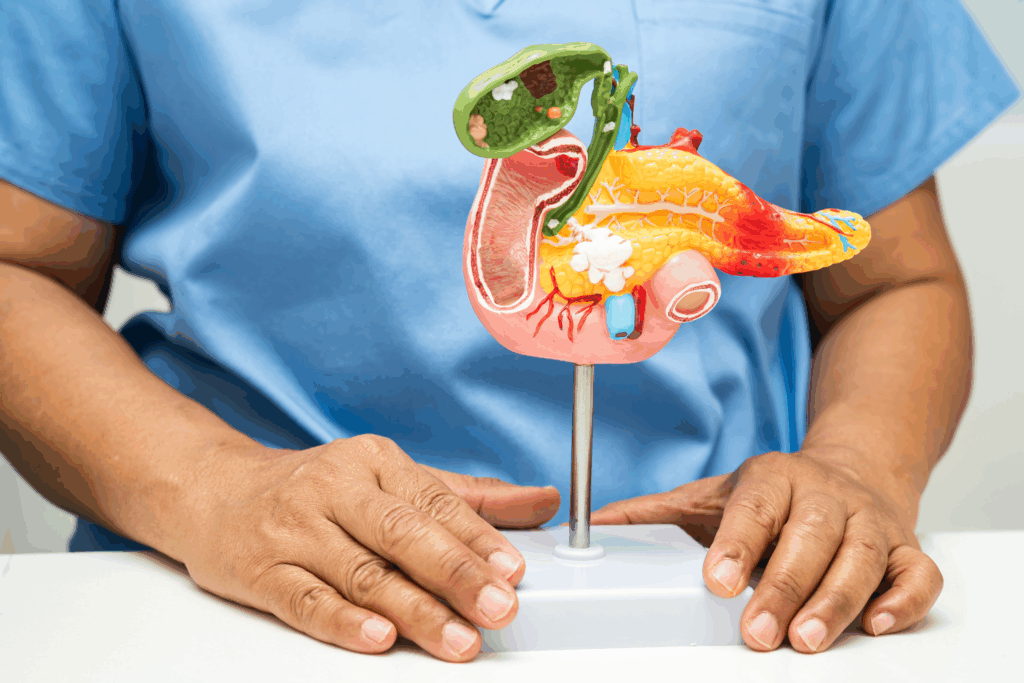
The gallbladder is a small organ under the liver that stores bile for fat digestion, and common problems include gallstones, biliary colic, and cholecystitis, which sometimes require urgent medical or surgical treatment.
Where The Gallbladder Sits And What It Does
In Western terms, your gallbladder is a small, pear-shaped organ tucked under the liver in the upper right part of the abdomen. Its main job is to store and concentrate bile, a fluid made by the liver that helps break down fats and absorb fat-soluble vitamins. When you eat, the gallbladder contracts and releases bile into the small intestine through the bile ducts.
Common Gallbladder Conditions You May Hear About
Common medical conditions include:
- Gallstones – Solid deposits that form inside the gallbladder. They can be silent or cause intense pain if they block the ducts.
- Biliary colic and cholecystitis – Painful spasms or inflammation of the gallbladder that often cause sharp right upper abdominal pain, sometimes with fever or nausea.
- Choledocholithiasis and bile duct issues – Stones or sludge in the ducts that can trigger jaundice, infection, and serious complications.
- Post cholecystectomy symptoms – After gallbladder removal some people notice changes in digestion, bowel habits, or right side discomfort.
How This Connects With TCM Rather Than Replaces It
TCM does not replace imaging or labs. Instead, it layers an energetic and functional map on top of the physical organ. When our acupuncturists at ACA assess gallbladder health, we consider both worlds. We want to know your history of gallstones, surgeries, medications, and imaging, and we also want to understand your sleep, stress, emotional patterns, and how symptoms line up along the gallbladder meridian pathway.
The Gallbladder Meridian In TCM: Pathway, Wood Element, And Body Clock
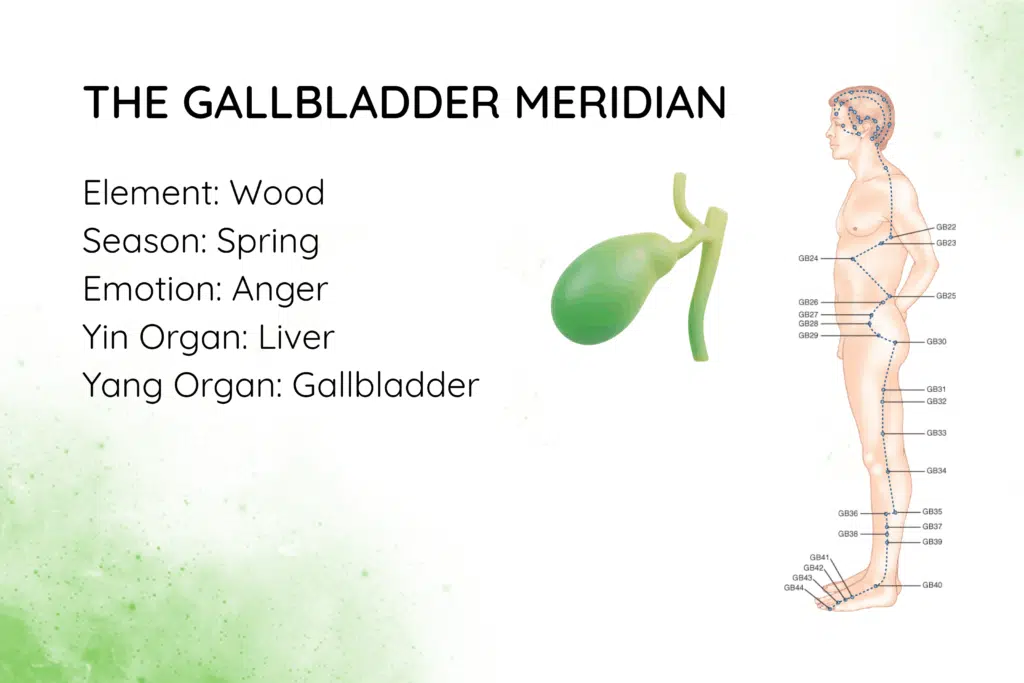
In TCM the gallbladder meridian is an energy pathway that starts at the outer corner of the eye, travels around the head, down the side of the body, and ends at the fourth toe, and it belongs to the wood element and the eleven pm to one am time zone on the body clock where decisions and emotional processing are emphasized.
Pathway Of The Gallbladder Meridian
The gallbladder meridian begins at the outer canthus of the eye, circles around the side of the head and ear, zigzags across the scalp, descends along the side of the neck and shoulder, crosses the rib cage and flank, travels over the hip, and continues along the outer thigh and leg to reach the fourth toe.
This pathway explains why TCM links gallbladder imbalance with:
- Temporal and side of head headaches or migraines
- Neck and shoulder tension
- Rib side or flank tightness
- Hip and outer leg pain
Wood Element, Spring Season, And Lateral Movement
In the five element system, the gallbladder and liver form the wood pair. Wood is associated with spring, growth, vision, planning, and the ability to move around obstacles.
When wood energy is healthy, people typically feel:
- Motivated and purposeful
- Flexible yet firm in their decisions
- Able to express anger cleanly and move on
When wood energy is stuck, the body and mind often feel tight, frustrated, or directionless. That might show up as tendon tightness and stiff ribs, or as irritation, stagnation, and difficulty moving forward with plans.
Gallbladder Time On The Chinese Body Clock
On the TCM body clock, the gallbladder peak time is roughly eleven pm to one am. This is thought to be a window when the body digests not just food but also decisions and emotional content from the day. Imbalances can show up as late night second guessing, replaying conversations, or waking with a sense of dread or agitation during that time.
Emotional And Mental Patterns Of Gallbladder Meridian Imbalance
TCM associates gallbladder meridian imbalance with resentment, bitterness, frustration, timidity, fear of making decisions, and chronic indecision that undermines confidence and emotional flow.
Classic Emotional Themes In TCM Texts
Traditional descriptions link the gallbladder with:
- Courage and decisiveness
- Initiative and follow through
- The ability to act on the liver’s plans
When this system struggles, classic emotional tendencies include timidity, being easily startled, fear around decision-making, lingering resentment, and bitterness.
Modern Language For Gallbladder Qi Imbalances
In modern terms, many people describe gallbladder-related patterns in ways such as:
- “I cannot stop overthinking every choice.”
- “I know what I should do, but I cannot act on it.”
- “I avoid confrontation, so I bottle everything up.”
- “I say yes too quickly and then resent it, which makes me feel guilty.”
These patterns reflect a combination of hesitation, self-doubt, emotional suppression, and difficulty moving forward even when the next step seems clear.
Psychologically, this can look like a cycle of decision paralysis, self-doubt, and avoidance that gradually erodes confidence. Some people also notice social withdrawal or shyness that fits what older texts call Gallbladder Qi timidity.
How Repressed Anger Shows Up Somatically
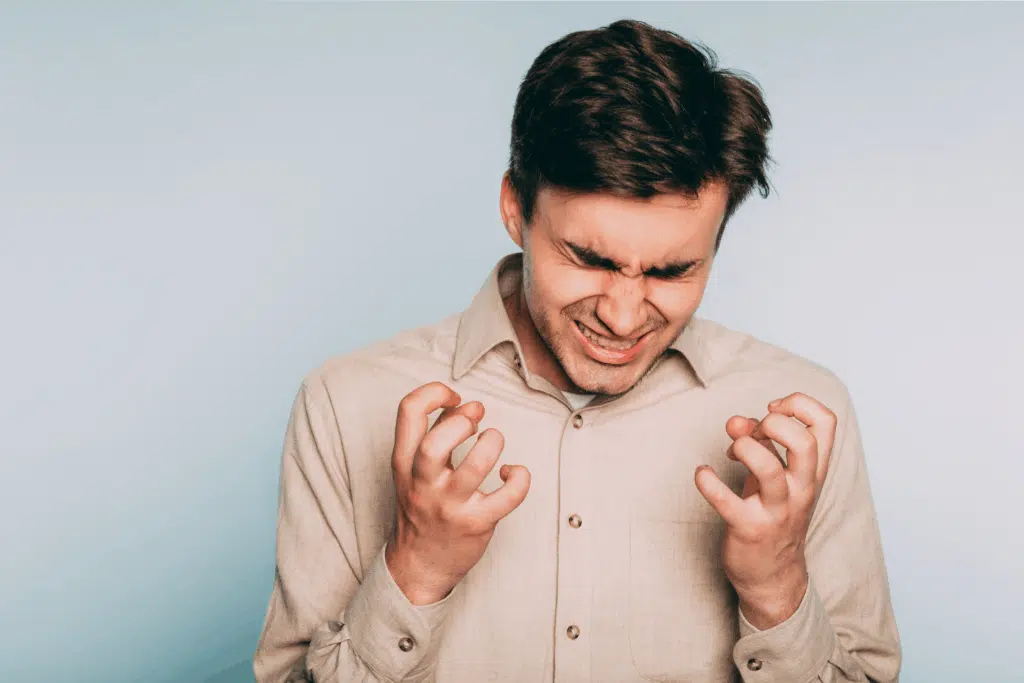
Repressed or unprocessed anger often does not feel like “rage.” It may show up as physical tightness and pain along the gallbladder pathway, such as:
- Tension headaches at the temples
- Neck and shoulder knots
- Rib side or flank tightness
- Hip and outer leg discomfort
- Jaw clenching or grinding
Many of these regions lie right on the gallbladder channel, which is one reason gallbladder points are frequently used for musculoskeletal patterns in the lateral body.
Gallbladder Qi And Modern Mental Health Language
Gallbladder Qi patterns often overlap with modern mental health descriptions. Some people meet criteria for anxiety or depression, while others simply feel stuck, reactive, or overwhelmed without fitting any specific diagnosis. Modern research suggests that acupuncture can influence neurotransmitters such as serotonin and endorphins and can alter brain connectivity in regions involved in emotion, attention, and self-regulation. This provides a neurobiological perspective on the emotional patterns traditionally linked to the gallbladder meridian.
When deeper psychiatric concerns are present, it is important to work with therapists, psychiatrists, or other mental health professionals. The most supportive approach acknowledges both the TCM pattern and the psychological reality so the person receives comprehensive and appropriate care.
Physical Signs Of Gallbladder Meridian Imbalance
Gallbladder meridian imbalances often show up as headaches along the sides of the head, neck and shoulder tension, rib side pain, digestive issues with fatty foods, and sleep disruption around the middle of the night.
| Category | Common Symptoms | TCM Interpretation |
| Digestive Symptoms Beyond “Bad Gallbladder” |
|
Often reflects Gallbladder damp heat or constrained Liver Qi disrupting digestion |
| Musculoskeletal and Pain Patterns Along the Channel |
|
Pain follows the Gallbladder meridian pathway, showing Qi stagnation or heat in the channel |
| Eye, Tendon, and Jaw Symptoms |
|
The Gallbladder and Liver belong to the wood element, which governs tendons, eyes, and smooth flow |
| Sleep Disturbances and Night Waking Patterns |
|
This is the Gallbladder and Liver time on the body clock, revealing imbalance in wood element processing |
Common Gallbladder Patterns Seen In TCM
The most common TCM patterns related to gallbladder imbalance include Gallbladder damp heat, Gallbladder Qi stagnation with Liver involvement, and Gallbladder Qi deficiency or timidity. Each pattern presents a different mix of digestive symptoms, pain, emotional tension, and sleep disruption.
| TCM Pattern | Primary Triggers | Key Symptoms | Western Overlaps | Notes |
| Gallbladder Damp Heat | Rich or greasy foods, alcohol, infections, long standing emotional stress | Rib side or right upper abdominal fullness, nausea, bitter taste, intolerance to oily foods, loose or urgent stools, yellow or greasy tongue, irritability, feeling of internal heat | Gallbladder inflammation, biliary dyskinesia, bile reflux | Important to watch for red flag symptoms such as severe pain, fever, or jaundice |
| Liver Qi Stagnation With Gallbladder Involvement | Stress, emotional suppression, hormonal fluctuations | Tight chest and ribs, frequent sighing, PMS, mood swings, tension headaches, jaw clenching, frustration that lingers, stress related digestive upset | Stress related digestive issues, tension headaches | Reflects impaired movement of Qi affecting both emotional and physical flow |
| Gallbladder Qi Deficiency or Timidity | Chronic stress, fear, long term lack of confidence or boundary challenges | Chronic indecision, fear of making mistakes, shyness, social withdrawal, feeling easily startled, early morning waking, palpitations, conflict avoidance | Anxiety like symptoms, low confidence patterns | Often presents with emotional sensitivity and hesitation in decision making |
| Shaoyang Imbalance | Alternation between exterior and interior conditions, stress, unresolved infections | Alternating hot and cold sensations, side of head headaches, nausea, low appetite, sensation of something stuck in the throat or chest | Cyclical symptoms, migraines, digestive irregularity | Responds well to harmonizing treatments that regulate the pivot between internal and external dynamics |
How Practitioners Differentiate These Patterns
A TCM evaluation typically considers:
- Detailed symptom history, including digestive trends, pain patterns, and emotional states
- Pulse and tongue findings
- Alignment with Western diagnostics such as imaging and lab results
- Sleep quality, stress levels, and menstrual history when relevant
This approach helps determine whether gallbladder-related concerns are primary, secondary, or part of a broader wood element and nervous system imbalance.
How Acupuncture Supports Gallbladder Health, Pain Relief, And Emotional Balance
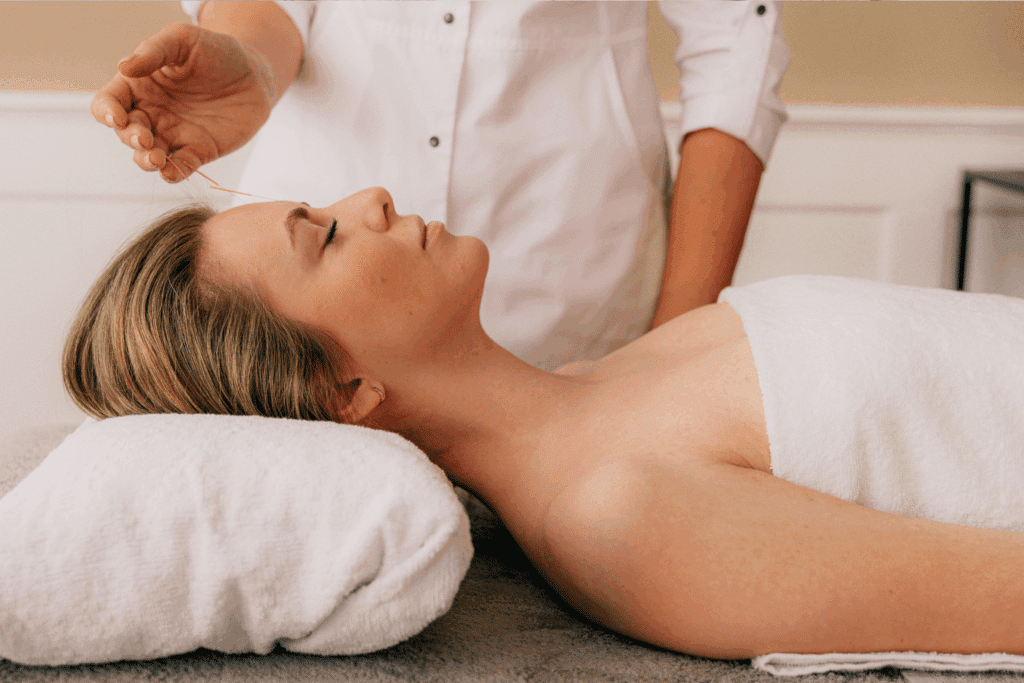
Modern studies suggest that acupuncture can modulate gallbladder motility and pressure, reduce biliary and right upper abdominal pain, and influence neurotransmitters and brain networks involved in mood and emotional regulation, while TCM explains these effects as moving Qi, clearing damp heat, and calming the spirit.
Regulating Bile Flow And Gallbladder Motility
Experimental work has examined the effects of stimulating GB34 Yanglingquan on gallbladder function, showing changes in gallbladder pressure, bile flow, and Oddi sphincter regulation in animal and human models.
From a TCM standpoint, this aligns with the idea that GB34 “benefits the sinews and joints” and influences Gallbladder function and damp heat. From a modern lens it suggests acupuncture can help regulate biliary dynamics, which may explain why some people experience less fullness and discomfort after treatment.
Pain Relief For Gallbladder Region Discomfort
Recent clinical research, including randomized trial protocols and observational studies, has explored acupuncture for biliary colic and right upper abdominal pain. Early findings suggest that targeted acupuncture may reduce pain scores for many individuals, although stronger clinical guidelines will require additional high quality trials.
Pain relief from acupuncture should never replace appropriate medical evaluation. If symptoms involve acute or worsening pain, fever, jaundice, or other red flags, immediate medical assessment is essential. Acupuncture can then be used as a complementary therapy once serious conditions have been ruled out or are being medically managed.
Emotional Regulation And Brain Effects
Neuroscience research increasingly shows that acupuncture is not just a local mechanical intervention. It can influence:
- Levels of neurotransmitters like serotonin and endorphins
- Activity in limbic and prefrontal areas involved in mood, attention, and emotional reactivity
- Sleep and circadian regulation in people with depression or anxiety
For patients whose gallbladder meridian imbalance feels like chronic indecision, irritability, or rumination, this brain based perspective helps explain why they feel calmer, more decisive, and more able to act after several treatments.
The TCM Mechanism: Moving Qi, Resolving Damp Heat, Calming Shen
In TCM language, acupuncture for gallbladder health:
- Moves constrained Liver and Gallbladder Qi
- Resolves damp heat that blocks bile flow and clouds the mind
- Calms the shen, the spirit, so that emotions can rise, move, and settle
This is why a single treatment can sometimes ease a headache and a difficult emotion at the same time.
Key Gallbladder And Liver Meridian Acupuncture Points We Often Use
Acupuncture for gallbladder related patterns often combines local points near the head, neck, ribs, and hips with distal points such as GB34 on the leg and Liver 3 on the foot. This creates a network that addresses both physical discomfort and emotional imbalance.
GB34 Yanglingquan
GB34 is one of the primary points for gallbladder health. Research indicates that stimulating this point may influence gallbladder pressure, bile flow, and pain. This matches its traditional use for lateral knee pain, muscle and tendon tension, digestive discomfort, and patterns involving a stuck or constrained emotional state.
People often benefit from GB34 when there is:
- Lateral leg or knee pain
- Right rib or flank tightness
- A sense of difficulty moving forward in decisions or emotions
GB20 Fengchi For Headaches And Overwhelm
GB20 sits at the base of the skull and is a key point for:
- Migraines and tension headaches
- Eye strain and dizziness
- Emotional overload and stress
Needling or acupressure here often creates a sense of release for individuals who hold tension in the upper neck and head.
GB21 Jianjing For Shoulder Tension And Mental Burden
GB21 is located at the top of the shoulder where many people store stress. It is commonly used for:
- Neck and shoulder tightness
- A feeling of carrying too much responsibility
- Emotional heaviness that settles in the upper body
Because of its strong descending action, GB21 must be used carefully during pregnancy and only within appropriate safety guidelines.
GB13 To GB15 For Mental Clarity And Rumination
These points along the lateral forehead are traditionally selected for mental restlessness, anxiety, repetitive thoughts, and difficulty focusing. They lie along the path where many people experience band like tension headaches and decision fatigue.
Liver 3, Pericardium 6, And Other Partner Points
Gallbladder points rarely function in isolation. They are often paired with:
- Liver 3 to move Liver Qi and reduce frustration
- Pericardium 6 to calm nausea, release chest tightness, and support emotional balance
- Spleen and Stomach points to resolve dampness and support digestion
These combinations help harmonize the overall pattern rather than treating one section of the body in isolation.
Ear Points And Scalp Acupuncture For Emotional Processing
Ear acupuncture, including points such as Shenmen and zones associated with the liver and gallbladder, can regulate stress, emotional reactivity, and nervous system tension. Scalp acupuncture near the gallbladder pathway adds additional support for migraines, cognitive fog, and mental overload.
At Home Support For Gallbladder Meridian Health
Daily self-care for gallbladder meridian health includes gentle acupressure along the channel, side body stretching, supportive sleep and food habits, and practicing healthy emotional expression rather than bottling up anger and resentment.
Acupressure And Gentle Massage Along The GB Channel
Simple at home practices can extend the benefits of acupuncture. For many people we suggest:
- Massaging GB20 at the base of the skull for headaches and stress
- Gently pressing or rolling GB21 on the shoulders to soften tension
- Kneading around GB34 on the outer lower leg to ease lateral leg tightness
- Rubbing the outer foot near the fourth toe for end of day release
Always avoid strong pressure on the abdomen in pregnancy, and stop if you feel sharp or worsening pain.
Movement For Lateral Flexibility And Wood Element Flow
Because the gallbladder meridian runs down the side of the body, lateral movement helps. Practices include:
- Side bends and gentle twisting stretches
- Walking outdoors, especially in green spaces
- Hip opening exercises and foam rolling along the outer thigh, if appropriate
- Eye level horizon gazing instead of constant downward screen focus
These movements give wood element energy a physical pathway to move through.
Sleep Hygiene For The Eleven Pm To One Am Window
Supporting gallbladder time on the clock is powerful. Simple steps include:
- Bringing bedtime earlier so you are asleep during most or all of the eleven pm to one am window
- Avoiding large, fatty meals and heavy alcohol within several hours of bed
- Creating a wind down routine that helps you process the day so decisions are not left to midnight rumination
Food Choices That Support Gallbladder Function
From both Western and TCM angles it helps to:
- Reduce very greasy, fried, heavy foods that strain bile flow
- Include bitter greens like arugula, dandelion, kale, and chicory
- Add fiber and adequate hydration to keep bile and stool moving well
- Use sulfur-rich foods like garlic, onions, and leeks as tolerated
These choices support both the physical organ and the wood element’s preference for clean, free flowing movement.
Emotional Hygiene For Gallbladder Qi
Emotional hygiene for Gallbladder Qi includes:
- Naming anger and frustration sooner, before they crystallize into resentment
- Using journaling or voice notes to clarify decisions rather than looping silently
- Practicing small, low stakes decisions quickly to rebuild confidence
- Setting boundaries around time, work, and emotional labor
These practices align with the gallbladder’s job in TCM to execute decisions with courage and clarity.
Special Situations: Removed Gallbladder, Hormonal Migraines, And High-Stress Careers
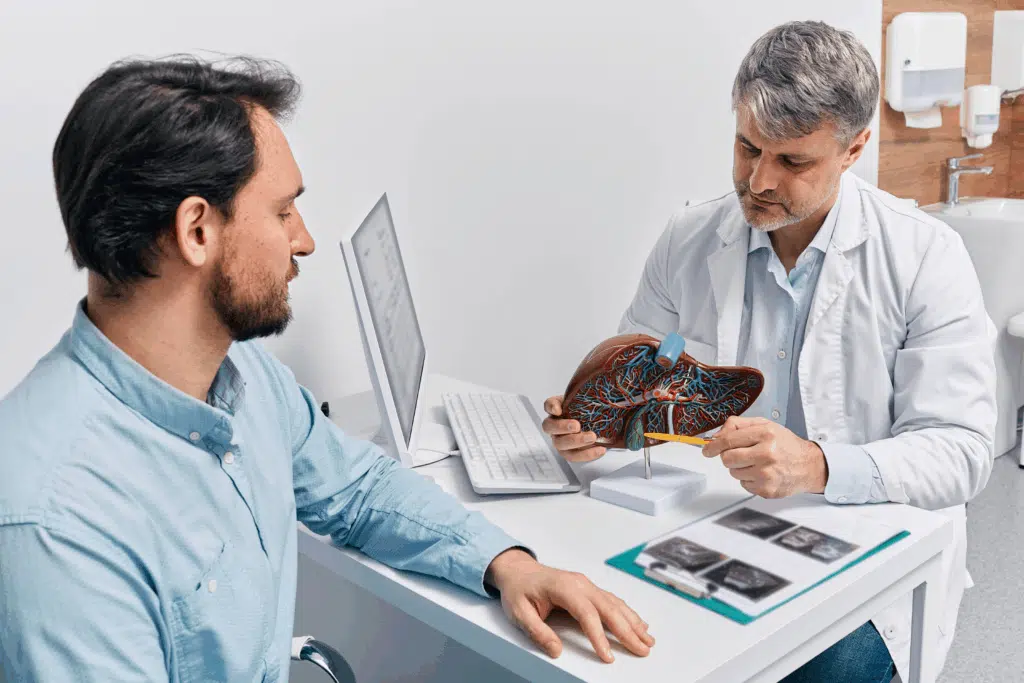
Even after gallbladder removal, gallbladder meridian patterns can persist in the body and emotions, and acupuncture can still help ease pain, digestive issues, migraines, and decision overload while you continue standard medical care.
Life After Gallbladder Removal
Surgery removes the organ but not the meridian. People without a gallbladder can still have:
- Digestive changes like urgency, loose stools, or food fear
- Right side tightness or phantom sensations
- Emotional themes of timidity, resentment, or decision fatigue
Acupuncture then focuses on regulating bile flow through the liver and ducts, soothing the nervous system, and balancing Gallbladder and Liver Qi patterns that remain.
Gallbladder Meridian And Hormonal Or Cyclic Migraines
The gallbladder pathway crosses the temples and side of the head, which matches where many hormonal migraines sit. It also belongs to the wood element, which is implicated in PMS, hormonal swings, and breast tenderness.
By treating GB20, GB34, Liver 3, and hormone related points, we aim to ease both pain and emotional volatility, while you work with your doctor on hormones, nutrition, and other medical drivers.
The “Overthinking Professional” Pattern
Many high pressure roles, such as lawyers, executives, founders, and creatives, live in constant decision making. Over time, this can resemble a modern gallbladder Qi pattern:
- Chronic overthinking and fear of making the wrong move
- Tight shoulders and neck, headaches, jaw tension
- Late night rumination and poor sleep
- Digestive habits built around quick, rich, or irregular meals
In these cases, acupuncture becomes a regular tune up for both body and decision making capacity.
When Acupuncture Is Helpful Versus When It Is Not Enough
Acupuncture is well suited for functional, chronic patterns and for supporting mood, pain, and sleep during medical treatment. It is not enough by itself for:
- Severe acute abdominal pain
- High fever or chills
- Jaundice or dark urine
- Sudden weight loss or vomiting
Those situations require urgent medical evaluation. After stabilization, acupuncture can support recovery and emotional resilience.
Safety, Contraindications, And Integrative Care
Acupuncture for gallbladder concerns is generally safe when performed by licensed practitioners, but urgent symptoms still need medical care, and treatment should be adapted in pregnancy, bleeding disorders, and serious illness while coordinating with your doctors.
Symptoms That Need Immediate Medical Attention
Seek urgent care or emergency evaluation if you experience:
- Sudden, intense right upper abdominal pain
- Pain that radiates to the back or shoulder with nausea and vomiting
- Fever, chills, or signs of infection
- Yellowing of the skin or eyes
- Chest pain or shortness of breath
These signs can indicate gallstones, infection, or other serious conditions that must be addressed first.
Working Alongside Your Gastroenterologist Or Surgeon
Acupuncture can be used in coordination with care from gastroenterologists and surgeons. It may help with:
- Pain and nausea related to diagnostic procedures or recovery
- Anxiety and sleep disturbance before and after surgery
- Long term nervous system regulation and emotional adaptation
Research on biliary dynamics and gallstone recurrence suggests that TCM based approaches, including acupuncture, may provide supportive benefits for regulating biliary tract function over time. More high quality studies are still needed, but current evidence indicates a promising complementary role.
Who Should Be Cautious With Gallbladder Focused Treatment
Extra caution is needed for:
- Pregnancy, especially with stronger points like GB21
- People on anticoagulants or with bleeding disorders
- Severe systemic illness or unstable cardiovascular disease
In these settings we adjust techniques, select gentler points, or coordinate even more closely with your medical team.
Bringing Your Gallbladder And Emotions Back Into Alignment

Acupuncture can support gallbladder health as both a physical and emotional experience, helping regulate bile flow, ease discomfort, and encourage the courage and clarity associated with balanced Gallbladder Qi.
In TCM the gallbladder is viewed as the decision maker, the part of the system that transforms intention into action with courage and timing. When this area is under strain, choices can feel heavy, emotions linger longer than expected, and the body may respond with pain, digestive tension, or disrupted sleep.
At ACA Acupuncture and Wellness, we offer a range of holistic therapies that can complement your wellness journey. These include cupping, moxibustion, ear seeds, our thermal therapy room, and reflexology. Each service supports balance, relaxation, and overall wellbeing.
If you are exploring natural ways to support your gallbladder, digestion, or emotional health, you are welcome to contact us to schedule a consultation or learn more about how our services can help you feel more aligned and supported.
Sources:
Zhong, G., Luo, Y., Chi, Z., Zhang, Y., Xu, W., Zhu, D., Li, J., Hu, X., & Jiao, L. (2021). Clinical acupuncture therapy for chronic cholecystitis: A protocol for systematic review and meta-analysis. Medicine, 100(10), e24792.
Sun, N., He, D. M., Ye, X., Bin, L., Zhou, Y., Deng, X., Qu, Y., Li, Z., Cheng, S., Shao, S., Zhao, F. J., Zhang, T. H., Cai, J., Sun, R., & Liang, F. (2022). Immediate acupuncture with GB34 for biliary colic: Protocol for a randomised controlled neuroimaging trial. BMJ Open, 12(1), e055673.
Wong, W. (2019, March 28). A clinical trial of electro-acupuncture for treating gallstone diseases (ClinicalTrials.gov Identifier NCT03891147). Chinese University of Hong Kong.
Acupuncture does not dissolve gallstones. It can help regulate bile flow, ease discomfort, support digestion, and improve emotional resilience while a medical doctor manages stones through observation, medication, or surgery.
Yes. The physical organ is gone, but the meridian, liver, ducts, and related emotional patterns remain. Acupuncture can support digestion, reduce pain, improve sleep, and help regulate Gallbladder and Liver Qi even after surgery.
Acute and mild episodes may respond within a few sessions. Chronic patterns involving long standing pain, digestive issues, emotional tension, or sleep disruption often require weekly treatments over several weeks to months, with frequency tapering as balance improves.
Most people describe acupuncture as a brief prick followed by warmth or heaviness. Areas near the ribs and scalp can be more sensitive, so practitioners typically use thinner needles, gentle technique, and consistent communication to ensure comfort.
Light acupressure on points such as GB20, GB34, or the outer foot can help when emotions feel overwhelming. If symptoms worsen or you feel dizzy or uncomfortable, stop and seek professional guidance. Self acupressure supports care but does not replace professional treatment.
A cautious approach is always safest. Gallbladder meridian imbalances are typically chronic, fluctuating, and influenced by stress or hormonal cycles. Medical emergencies are usually intense, rapidly worsening, and include systemic signs such as fever, jaundice, vomiting, severe nausea, or escalating pain. If unsure, seek medical evaluation first, then address meridian balance once serious conditions are ruled out.
Testimonials

Cart (0)
Your cart is currently empty.


Cart (0)
Your cart is currently empty.